
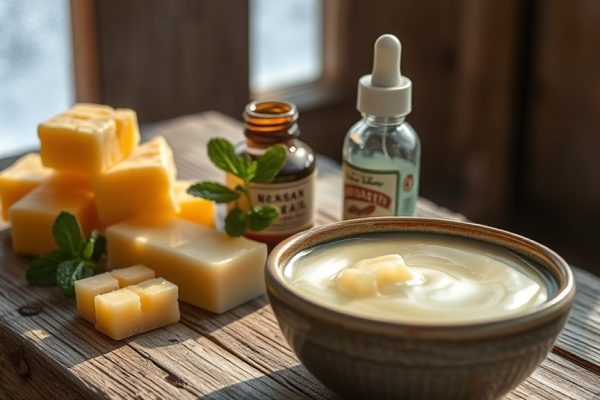
How to Make a Gentle Baby Chest Rub for Winter Comfort.

You’ll be surprised to learn that pediatric respiratory infections account for over 20 million doctor visits annually in the United States alone. When your baby struggles with winter congestion, you’re naturally searching for safe, effective relief options that don’t rely solely on medication. A properly formulated chest rub can provide gentle comfort during those restless…

Read More

What’s the Best Natural Lip Balm Recipe for Cold Weather.

Your lips lose moisture up to ten times faster than other facial skin during winter months, making them uniquely vulnerable to environmental damage. You’ll need a specific combination of occlusive agents and emollients—particularly beeswax, shea butter, and ceramide-rich oils—to create an effective barrier against transepidermal water loss. Understanding the precise ratios and molecular properties of…

Read More

What’s the Best Morning Skin Routine for Winter Dryness.

When winter air strips your skin’s natural lipid barrier, you’re left fighting transepidermal water loss and compromised barrier function. You’ll need a strategic layering approach—starting with non-foaming cleansers containing ceramides, followed by humectant-rich toners, L-ascorbic acid serums, and occlusive moisturizers. The key isn’t adding more products, but selecting formulations with specific lipid ratios and molecular…

Read More

What’s the Best Natural Morning Drink for Winter Energy Boost.

You’ve likely noticed how winter mornings drain your energy faster than other seasons—there’s actual science behind this phenomenon. Your body burns 30% more calories maintaining core temperature in cold weather, while reduced sunlight disrupts circadian rhythms and vitamin D production. Before you reach for another coffee, consider that certain nutrient-dense morning drinks can address these…

Read More

What’s the Best Natural Decongestant Tea for Morning Relief.

You’ve likely noticed how morning nasal congestion disrupts your entire routine, forcing you to breathe through your mouth and delaying your day. While over-the-counter decongestants work quickly, they carry rebound congestion risks and cardiovascular side effects that herbalist-formulated teas don’t. The science behind bioactive compounds like menthol and gingerols shows measurable mucolytic effects—but only when…

Read More

What Foods Support Healthy Skin Barrier in Cold Weather.

Your skin isn’t exactly thriving when temperatures drop and indoor heating runs constantly. During winter months, transepidermal water loss increases by up to 25%, while sebum production decreases drastically, compromising your stratum corneum’s structural integrity. You’ll need specific nutrients—particularly ceramide precursors, omega-3 fatty acids, and antioxidants—to maintain ideal barrier function. The question isn’t whether your…

Read More

What Natural Remedies Help Indoor Air Quality During Winter.

While you’re sealing your home against winter’s chill, you’re simultaneously trapping volatile organic compounds, particulate matter, and allergens that compromise respiratory function. The EPA reports indoor air can be two to five times more polluted than outdoor air, yet you’ll find most homeowners neglect this critical health risk during colder months. Understanding which evidence-based interventions…

Read More

What Foods Reduce Indoor Allergy Symptoms Naturally.

You’ve probably never considered that the foods on your plate directly influence mast cell degranulation—the cellular mechanism behind your sneezing and congestion. Research demonstrates that specific nutrients can stabilize these immune cells and modulate histamine pathways before symptoms even begin. While you’re reaching for over-the-counter antihistamines, certain fruits, fish, and fermented foods are working at…

Read More

What Foods Help Your Body Adjust to Cold Weather Naturally.

When winter arrives, you’ll find your body working harder to maintain its core temperature, burning extra calories just to stay warm. The right dietary choices can greatly/considerably ease this metabolic burden by supporting thermogenesis—your body’s natural heat production process. Beyond simply warming you up temporarily, certain foods trigger sustained physiological responses that help you adapt…

Read More

What Foods Support Healthy Mucous Membranes in Dry Air.

When dry air compromises your mucous membranes, specific nutrients can reinforce their barrier function and moisture retention. You’ll need targeted compounds—beta-carotene for epithelial regeneration, omega-3s to modulate inflammatory pathways, and polyphenols that protect against oxidative stress. The distinction between hydration and cellular membrane support matters here, as water content alone won’t address the biochemical mechanisms…

Read More
Back To Top