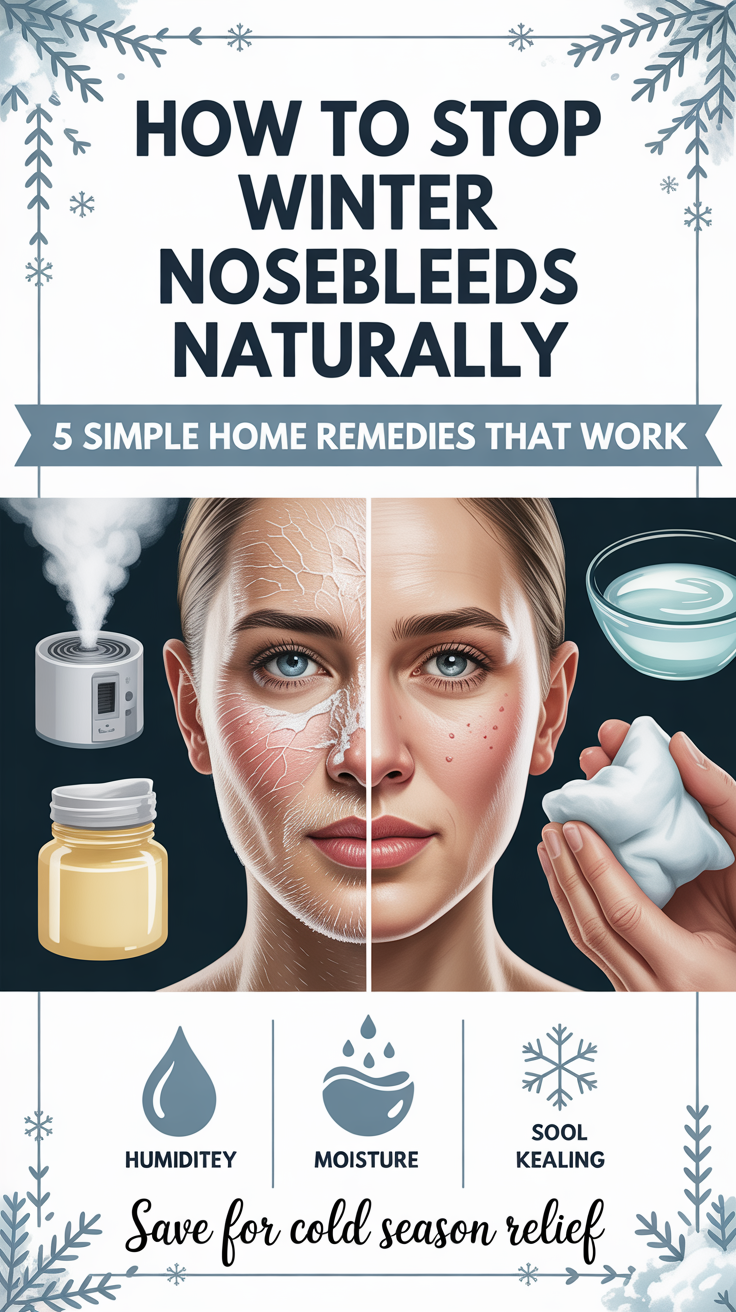

Your nasal mucosa contains a dense network of superficial blood vessels called Kiesselbach’s plexus, making it particularly vulnerable when winter’s low humidity drops below 30%. You’ve likely noticed more epistaxis episodes during cold months, but you might not realize that your body’s mucociliary clearance system becomes impaired in dry conditions, creating microfissures in the nasal epithelium. Understanding the physiological cascade behind winter nosebleeds will help you implement targeted interventions that address the root cause rather than just managing symptoms.
Why Cold, Dry Winter Air Triggers Nosebleeds
When ambient humidity drops below 30% during winter months, the nasal mucosa’s protective moisture barrier becomes compromised, leaving the delicate capillaries in Kiesselbach’s plexus vulnerable to rupture. Cold air exacerbates this by reducing mucociliary clearance and increasing nasal tissue friability.
Indoor heating systems further deplete atmospheric moisture, creating xerotic conditions that desiccate your epithelial lining. This physiological cascade weakens vessel integrity, making spontaneous epistaxis more frequent. The anterior septum’s superficial vasculature becomes particularly susceptible to mechanical trauma from nose-blowing or digital manipulation.
Understanding these mechanisms helps you stop winter nosebleeds naturally through targeted environmental and tissue interventions. Maintaining indoor humidity levels between 40-50% with humidifier therapy can help restore the nasal mucosa’s protective moisture barrier and prevent recurring episodes.
Saline Nasal Rinse: The First Line of Defense
Because isotonic saline solution mimics your body’s natural electrolyte concentration, it effectively rehydrates the nasal epithelium without disrupting cellular osmotic balance. You’ll restore mucosal integrity while removing crusted debris from Kiesselbach’s plexus—the anterior septal vascular network responsible for 90% of epistaxis episodes.
| Solution Type | NaCl Concentration | Optimal Frequency |
|————–|——————-|——————-|
| Isotonic | 0.9% | 2-3x daily |
| Buffered | 0.9% + bicarbonate | 3-4x daily |
| Hypertonic | 2-3% | 1-2x daily |
Administer 240ml per nostril using a neti pot or squeeze bottle. Tilt your head 45 degrees, allowing gravitational drainage through the contralateral naris while maintaining mouth breathing to prevent eustachian tube pressure. For a simple homemade preparation, mix 1/4 teaspoon sea salt in 8oz distilled water and apply twice daily during morning and evening routines.
Petroleum Jelly Application for Nasal Moisture
While saline rinses address mucosal hydration systemically, topical emollients provide a protective barrier at the most vulnerable hemorrhage sites. You’ll achieve optimal results by applying petroleum jelly to Kiesselbach’s plexus, the anteroinferior septal region where 90% of epistaxis originates.
Application protocol:
-
Use a cotton-tipped applicator for precise delivery to Little’s area
-
Apply a thin layer twice daily, particularly before sleep
-
Target the anterior nasal septum, avoiding deep insertion beyond the vestibule
-
Maintain application throughout winter months when relative humidity drops below 30%
-
Discontinue if lipoid pneumonia symptoms develop from aspiration
This occlusive barrier prevents desiccation-induced capillary rupture. For best results, use a pea-sized amount of petroleum jelly and apply after morning cleansing or before bedtime to support skin barrier repair in the delicate nasal passages.
Using a Humidifier to Maintain Optimal Indoor Humidity
The strategic deployment of humidification devices counteracts winter’s low absolute humidity, which drops to 2-4 g/m³ in heated indoor environments compared to summer’s 10-15 g/m³. You’ll maintain nasal mucosa integrity by targeting 40-50% relative humidity, which preserves the mucociliary clearance mechanism and prevents epithelial desiccation.
Position cool-mist ultrasonic or evaporative humidifiers in bedrooms where you spend extended periods. Clean reservoirs with 3% hydrogen peroxide solution every 72 hours to prevent Legionella colonization.
Monitor humidity levels using digital hygrometers; excessive moisture above 60% promotes mold proliferation and Dermatophagoides pteronyssinus populations, triggering alternative respiratory complications. If you prefer equipment-free approaches, consider natural ventilation practices like opening windows during less extreme weather or placing water bowls near heat sources to gradually increase moisture levels.
Cold Compress Treatment for Active Bleeding
Upon onset of anterior epistaxis, immediate application of cold compresses to the nasal bridge triggers localized vasoconstriction through sympathetic nervous system activation, reducing blood flow to Kiesselbach’s plexus by approximately 30-40%.
Optimal cold compress application protocol:
-
Apply ice wrapped in cloth for 10-minute intervals
-
Position compress directly over nasal dorsum and lateral walls
-
Maintain head elevation at 45-60 degrees during treatment
-
Avoid direct ice contact preventing tissue damage
-
Repeat applications until hemostasis achieved
You’ll simultaneously apply anterior pressure to Little’s area while maintaining cold therapy. This dual-mechanism approach maximizes vasoconstriction effectiveness, typically achieving hemostasis within 15 minutes. Once bleeding stops, saline rinses using 1/4 teaspoon sea salt in 8 ounces distilled water can help restore nasal moisture and prevent future episodes.
Hydration and Its Role in Preventing Nosebleeds
Beyond addressing active hemorrhage, you must maintain optimal mucosal hydration to prevent recurrent anterior epistaxis episodes. Systemic hydration preserves nasal mucosa integrity by supporting vascular elasticity and epithelial barrier function. You’ll need 2-3 liters daily to maintain adequate plasma osmolality.
| Hydration Method | Mechanism | Implementation | Efficacy |
|—————–|———–|—————-|———-|
| Oral water intake | Systemic rehydration | 250ml every 2 hours | High |
| Saline irrigation | Direct mucosal moisturization | 0.9% NaCl twice daily | Moderate |
| Humidifier therapy | Environmental moisture delivery | 40-50% relative humidity | Moderate |
Monitor urine color—pale yellow indicates sufficient hydration. Dehydration increases blood viscosity, compromising capillary perfusion in Kiesselbach’s plexus.
Gentle Nasal Care Techniques to Avoid Irritation
While maintaining systemic hydration addresses internal factors, you’ll need to modify your nasal manipulation behaviors to prevent mechanical trauma to the anterior nasal septum.
Systemic hydration alone isn’t enough—you must also change your nasal manipulation habits to protect the delicate anterior septum from injury.
-
Trim fingernails short to minimize mucosal laceration risk during inevitable nasal contact
-
Apply digital pressure laterally against the nasal alae rather than inserting fingers into vestibules
-
Use saline irrigation with isotonic solutions to dislodge crusts instead of mechanical removal
-
Blow your nose gently through both nostrils simultaneously to equalize intranasal pressure
-
Avoid forceful sniffing, which creates negative pressure and destabilizes clot formation
These behavioral modifications significantly reduce epistaxis recurrence by protecting the vulnerable Kiesselbach’s plexus.
When to Seek Medical Attention for Persistent Nosebleeds
Most nosebleeds resolve with conservative management within 10-20 minutes, but certain clinical presentations require immediate medical evaluation. You’ll need emergency care if bleeding persists beyond 30 minutes despite proper anterior pressure application.
| Emergency Indicators | Underlying Concerns |
|————————-|————————|
| Recurrent bilateral epistaxis | Coagulopathy or systemic disorder |
| Hemodynamic instability | Posterior nasal artery involvement |
| Hematemesis or hemoptysis | Nasopharyngeal pathology |
| Post-traumatic bleeding | Septal perforation or fracture |
You should consult an otolaryngologist if you’re experiencing weekly episodes, require cauterization, or have a history of hereditary hemorrhagic telangiectasia. Anticoagulation therapy necessitates careful monitoring and potential dosage adjustment.
Frequently Asked Questions
Can Certain Medications Make Winter Nosebleeds Worse or More Frequent?
Like a double-edged sword, anticoagulants (warfarin, aspirin), NSAIDs, and nasal corticosteroids can exacerbate epistaxis by inhibiting platelet aggregation or compromising nasal mucosa integrity. You’ll experience increased capillary fragility and impaired hemostasis during winter months.
Are Children More Prone to Nosebleeds During Winter Than Adults?
Yes, children experience more frequent winter epistaxis than adults. You’ll find their nasal mucosa is thinner, they’ve got more prominent Kiesselbach’s plexus vasculature, and they’re prone to digital trauma and aggressive nose-blowing during upper respiratory infections.
Does Vitamin Deficiency Contribute to Recurring Nosebleeds in Cold Weather?
Yes, you’ll find that vitamin C and K deficiencies compromise capillary integrity and coagulation factors in your nasal mucosa. During winter, reduced dietary intake exacerbates epistaxis by weakening blood vessel walls and impairing hemostatic mechanisms.
Can Allergies During Winter Increase the Likelihood of Getting Nosebleeds?
Yes, you’ll experience increased nosebleeds—winter allergies trigger inflammatory mediators causing nasal mucosa edema and friable vessels. Histamine release prompts pruritis, leading to mechanical trauma of Kiesselbach’s plexus through scratching, rupturing superficial capillaries.
Is It Safe to Exercise Outdoors in Winter if Prone to Nosebleeds?
You can exercise outdoors if you’re prone to nosebleeds, but you’ll need precautions. Cover your nasal passages with a breathable mask, apply petroleum jelly to your nasal mucosa, and avoid extreme cold temperatures that cause vasoconstriction and subsequent mucosal desiccation.