When winter arrives, you’ll find your body working harder to maintain its core temperature, burning extra calories just to stay warm. The right dietary choices can greatly/considerably ease this metabolic burden by supporting thermogenesis—your body’s natural heat production process. Beyond simply warming you up temporarily, certain foods trigger sustained physiological responses that help you adapt to cold environments more efficiently. Understanding which nutrients optimize this adaptation reveals why some traditional winter staples exist across cultures.
How Thermogenic Foods Generate Internal Body Heat During Winter
When temperatures drop, your body activates thermogenesis—a metabolic process that converts food into heat energy to maintain core temperature. Foods requiring extended digestion periods amplify this thermal response, with different macronutrients producing varying heat outputs.
Protein generates the highest thermic effect, while complex carbohydrates and healthy fats contribute sustained warmth through gradual energy release. Strategic foods cold weather adjustment involves consuming adequate calories throughout the day to maximize natural heat-generation capacity.
The digestive conversion of nutrients releases thermal energy, with certain foods cold weather adjustment properties triggering greater metabolic heat production than others, supporting your physiological adaptation to winter conditions. Regulating body temperature becomes particularly crucial during cold weather when environmental conditions challenge your system’s thermal equilibrium. Specific compounds like gingerol and shogaol in warming foods activate thermogenic responses through vasodilation enhancement and circulation improvement mechanisms.
Root Vegetables and Complex Carbohydrates for Sustained Energy
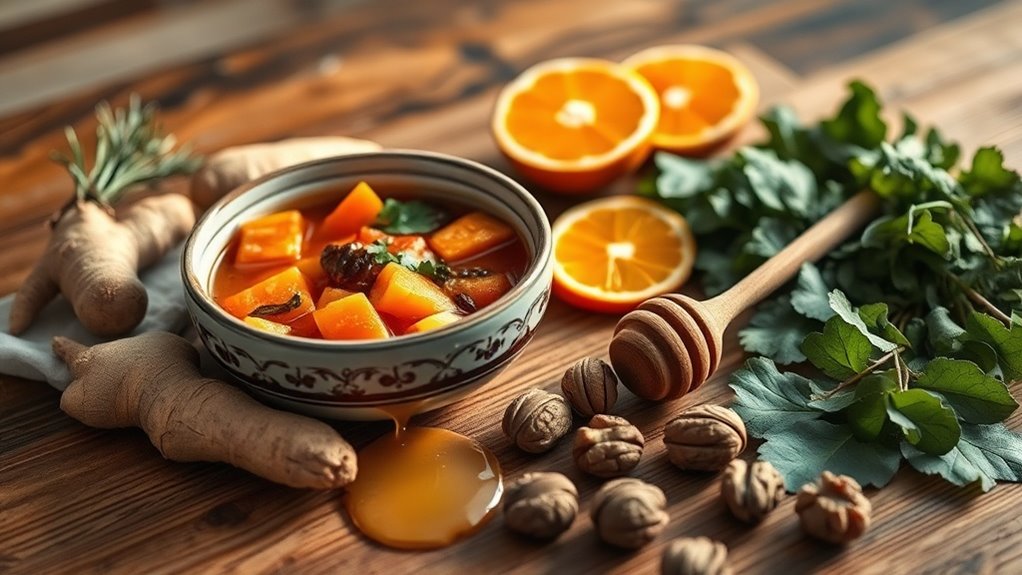
Root vegetables deliver a nutritional foundation for cold weather adaptation through their exceptional complex carbohydrate density and thermogenic properties. Carrots, beets, sweet potatoes, turnips, and parsnips provide steady energy release through slower carbohydrate metabolism, generating internal heat during digestion.
Their dietary fiber stabilizes blood sugar while prolonging satiety, preventing cold-induced energy crashes. These vegetables contain vitamin A, vitamin C, potassium, and antioxidants that strengthen immune function during winter months. Carrots contain beta carotene and lutein, compounds linked to eye health that support visual function during darker winter days. Cold exposure converts starches into sugars, naturally increasing their sweetness and caloric value.
You’ll benefit from their low glycemic index, which sustains metabolic heat production without blood sugar spikes, supporting efficient thermoregulation. Sweet potatoes, in particular, rank among naturally warming foods that help support your body’s internal heating mechanisms during frigid winter months.
Healthy Fats and Proteins That Regulate Body Temperature
While root vegetables provide foundational energy through complex carbohydrates, your body’s temperature regulation depends equally on adequate consumption of healthy fats and proteins.
Protein digestion increases postprandial thermogenesis approximately 100% compared to carbohydrates, generating substantial internal heat through metabolic processes. You’ll experience body temperature elevation markedly after protein-rich meals.
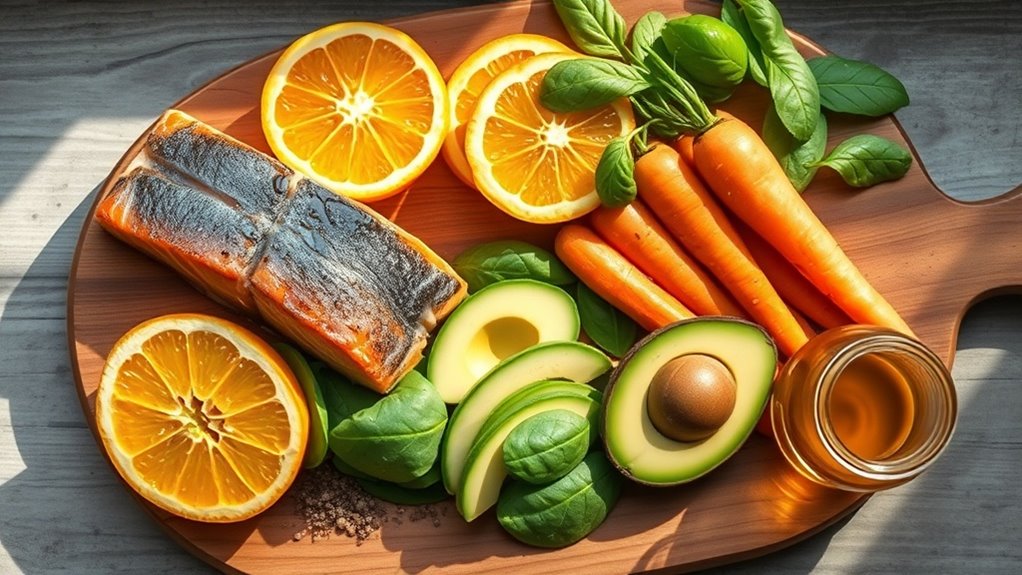
Healthy fats from salmon, nuts, olive oil, and avocados provide concentrated energy sources that prevent heat loss while protecting essential organs. These fats require extended digestion time, prolonging thermogenic effects. Complex carbohydrates also increase thermogenesis after consumption, taking more energy to break down than simple, processed foods.
Warming spices like ginger and cinnamon can be incorporated with proteins and fats to further enhance your body’s natural heat production during cold exposure.
Together, proteins and fats create synergistic metabolic activity that maintains elevated body temperature during cold exposure.
Immune-Strengthening Winter Fruits and Natural Supplements
The immune system’s vulnerability increases during winter months when reduced sunlight exposure, indoor crowding, and respiratory pathogen circulation create heightened infection risks.
You’ll strengthen defenses by consuming vitamin C-rich citrus fruits like oranges and grapefruits, which stimulate white blood cell production essential for fighting pathogens. Berries provide antiviral polyphenols while maintaining low sugar content. Winter fruits including persimmons deliver vitamin A for enhanced immune function, while pomegranates supply vitamin K for immune system maintenance. Pears offer fiber-rich support that enhances immune cell function while promoting digestive health crucial for pathogen defense.
You’ll maximize benefits by eating whole fruits rather than juices, preserving fiber that supports beneficial gut microbiota. Supplement strategically with vitamin D and zinc to activate T-cells and reduce inflammation. Consider incorporating turmeric’s anti-inflammatory properties through golden milk preparations that combine 1 teaspoon turmeric powder with black pepper to enhance absorption and support natural immune function during winter.
Warming Spices and Beverages for Cold Weather Adaptation
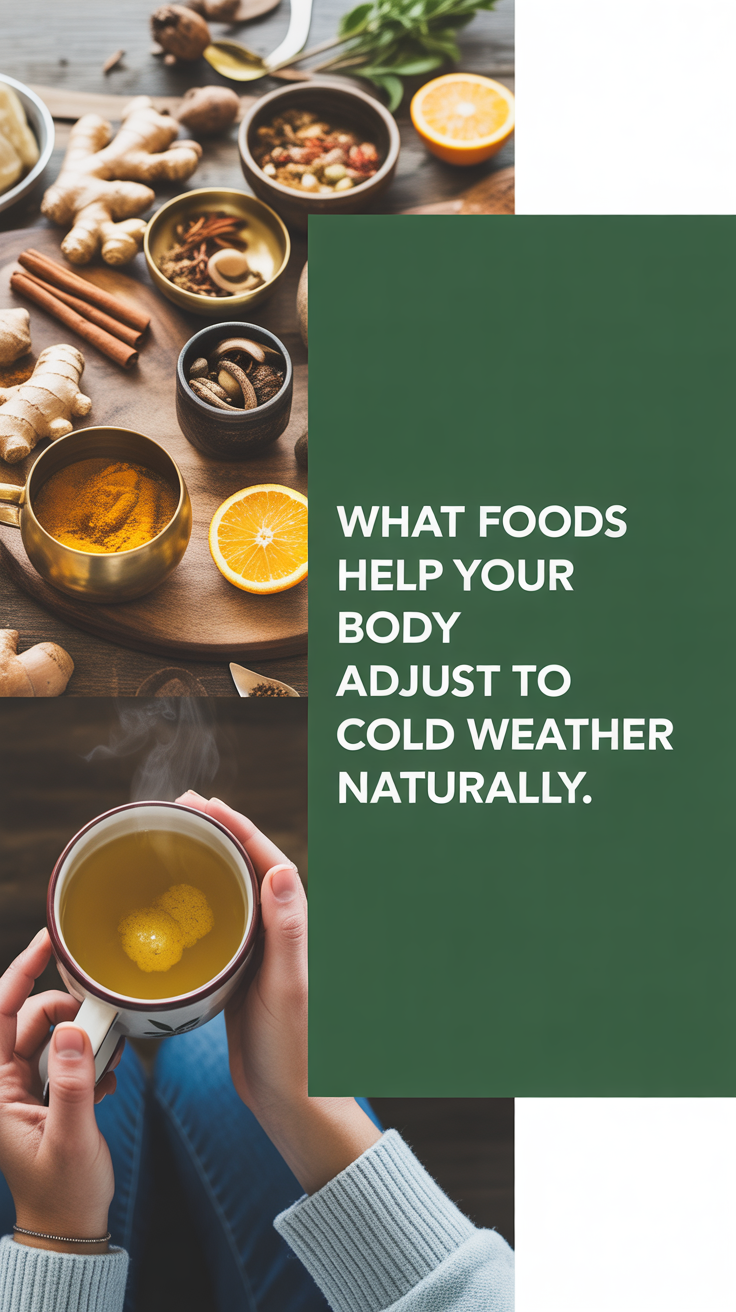
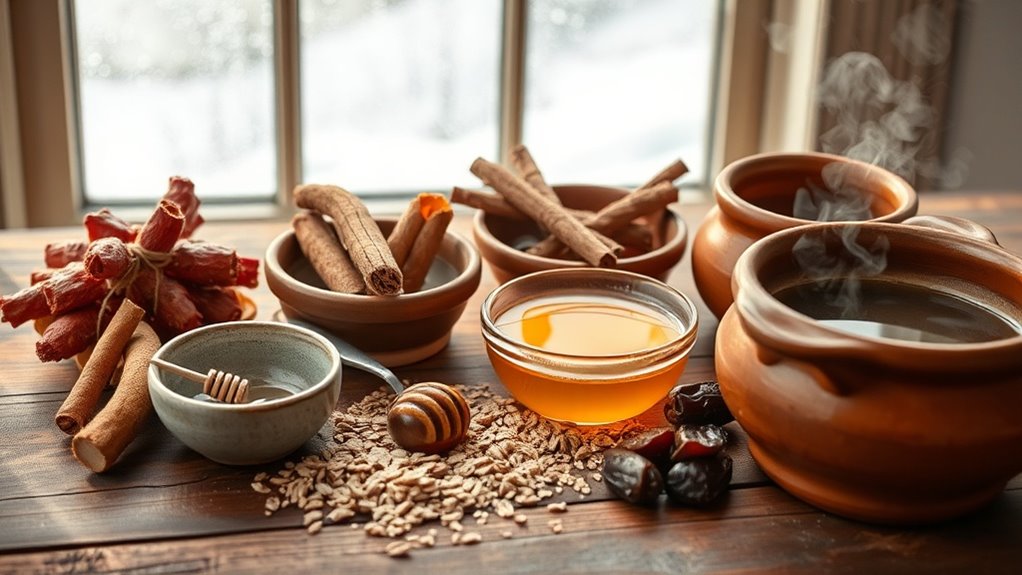
During cold weather months, certain spices trigger thermogenic responses that elevate your core body temperature through metabolic activation. Cayenne’s capsaicin increases metabolism and core temperature, while ginger stimulates thermogenesis and reduces inflammation. Cinnamon enhances circulation and heat retention, supporting cardiovascular function and glucose regulation.
Black pepper’s piperine improves nutrient bioavailability and blood flow, particularly when combined with turmeric’s anti-inflammatory curcumin. You’ll maximize warming effects by consuming these spices in herbal teas, soups, and broths. Ayurvedic medicine emphasizes seasonal adaptation through warming spices like cardamom, cloves, and nutmeg, which support respiratory function and digestive efficiency during winter months. Garlic acts as a vasodilator to improve circulation while preventing blood clumping and providing antiviral protection during cold weather.