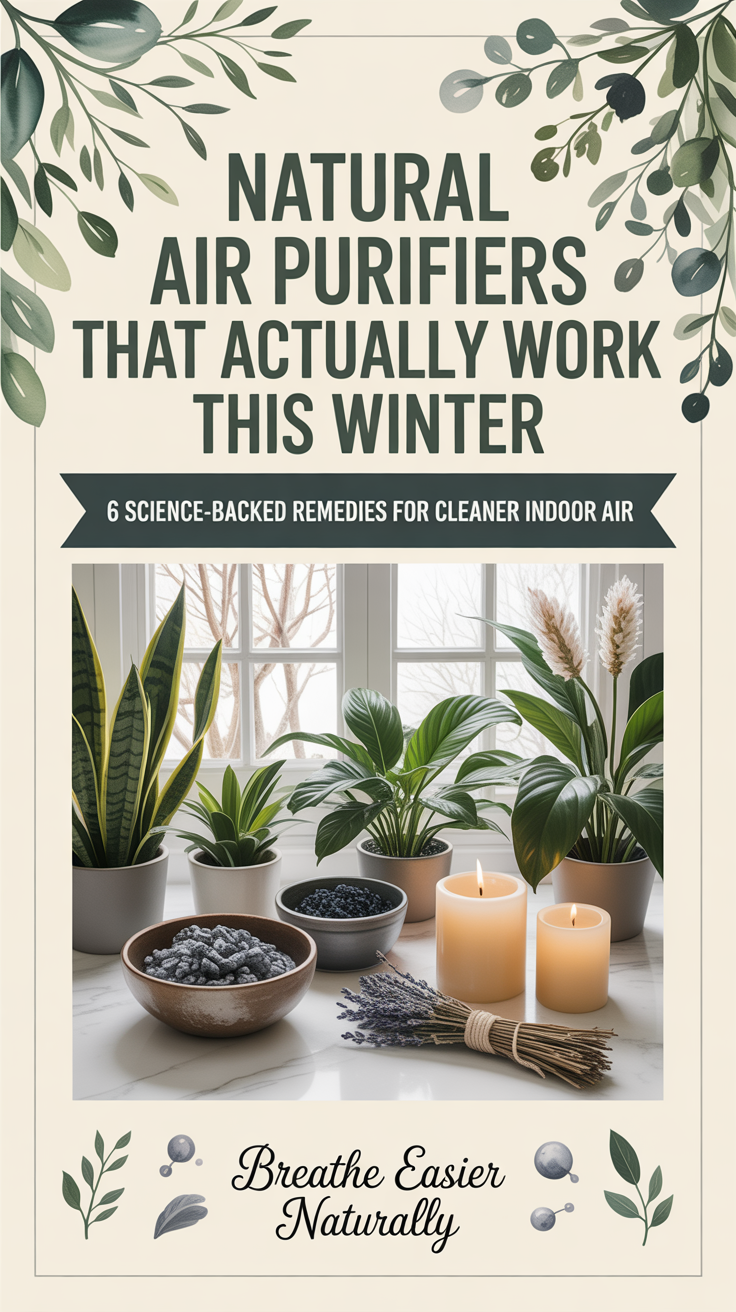
While you’re sealing your home against winter’s chill, you’re simultaneously trapping volatile organic compounds, particulate matter, and allergens that compromise respiratory function. The EPA reports indoor air can be two to five times more polluted than outdoor air, yet you’ll find most homeowners neglect this critical health risk during colder months. Understanding which evidence-based interventions effectively reduce indoor contaminants requires examining both mechanical filtration systems and biological purification methods that target specific pollutant categories.
Open Windows Daily for Natural Ventilation Even in Cold Weather
Opening windows for at least 10 minutes daily addresses a critical indoor air quality concern: residential environments consistently harbor pollutant concentrations two to five times higher than outdoor air. You’ll dilute accumulated CO₂, volatile organic compounds, and airborne contaminants through strategic cross-ventilation.
However, timing matters—opening windows during high-pollution events or winter heating periods introduces external pollutants rather than improving natural indoor air quality. Monitor outdoor air quality indices before ventilating. On cold days, brief intermittent openings maintain thermal comfort while exchanging stale air. Natural ventilation also helps manage humidity levels that typically rise during winter when homes remain sealed, preventing mold growth and condensation on windows.
This zero-cost intervention effectively reduces drowsiness, headaches, and respiratory irritation caused by sealed winter environments. Complement natural ventilation with air-purifying plants like snake plants and spider plants, which NASA research confirms naturally filter harmful toxins including formaldehyde and benzene while supporting oxygen production.
Use Air-Purifying Houseplants to Absorb Indoor Toxins
While houseplants demonstrably remove volatile organic compounds in controlled laboratory settings, you’ll need to understand their significant real-world limitations before relying on them for indoor air purification. NASA’s sealed-chamber tests showed 87% VOC removal within 24 hours, but the US EPA confirms houseplants don’t remove significant pollutants in typical homes.
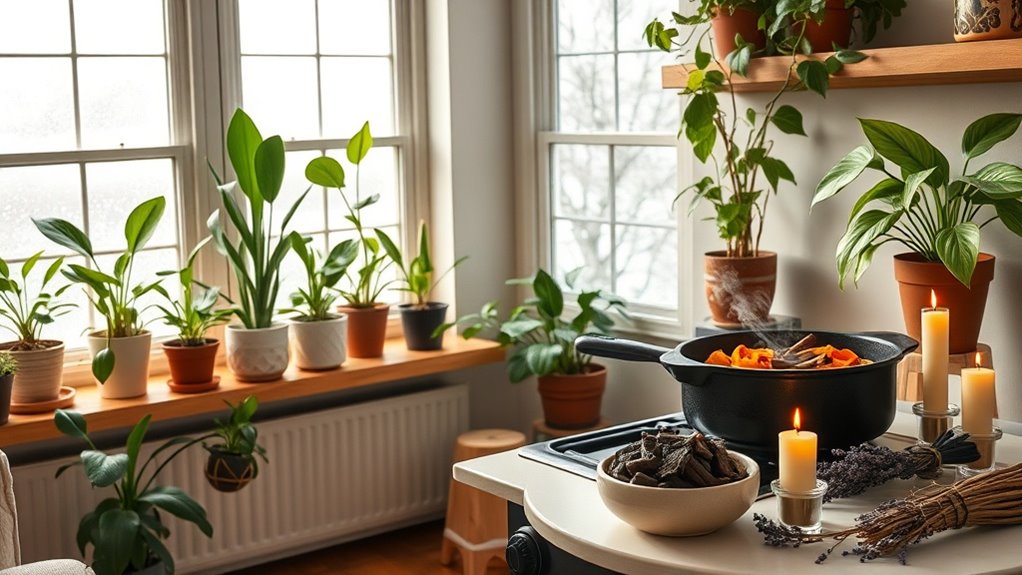
You’d require impractically high plant densities—far exceeding the recommended one plant per 100 square feet—to achieve meaningful air quality improvements. Species like Snake Plant and Spider Plant can absorb formaldehyde and benzene, though their effectiveness remains limited in open-room environments. During heating season when windows stay closed, indoor air can become particularly stagnant, making air quality solutions even more critical for health-conscious families. Additionally, overwatered specimens can promote mold growth, and certain species release allergenic pollen. Consider houseplants supplementary components within thorough air quality strategies, not standalone solutions.
Switch to Natural Cleaning Products and DIY Solutions
Conventional cleaning products are the primary source of hazardous volatile organic compound (VOC) emissions in residential spaces, contributing to respiratory irritation, asthma exacerbation, and long-term health risks.
You’ll reduce indoor VOC concentrations by up to 50% when switching to third-party certified green cleaners (EPA, Green Seal, UL ECOLOGO) or fragrance-free alternatives that emit markedly fewer harmful compounds.
DIY solutions using vinegar, baking soda, and castile soap offer cost-effective disinfection without synthetic fragrances or chemical off-gassing, minimizing your exposure to allergens and respiratory irritants.
Beyond cleaning products, maintaining optimal humidity levels between 30-50% through natural methods like strategic plant placement and proper ventilation further improves winter air quality by reducing airborne irritants and supporting respiratory health.
Benefits of Green Cleaners
Because traditional household cleaners emit volatile organic compounds (VOCs) like formaldehyde, benzene, and phthalates, they substantially degrade indoor air quality and elevate respiratory health risks. Green cleaners utilize plant-based, non-toxic ingredients that minimize VOC emissions, reducing asthma exacerbations, allergic reactions, and respiratory irritations.
You’ll lower surface chemical residues that pose ingestion and dermal absorption risks for children and pets. Enhanced IAQ from biodegradable formulations decreases airborne particulates and toxic gases, mitigating wheezing, coughing, and headaches. Eliminating synthetic fragrances reduces chemical sensitivity triggers. Pollutants can linger in the air long after cleaning activities, particularly in poorly ventilated winter spaces.
You’ll achieve lower long-term healthcare costs through decreased respiratory illness frequency while supporting environmental sustainability via reduced aquatic toxin loads and petrochemical dependency.
Homemade Cleaning Recipe Options
Moving from commercial cleaning products to homemade alternatives eliminates exposure to hazardous volatile organic compounds while maintaining antimicrobial efficacy through evidence-based formulations. You’ll need white vinegar as a disinfectant base, baking soda for abrasive deodorizing action, and essential oils (tea tree, eucalyptus) providing antibacterial properties.
A standard all-purpose cleaner combines ½ cup vinegar, 2 tablespoons baking soda, and 10 drops essential oil in water within glass spray bottles. However, vinegar and baking soda neutralize each other, reducing the mixture’s cleaning power, so vinegar alone may prove more effective. For mold remediation, tea-tree oil with baking soda proves effective. Carpet fresheners utilize baking soda, borax, and essential oils to reduce allergens and pathogen loads while neutralizing airborne particulates.
Control Humidity Levels With Humidifiers and Dehumidifiers
You’ll need to maintain indoor relative humidity between 30–50% to prevent both respiratory irritation from dry air and mold proliferation from excess moisture. Levels below 30% increase airborne contaminants and cause sinus inflammation, while humidity exceeding 50% promotes allergenic dust mites and structural damage from fungal growth.
Use calibrated hygrometers to monitor your indoor environment and deploy humidifiers when levels drop below 30% or dehumidifiers when readings exceed 50%. In cold climates, heated indoor air can plummet to 10% relative humidity without active humidification, significantly increasing susceptibility to winter respiratory illnesses. For a natural approach, diy humidifier essential oils methods can effectively increase room humidity while adding aromatherapy benefits that may support respiratory comfort and relaxation.
Maintain Optimal Humidity Range
Indoor humidity fluctuations pose significant risks to respiratory health, structural integrity, and thermal comfort, particularly during winter months when heating systems amplify moisture imbalances. You must maintain 30-40% relative humidity to prevent mucosal membrane desiccation and pathogen susceptibility. Deploy hygrometers away from thermal sources for accurate monitoring.
Below 30% RH triggers xerosis, pharyngeal irritation, and exacerbates COPD symptoms. Exceeding 50% RH promotes condensation-induced mold proliferation and structural degradation. Cold air’s reduced moisture-holding capacity necessitates vigilant daily monitoring during temperature extremes. Asthmatic individuals may require 45% RH for ideal bronchial function and sleep quality maintenance.
Prevent Mold and Dryness
Excessive moisture and inadequate humidity create dual pathogenic environments that compromise respiratory function and structural durability throughout heating seasons. Deploy dehumidifiers in basements and bathrooms to maintain 30-50% relative humidity, inhibiting mold proliferation and dust mite colonization.
Concurrently, humidifiers prevent mucosal desiccation in over-dried spaces, but require hygrometer monitoring to avoid over-humidification. You must inspect and seal plumbing leaks immediately, as persistent wetness enables fungal establishment within 24-48 hours.
Install exhaust fans near moisture-generating activities and employ mold-resistant materials during renovations. Regular equipment maintenance prevents microbial contamination that degrades air quality despite humidity regulation.
Install HEPA Air Purifiers in High-Traffic Rooms
When outdoor air quality deteriorates during winter months, installing HEPA air purifiers in high-traffic rooms can cut indoor fine particulate matter (PM2.5) concentrations by up to 55%. These filters remove 99.97% of 0.3-micron particles through interception, impaction, diffusion, and sieving mechanisms.
Optimal deployment strategies include:
- Positioning units in rooms with elevated pollutant sources
- Operating continuously at higher airflow settings
- Limiting window ventilation to maintain filtration effectiveness
HEPA purifiers reduce health risks 2.94 times during high-pollution events and lower indoor PM2.5 to 9.7 µg/m³—meeting WHO guidelines while decreasing respiratory symptoms and cancer risks.
Simmer Herbs and Spices for Natural Air Freshening
While HEPA filtration addresses particulate matter mechanically, thermal diffusion of botanical compounds offers complementary benefits for indoor air quality through volatile organic compound displacement. You’ll release antimicrobial terpenes by simmering eucalyptus, thyme, and rosemary—compounds that demonstrate verifiable antibacterial properties.
Citrus peels (lemon, orange) contain d-limonene, which oxidizes airborne pollutants while providing respiratory decongestant effects. Cinnamon bark and cloves release eugenol, offering antiviral activity during influenza season. However, recognize that excessive moisture from prolonged simmering risks mold proliferation. Maintain humidity below 50% and guarantee adequate ventilation.
This method supplements mechanical filtration rather than replacing it for thorough air quality management.
Choose Beeswax Candles and Store Chemicals Properly
Beyond airborne botanical compounds, combustion-based interventions present a paradox: you’re introducing controlled fire into your environment to improve air quality. Beeswax candles produce fewer toxic byproducts (benzene, toluene) than petroleum-derived paraffin alternatives. While negative ion emission claims lack robust scientific validation, beeswax’s cleaner combustion profile reduces respiratory irritant exposure.
Proper chemical storage mitigates indoor VOC contamination:
- Seal containers tightly to prevent volatile compound escape
- Store in cool, ventilated areas away from living spaces
- Dispose of expired materials per local hazardous waste protocols
However, beeswax candles aren’t substitutes for mechanical air purification systems when addressing significant indoor air quality concerns.