Cold hands and feet during winter aren’t just uncomfortable—they’re signs your body is restricting blood flow to protect your core temperature. Natural methods like movement breaks, warming spices, compression techniques, and hydration strategies can support healthy circulation and may help relieve that numbness in as little as 15-20 minutes. These approaches work with your body’s natural processes rather than against them, requiring no special equipment or supplements. Here are five evidence-based techniques that can help keep your extremities warm all season long.
Stay Active With Indoor and Outdoor Winter Exercises
Try Brisk Walking to Boost Circulation Naturally
Brisk walking can help improve blood flow throughout your body in just 20-30 minutes. This simple activity may support better oxygen delivery to your tissues and help keep your extremities warmer during cold months.
Walking increases your heart rate gently, which encourages blood vessels to expand and promotes healthy circulation. The rhythmic movement of your legs also activates muscles that push blood back toward your heart. This is especially important during freezing temperatures when cold weather can significantly reduce blood flow to your extremities.
How to do it:
• Start with a 5-minute warm-up walk at a slower pace indoors
• Gradually increase to a brisk pace where you can still talk comfortably
• Aim for 20-30 minutes of continuous walking
• Dress in layers if exercising outdoors in cold weather
• Walk 3-5 times per week for best circulation support
Begin your warm-up indoors before heading outside to help your body adjust to temperature changes gradually.
Use Indoor Cycling for Winter-Friendly Cardio
Indoor cycling may help enhance blood flow while keeping you comfortable in a temperature-controlled environment. This low-impact exercise can support cardiovascular health and promote circulation without exposure to cold air.
The pedaling motion engages large leg muscles repeatedly, which helps pump blood efficiently throughout your body and may reduce sluggish circulation.
How to do it:
• Warm up with 5 minutes of easy pedaling
• Cycle at moderate intensity for 20-30 minutes
• Keep resistance challenging but manageable
• Stay hydrated throughout your session
• Practice 3-4 times weekly for circulation benefits
Monitor how you feel during exercise and stop if you experience chest discomfort or unusual shortness of breath.
Add Resistance Training to Support Blood Flow
Resistance training with light weights or bands may help strengthen your cardiovascular system and promote healthy circulation. Regular strength work can support better blood vessel function and oxygen delivery to muscles.
When you contract muscles against resistance, you create pressure that encourages blood flow to working tissues and may improve overall vascular health over time.
How to do it:
• Start with 5-10 minutes of light movement to warm up
• Use light dumbbells, resistance bands, or bodyweight exercises
• Perform 8-12 repetitions of each exercise for 2-3 sets
• Focus on major muscle groups like legs, arms, and core
• Practice 2-3 times per week with rest days between sessions
Consult your healthcare provider before starting any new exercise routine, especially if you have existing health concerns.
Warm up From the Inside With Circulation-Boosting Foods and Drinks
Try Ginger to Boost Circulation Naturally
Ginger may help improve blood flow and warm your body from the inside out, with effects you might notice within 30-60 minutes of consumption. This warming root has been used for centuries to support healthy circulation throughout the body.
Ginger contains compounds called gingerols that can help relax blood vessels, allowing blood to flow more easily to your hands, feet, and other extremities.
How to use it:
• Steep 1-2 teaspoons fresh grated ginger in hot water for 10 minutes
• Drink 2-3 cups of ginger tea throughout the day
• Add fresh ginger to stir-fries, soups, or smoothies
• Try ginger supplements (500-1000mg daily) after consulting your doctor
• Combine with lemon and honey for added flavor
Start with small amounts if you’re new to ginger, as it can feel quite warming and may cause mild stomach upset in sensitive individuals.
Eat Dark Chocolate to Support Blood Vessel Health
Dark chocolate with 70% or higher cocoa content may help support the inner lining of your blood vessels, potentially improving circulation within a few hours. This treat offers cardiovascular benefits while satisfying your sweet tooth.
The flavonoids in dark chocolate can support endothelial function, which helps blood vessels stay flexible and responsive to your body’s circulation needs.
How to use it:
• Choose dark chocolate with at least 70% cocoa content
• Eat 1-2 small squares (about 1 ounce) daily
• Enjoy it mid-afternoon as a snack with green tea
• Look for minimally processed varieties with simple ingredients
• Avoid milk chocolate, which contains fewer beneficial compounds
Keep portions moderate, as chocolate is calorie-dense—a little goes a long way for potential circulation benefits.
Drink Green Tea for Vascular Support
Green tea may help support healthy blood vessels and improve circulation throughout your body, with regular consumption showing potential benefits over several weeks. This antioxidant-rich beverage offers a gentle, sustained approach to vascular health.
Green tea contains catechins that can support the flexibility and function of blood vessel walls, helping blood flow more smoothly to all areas of your body.
How to use it:
• Brew 1-2 cups of green tea daily using water just below boiling
• Steep for 2-3 minutes to avoid bitterness
• Drink it warm in the morning or early afternoon
• Avoid adding sugar; try lemon or mint for flavor
• Choose quality loose-leaf or organic tea bags when possible
Limit consumption after 2 PM if you’re sensitive to caffeine, as green tea contains about 25-50mg per cup.
Add Cayenne Pepper to Enhance Peripheral Circulation
Cayenne pepper’s natural heat may help improve blood flow to your extremities, with warming effects you can feel within 15-30 minutes. This spicy addition supports circulation while adding flavor to your meals.
Capsaicin, the compound that makes cayenne hot, can stimulate blood flow and may help blood vessels dilate, especially in your hands and feet.
How to use it:
• Add a pinch (1/8 to 1/4 teaspoon) to warm drinks or food
• Mix into soups, stews, or sauces during cooking
• Start with very small amounts and gradually increase
• Try it in warm lemon water first thing in the morning
• Combine with ginger for enhanced circulation support
Always start conservatively with cayenne—too much can cause digestive discomfort, and you can always add more to build tolerance.
Sip Warm Herbal Teas for Thermal Circulation Benefits
Warm herbal teas provide immediate thermal stimulation that may encourage better blood flow while hydrating your body. The combination of heat and beneficial plant compounds offers gentle circulation support throughout the day.
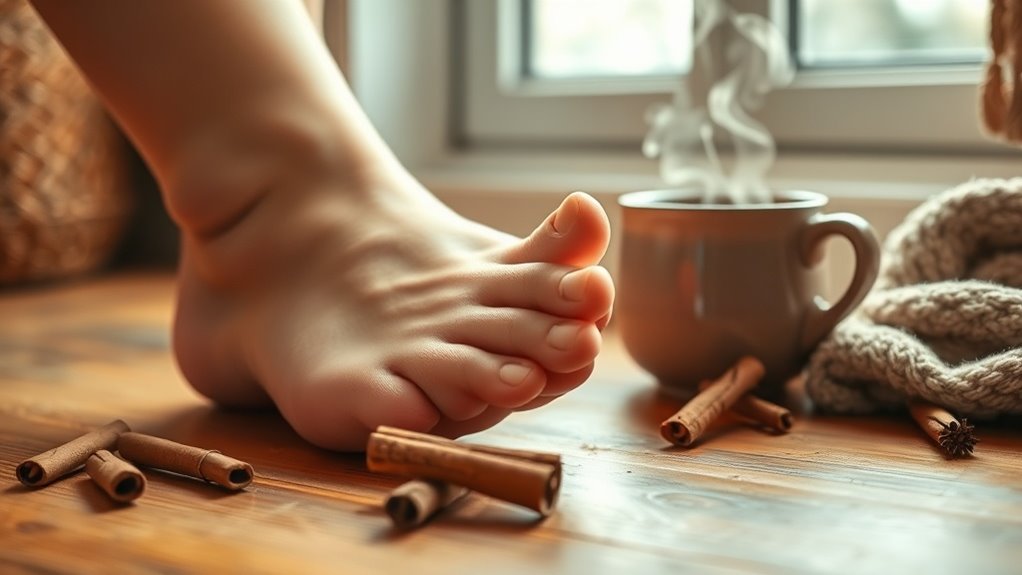
The warmth from hot beverages causes blood vessels near your core to dilate, and as your body distributes this heat, circulation naturally increases to help regulate temperature. Cinnamon is another excellent addition to your tea rotation, as this warming spice has been valued in traditional practices for supporting the body’s internal heating mechanisms during cold weather months.
How to use it:
• Choose circulation-friendly herbs like hibiscus, cinnamon, or rooibos
• Drink 3-4 cups of warm herbal tea spread throughout the day
• Hold the warm mug in your hands to directly warm cold fingers
• Sip slowly to maintain gentle, sustained warmth
• Rotate between different herbal varieties for diverse benefits
Keep a thermos of warm tea at your desk or in your bag for convenient circulation support whenever you need it.
Layer Strategically to Maintain Body Heat and Blood Flow
Layer Strategically to Keep Hands and Feet Warm
Proper layering may help maintain warmth in your extremities by supporting healthy circulation when temperatures drop. This approach keeps your core warm, which can encourage better blood flow to your fingers and toes throughout the day.
Cold weather naturally causes your body to reduce blood flow to hands and feet as it works to protect your core temperature. Keeping your center warm helps signal your body to maintain circulation to your extremities.
How to layer effectively:
• Start with a moisture-wicking base layer against your skin
• Add an insulating middle layer (fleece or wool works well)
• Top with a windproof, breathable outer shell
• Choose loose-fitting clothes that don’t compress your limbs
• Keep your torso especially warm with a vest if needed
Avoid tight waistbands, cuffs, or socks that might restrict circulation and make cold extremities worse. Just as pets benefit from omega-3 rich supplements to support their skin barrier function during winter, humans can also incorporate these nutrients to help maintain healthy circulation in cold conditions.
Massage and Dry Brushing Techniques for Better Circulation
Try Massage Techniques to Support Healthy Circulation
Targeted massage with upward strokes may help stimulate blood flow* in your arms and legs by gently moving fluid through vessels *toward your heart. This simple technique could support peripheral circulation in as little as 5-10 minutes.
Massage works by applying mechanical pressure that might encourage fluid movement through your tissues and blood vessels, similar to how compression socks function.
How to massage for circulation:
• Apply natural oil or lotion to clean skin on your limbs
• Use firm, upward strokes starting at your hands or feet
• Always move toward your heart (proximally)
• Spend 2-3 minutes on each limb
• Repeat daily or as needed for comfort
Avoid massaging areas with varicose veins, wounds, or inflamed skin to prevent irritation.
Use Dry Brushing Before Showers to Promote Flow
Dry brushing with a natural-bristle brush may support circulation by stimulating your skin and underlying tissues before you bathe. This quick technique could help encourage lymphatic drainage and blood flow in your extremities.
The gentle friction from brushing might activate surface blood vessels and promote fluid movement through a light mechanical effect on your skin.
How to dry brush effectively:
• Use a natural-bristle brush on completely dry skin
• Brush with gentle pressure in upward motions toward your heart
• Start at your feet and hands, moving proximally
• Spend 3-5 minutes before showering
• Follow with your regular bathing routine
Skip dry brushing over irritated skin, open wounds, or visible varicose veins to avoid tissue damage.
For additional warmth and circulation support during cold weather, consider applying a warming ginger compress to sore muscles after your massage or dry brushing session.
Herbal Remedies and Supplements That Improve Winter Blood Flow
Try Ginkgo Biloba to Support Winter Circulation
Ginkgo biloba may help improve blood flow to your extremities during cold weather by supporting the dilation of small blood vessels. Many people notice warmer hands and feet within 2-4 weeks of consistent use.
Ginkgo works by helping relax blood vessel walls, which allows blood to move more easily through narrow capillaries that tend to constrict in winter.
How to use it:
• Take 120-240 mg of standardized extract daily, split into 2-3 doses
• Choose supplements with 24% flavone glycosides and 6% terpene lactones
• Take with meals to improve absorption and reduce stomach upset
• Allow 4-6 weeks to notice full effects
• Use consistently throughout winter months
Start with a lower dose to assess tolerance, and avoid taking before bedtime as it may interfere with sleep.
Eat Cayenne Pepper to Warm Up from Within
Cayenne pepper can help stimulate blood vessel dilation, which may improve circulation to cold fingers and toes within 30-60 minutes of consumption. The warming sensation you feel is your blood vessels opening up.
Capsaicin, the compound that makes cayenne spicy, triggers your body to widen blood vessels and increase blood flow to the skin’s surface.
How to use it:
• Add ¼-½ teaspoon of cayenne to warm water, tea, or soup
• Mix into meals like stir-fries, stews, or scrambled eggs
• Start with small amounts and gradually increase as tolerated
• Consume 1-3 times daily during cold weather
• Combine with a bit of fat (like olive oil) for better absorption
Keep a glass of milk nearby—it neutralizes the burn better than water if it’s too spicy.
Take Omega-3s to Support Smooth Blood Flow
Omega-3 fatty acids may help reduce blood thickness and support the health of blood vessel linings, which can improve overall circulation during winter. You might notice benefits after 2-3 months of regular use.
These essential fats help keep blood flowing smoothly by supporting vessel flexibility and reducing substances that can make blood more sluggish.
How to use it:
• Take 1,000-2,000 mg of combined EPA and DHA daily
• Choose high-quality fish oil, krill oil, or algae-based supplements
• Take with meals to enhance absorption and minimize fishy aftertaste
• Consider eating fatty fish (salmon, mackerel, sardines) 2-3 times weekly
• Store supplements in the refrigerator to maintain freshness
Look for supplements with third-party testing to ensure purity and potency.
Use Ginger to Promote Healthy Circulation
Ginger may help support blood flow by discouraging platelets from clumping together, which allows blood to move more freely through your vessels. Fresh or dried ginger can provide warming relief within an hour.
Ginger contains natural compounds that help keep blood flowing smoothly while producing a gentle warming sensation from the inside out.
How to use it:
• Steep 1-2 teaspoons of fresh grated ginger in hot water for 10 minutes
• Drink 2-3 cups of ginger tea throughout the day
• Add fresh ginger to stir-fries, soups, or smoothies
• Take 1-2 grams of powdered ginger in capsule form daily
• Combine with lemon and honey for a soothing winter drink
Fresh ginger typically provides stronger effects than ground ginger, so adjust amounts accordingly.
Important reminder: Consult your healthcare provider before starting any of these supplements, especially if you’re taking blood-thinning medications or have a bleeding disorder.