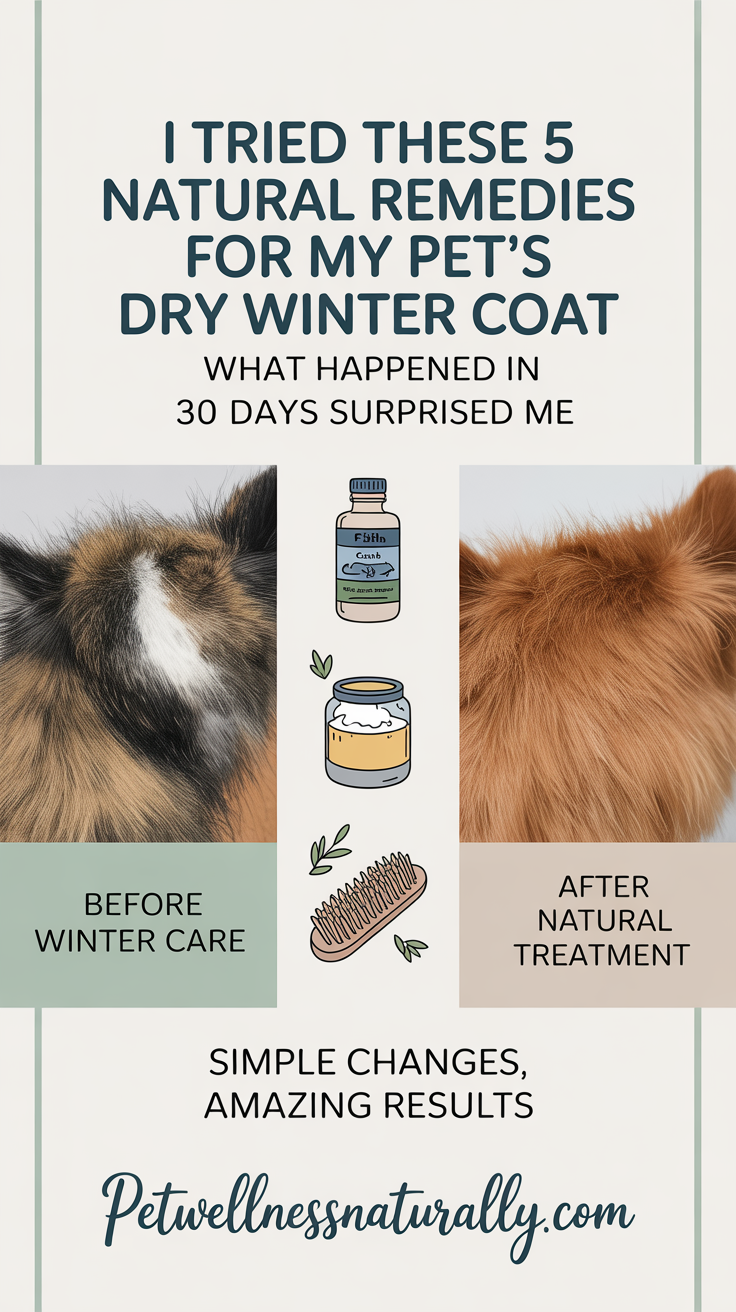

5 Ways to Keep Your Pet’s Coat Healthy in Winter Naturally
Watching your pet’s coat turn dry and brittle when winter hits can be frustrating for any pet parent. Natural solutions like omega-rich foods, coconut oil treatments, and proper grooming techniques can help restore moisture and shine to your pet’s fur in just a few weeks—no harsh chemicals needed. These gentle methods work with your pet’s natural skin balance to support healthier winter coats. Here are five natural approaches that may actually make a difference this season.
Boost Skin and Coat Health With Omega-3 Fish Oil Supplements
Try Omega-3 Fish Oil to Boost Winter Coat Health
Omega-3 fish oil supplements may help restore moisture to your pet’s dry winter coat and ease itching caused by indoor heating. Daily supplementation can support coat shine and reduce flaking, with improvements often visible within 4-6 weeks.
Fish oil contains EPA and DHA fatty acids that support your pet’s natural skin barrier and may help regulate inflammatory responses. These nutrients enrich the skin’s lipid content and encourage healthy sebum production for better hydration.
How to use it:
• Choose a high-quality fish oil supplement designed for pets
• Follow dosage instructions based on your pet’s weight
• Mix the oil into your pet’s regular food once daily
• Give with meals to improve absorption and reduce fishy burps
• Continue throughout winter months for consistent coat support
Store fish oil in the refrigerator to keep it fresh and prevent rancidity. For cats specifically, adding approximately 1/4 teaspoon fish oil to daily meals provides an effective starting dose that veterinarians commonly recommend for winter skin support.
Apply Coconut Oil as a Natural Conditioning Treatment
Apply Coconut Oil as a Natural Conditioning Treatment
Coconut oil may help soften your pet’s coat and support skin moisture when used as a topical treatment. This natural option can condition fur and potentially ease dry, flaky skin within regular use.
Virgin coconut oil contains fatty acids that can penetrate hair shafts and may help lock in hydration. These natural oils might support your pet’s skin barrier without synthetic ingredients.
How to apply it:
• Use virgin, organic coconut oil without additives or fragrances
• Apply a thin layer to affected areas after bathing while coat is still slightly damp
• Gently massage into skin and fur using circular motions
• Limit usage to 2-3 times weekly to prevent greasiness
• Start with small amounts—a little goes a long way
Monitor your pet during the first few applications to check for any adverse reactions or excessive licking. Just as coconut oil can restore moisture to human skin during harsh winter conditions, it offers similar protective benefits for your pet’s coat and skin health.
Maintain Optimal Indoor Humidity Levels for Your Pet
Use a Humidifier to Support Your Pet’s Comfort in Winter
A humidifier can help restore moisture to dry indoor air during winter months, which may support your pet’s respiratory comfort and skin health. Maintaining 30-50% relative humidity might reduce issues like dry skin, static electricity, and brittle fur that often occur when heating systems run constantly.
Heating systems pull moisture from the air, and pets can feel the effects through their skin and breathing passages. Adding humidity back creates a more balanced environment that may help their natural moisture barriers function better.
How to maintain healthy humidity levels:
• Place a hygrometer in main living areas to monitor humidity levels
• Run a humidifier when levels drop below 30%
• Position the humidifier in rooms where your pet spends most time
• Clean the humidifier thoroughly once a week with pet-safe cleaning solutions
• Refill with fresh water daily to prevent bacterial buildup
Weekly cleaning is essential since stagnant water in humidifiers could harbor bacteria that might affect your pet’s health. If you prefer not to use electric humidifiers, you can also try water bowl evaporation by placing shallow bowls of water near heat sources or using wet towels on radiators to naturally increase moisture levels.
Use Gentle Oatmeal Baths to Soothe Dry Winter Skin
Use Gentle Oatmeal Baths to Soothe Dry Winter Skin
Colloidal oatmeal baths may help relieve itchy, flaky skin by creating a protective barrier that locks in moisture for several hours. Most pets experience noticeable comfort within 10-15 minutes of soaking.
Oats contain natural compounds called avenanthramides that can support the skin’s ability to retain water and reduce irritation. The fine oat particles form a soothing film over dry patches.
How to give an oatmeal bath:
• Dissolve colloidal oatmeal in lukewarm water (never hot, as heat strips natural oils)
• Let your pet soak for 10-15 minutes while gently massaging the solution into affected areas
• Rinse minimally to preserve the protective oat layer on the skin’s surface
• Pat dry with a soft towel—avoid vigorous rubbing
• Repeat 2-3 times weekly during winter months
Use finely ground colloidal oatmeal rather than regular oats for better dissolving and skin contact. For enhanced benefits, you can also create honey-oat mixtures that combine oatmeal’s soothing properties with honey’s natural moisturizing effects.
Adjust Your Pet’s Diet With Nutrient-Dense Whole Foods
Add Omega-3 Fish Oil to Support Skin From Within
Fish oil supplements may help reduce inflammation and support your pet’s skin barrier function in 4-6 weeks of consistent use. This omega-3 source can ease itching and promote a healthier coat.
Omega-3 fatty acids work by supporting your pet’s natural anti-inflammatory response at the cellular level. These essential fats help maintain the skin’s protective moisture barrier.
How to add it to meals:
• Mix liquid fish oil into wet food or drizzle over kibble
• Start with the dosage recommended for your pet’s weight
• Serve with meals 1-2 times daily for better absorption
• Store in the refrigerator to prevent rancidity
• Give consistently for at least 6-8 weeks to see results
Look for wild-caught fish oil with no artificial additives for the best quality.
Feed Biotin-Rich Eggs for Stronger Skin and Coat
Cooked eggs can support keratin production, the protein that strengthens skin and fur. Your pet might show a shinier, healthier coat within 2-3 months of regular feeding.
Biotin (a B vitamin) found naturally in eggs helps support the building blocks your pet’s body uses to maintain healthy skin cells and hair follicles.
How to prepare and serve:
• Cook eggs thoroughly—scrambled, boiled, or poached without oil or seasonings
• Start with one egg 2-3 times per week for medium-sized pets
• Chop or mash and mix into regular food
• Adjust portions based on your pet’s size and caloric needs
• Monitor for any digestive sensitivity when first introducing
Raw eggs may interfere with biotin absorption, so always cook them first.
Include Lean Meats for Zinc to Aid Skin Repair
Zinc from chicken, turkey, or beef may help support your pet’s natural healing process and maintain healthy skin cell turnover. This essential mineral can promote faster recovery from minor irritations.
Zinc plays a key role in helping cells repair and regenerate. It supports the skin’s ability to maintain its protective barrier and respond to minor damage.
How to add to your pet’s diet:
• Choose lean, unseasoned meats without bones or excess fat
• Cook thoroughly and cut into bite-sized pieces
• Serve 3-4 times per week as part of balanced meals
• Rotate between chicken, turkey, and lean beef for variety
• Keep portions appropriate to your pet’s daily calorie requirements
Avoid processed meats with added salt, garlic, or onion powder.
Offer Vitamin E Through Pet-Safe Greens for Antioxidant Support
Small amounts of cooked spinach may help protect your pet’s skin cells from environmental stress through natural antioxidants. This can support overall skin resilience over time.
Vitamin E works as an antioxidant that helps neutralize potentially damaging compounds. It supports the skin’s natural defenses against everyday environmental factors.
How to prepare and feed:
• Steam or lightly cook fresh spinach until soft (never raw in large amounts)
• Chop finely and mix a teaspoon into regular meals
• Offer 1-2 times per week as a supplemental food
• Start with small portions to ensure digestive tolerance
• Combine with a small amount of healthy fat for better absorption
Spinach should be an occasional addition, not a daily staple, due to oxalate content.