
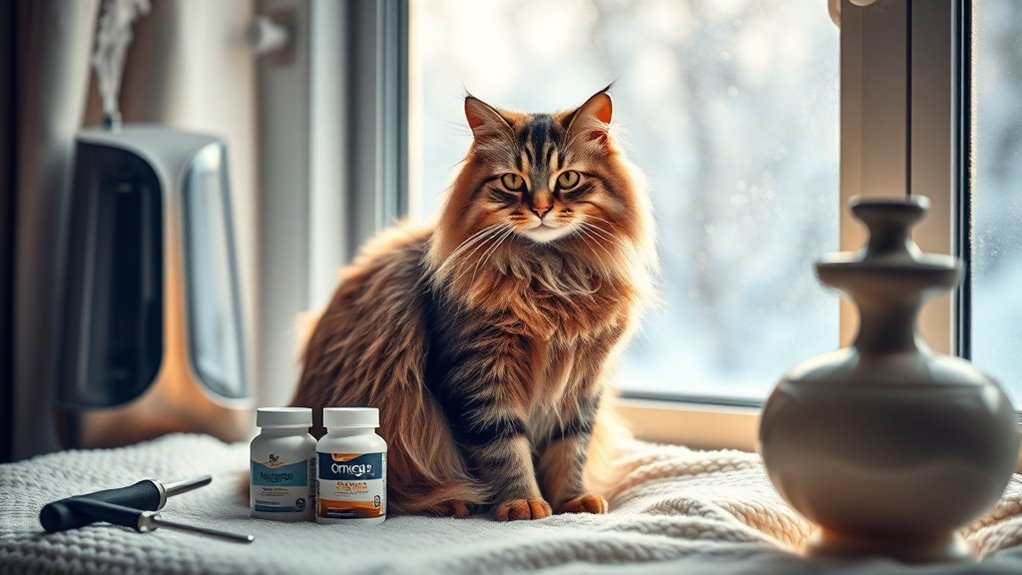
Watching your cat scratch constantly as winter arrives? You’re not alone—dry indoor heating and cold outdoor air can strip moisture from your cat’s skin, leaving it irritated and uncomfortable. Simple adjustments like adding humidity to your home, switching to moisturizing grooming products, and boosting omega-3s in their diet may help support healthier skin in just days. These natural, vet-approved approaches work quickly without expensive treatments or stressful vet visits. Here are eight practical ways to keep your cat comfortable all winter long.
Add Omega-3 Fatty Acids to Your Cat’s Diet
Add Omega-3 Fatty Acids to Your Cat’s Diet
Omega-3 supplements may help your cat maintain healthy skin during winter by supporting moisture retention when indoor heating dries out the air. These fatty acids could reduce flakiness and irritation within 4-6 weeks of consistent use.
Winter’s dry conditions can compromise your cat’s natural skin barrier. EPA and DHA omega-3s work as natural anti-inflammatory agents that may help strengthen skin’s ability to hold onto moisture.
How to add omega-3s to your cat’s meals:
• Give 20-55mg of combined EPA/DHA per pound of body weight daily
• Mix fish oil directly into wet food for easiest administration
• Choose cat-specific omega-3 supplements designed for feline digestion
• Serve with meals to improve absorption and reduce fishy breath
• Continue throughout winter months for best results
Start with lower doses and gradually increase to avoid digestive upset in sensitive cats. For optimal results, consider adding approximately 1/4 teaspoon fish oil to your cat’s daily meals as a convenient starting measurement.
Maintain Optimal Indoor Humidity Levels
Winter’s low humidity compromises the stratum corneum’s barrier function, leading to transepidermal water loss and subsequent xerosis in feline skin.
You’ll need to maintain indoor relative humidity between 30-50% using a quality humidifier to prevent these dermatological complications.
A hygrometer provides essential monitoring data to guarantee humidity levels remain within the therapeutic range that supports ideal skin hydration and barrier integrity.
If mechanical humidification isn’t available, strategic plant placement and water bowl evaporation can naturally help balance indoor moisture levels.
Use a Quality Humidifier
Use a Quality Humidifier to Ease Your Cat’s Dry Skin
A cool-mist humidifier can help restore moisture to your cat’s skin during dry winter months, potentially easing flakiness and irritation within a few days. Keeping indoor humidity at 40-50% may support your cat’s natural skin barrier.
Winter heating systems often drop humidity below 30%, which can dry out your cat’s skin and coat. Adding moisture back into the air helps keep their skin comfortable and hydrated.
How to use a humidifier for your cat:
• Place a cool-mist humidifier in rooms where your cat spends most time
• Maintain humidity levels between 40-50% for best results
• Use a hygrometer to monitor moisture levels daily
• Clean the unit once a week to prevent bacteria buildup
• Run continuously during heating season or as needed
Position the humidifier centrally in main living areas rather than directly next to your cat’s bed to ensure even moisture distribution.
Monitor Humidity With Hygrometer
Monitor Humidity With a Hygrometer for Healthier Cat Skin
A hygrometer can help you track indoor moisture levels to keep your home in the 40-50% humidity range that may support your cat’s skin health. This simple device gives you real-time readings so you can adjust conditions before dryness becomes a problem.
Dry air can pull moisture from your cat’s skin, while proper humidity levels might help maintain their natural skin barrier and reduce itching or flaking.
How to use a hygrometer effectively:
• Place digital hygrometers in rooms where your cat spends the most time
• Check readings twice daily—morning and evening
• Adjust your humidifier up or down to stay within 40-50% range
• Use multiple devices since humidity varies room to room
• Choose digital models over analog for more accurate measurements
Digital hygrometers offer better precision and are easier to read at a glance than older dial versions.
Adjust Your Cat’s Grooming Routine for Winter
Winter’s low humidity directly compromises your cat’s integumentary barrier function, necessitating modifications to standard grooming protocols.
You’ll need to increase brushing frequency to distribute sebaceous oils more effectively across the stratum corneum, which prevents transepidermal water loss and maintains skin pH.
Additionally, implementing anti-static measures during grooming sessions reduces mechanical trauma to the hair shaft and minimizes xerosis-related discomfort.
For cats experiencing paw pad dryness, warming 1/2 teaspoon of coconut oil between your palms and applying it in thin layers provides natural moisture retention that may help support healthy skin condition throughout winter months.
Increase Brushing Frequency
Brush More Often to Lock in Moisture
Brushing your cat more frequently during winter may help distribute natural oils across their coat and could reduce dry, flaky skin. Short-haired cats benefit from twice-weekly sessions, while long-haired breeds might need daily attention.
Winter air can strip moisture from your cat’s skin, and their body produces less natural oil during cold months. Regular brushing helps spread those protective oils from root to tip while removing dead skin cells that contribute to dryness.
How to brush for winter coat health:
• Use a metal-tined comb to reach through the undercoat effectively
• Brush in the direction of hair growth with gentle, even strokes
• Focus on areas prone to dryness like the back and sides
• Spend 5-10 minutes per session to stimulate skin circulation
• Brush short-haired cats twice weekly, long-haired breeds daily
Store your grooming tools in a warm room so the metal doesn’t feel cold against your cat’s skin during winter sessions.
Combat Static Electricity
Use a Leave-In Conditioning Spray to Reduce Static
Leave-in conditioning sprays with humectants may help neutralize static electricity on your cat’s fur in just minutes. These products work to balance electrical charges that build up during grooming sessions.
Humectants in these sprays attract and hold moisture from the air, which naturally dissipates the electrical imbalance causing static. The added moisture on the fur creates a conductive layer that prevents charge buildup.
How to apply the spray:
• Lightly mist the conditioning spray onto your hands first
• Gently smooth your dampened hands over your cat’s coat
• Focus on areas prone to static like the back and tail
• Apply before each brushing session
• Use 2-3 times weekly or as needed
Look for sprays specifically formulated for cats to ensure they’re safe if your pet grooms afterward.
Switch to a Metal Comb Instead of Plastic Tools
Metal grooming tools can help prevent static buildup by dissipating electrical charges as you brush. Unlike plastic combs that trap and amplify static, metal naturally conducts electricity away from your cat’s fur.
Metal’s conductive properties allow electrical charges to flow through the tool rather than accumulating on your cat’s coat. This continuous discharge keeps static from building up during grooming.
How to use metal grooming tools:
• Choose stainless steel or chrome-plated combs designed for cats
• Brush gently in the direction of fur growth
• Work in slow, smooth strokes rather than quick movements
• Clean the comb regularly to maintain conductivity
• Store in a dry place to prevent rust
Metal combs work best when combined with other static-reducing methods like humidifiers.
Run a Humidifier to Maintain Indoor Moisture Levels
A humidifier may help combat static electricity by keeping indoor humidity between 40-50%, which can reduce charge buildup on your cat’s fur. This method addresses the root cause of winter static issues.
Dry air below 30% relative humidity creates ideal conditions for static electricity to form. Adding moisture to the air helps electrical charges dissipate naturally before they accumulate on surfaces.
How to use a humidifier effectively:
• Place the unit in rooms where your cat spends most time
• Set humidity levels to 40-50% using a built-in hygrometer
• Run continuously during dry winter months
• Clean and refill the water reservoir every 2-3 days
• Position away from electronics and wooden furniture
Monitor humidity levels with a separate hygrometer to ensure you’re not creating excess moisture that could encourage mold.
Apply Moisturizing Balms to Paws and Dry Areas
Apply Pet-Safe Moisturizing Balm to Paws and Dry Skin
Cat-safe moisturizing balms may help protect paw pads and facial skin from cold weather damage. These petroleum-free formulas can create a barrier against harsh winter conditions while supporting natural moisture levels in delicate areas.
Cold air strips moisture from your cat’s skin, making paw pads and facial areas more prone to cracking. Pet-specific balms are designed to absorb safely if licked, unlike human products that might contain harmful ingredients.
How to apply protective balm:
• Choose a petroleum-free balm labeled safe for cats
• Gently massage a thin layer onto clean, dry paw pads before outdoor time
• Focus on the spaces between toes where dryness develops first
• Apply to any flaky or rough areas on nose or ear tips
• Reapply twice daily during cold weather months
Store balm at room temperature so it’s easy to spread when your cat needs protection. Some cat-safe balms contain coconut oil, which has natural moisturizing properties that may help support the skin’s protective barrier during winter months.
Increase Your Cat’s Water Intake and Hydration
Set Up Multiple Water Stations Around Your Home
Fresh water stations placed in different locations can encourage your cat to drink more throughout the day, potentially increasing their hydration by making water constantly accessible. Cats may drink up to 60ml per kilogram of body weight when water’s readily available.
Multiple water sources work because cats naturally prefer drinking from different spots—it mimics finding fresh water sources in the wild. Room-temperature water also appeals more to their preferences than cold water straight from the tap.
How to set it up:
• Place 3-4 shallow bowls in quiet areas away from litter boxes
• Fill with fresh, room-temperature water daily
• Position stations on different floors or in various rooms
• Keep bowls clean and rinse them every 1-2 days
• Avoid placing water next to food bowls, as cats prefer separation
Check water levels each evening to gauge how much your cat’s drinking from each station.
Try a Fountain-Style Water Dispenser
Cat water fountains with moving water can significantly boost drinking interest, as the flowing motion and sound may attract cats who ignore still water bowls. Many cats increase their water intake within days of switching to a fountain system.
The constant circulation keeps water oxygenated and fresh-tasting, while the movement triggers cats’ natural instinct to drink from running streams. The gentle sound can also draw their attention throughout the day.
How to use it:
• Choose a quiet fountain with adjustable flow settings
• Place it in a calm area where your cat spends time
• Clean the filter weekly and change it monthly
• Wash all fountain parts every 3-5 days to prevent buildup
• Keep the water level topped up so the pump doesn’t run dry
Start with the lowest flow setting if your cat seems hesitant around the fountain.
Add Moisture-Rich Foods to Their Diet
Wet cat food or water-added meals can supplement your cat’s hydration if they’re not drinking enough from bowls alone, providing up to 80% moisture content compared to dry food‘s 10%. This method works especially well for cats who simply won’t drink adequate water.
Moisture from food absorbs directly during digestion, helping cats meet their hydration needs through eating. Cats evolved getting most hydration from prey, so this approach aligns with their natural biology.
How to feed it:
• Mix 1-2 tablespoons of water into wet food before serving
• Offer wet food 2-3 times daily if possible
• Add low-sodium chicken broth to dry kibble for moisture boost
• Gradually transition if your cat currently eats only dry food
• Monitor to ensure they’re eating the moistened food fully
Warm the mixture slightly (room temperature or just above) to enhance the aroma and appeal.
Monitor Your Cat’s Daily Water Intake
Tracking water consumption helps you identify potential hydration issues early and ensure your cat’s getting approximately 60ml per kilogram of body weight daily. Most cats need between 150-300ml depending on their size.
Regular monitoring lets you spot changes that might indicate health concerns or simply confirm your hydration strategies are working. Small decreases can signal problems before other symptoms appear.
How to track it:
• Measure water you pour into bowls using a measuring cup
• Check and note remaining water at the same time each day
• Calculate the difference to find daily intake amounts
• Keep a simple log for one week each month
• Watch for sudden drops of 25% or more in consumption
If intake stays consistently low despite multiple water sources, consider adding more wet food to their meals.
Limit Bathing Frequency During Cold Months
Bathe Your Cat Less Often in Winter Months
Reducing bath frequency to once every 8-12 weeks may help preserve your cat’s natural skin oils during cold, dry weather. This gentler approach can support healthier skin and coat condition when indoor heating tends to cause dryness.
Winter air strips moisture from skin faster, and your cat’s natural oils act as a protective barrier. Bathing too frequently might remove these oils, potentially leading to dry, flaky skin that takes longer to recover in cold conditions.
How to adjust your cat’s bathing routine:
• Space baths 8-12 weeks apart during fall and winter months
• Monitor your cat’s coat between baths for excess oil or odor
• Brush regularly (2-3 times weekly) to distribute natural oils
• Only bathe sooner if your cat gets visibly dirty or develops odor
• Resume normal bathing frequency once warmer weather returns
If your cat has skin conditions, check with your vet before extending time between baths.
Use Moisturizing, pH-Balanced Cat Shampoo
pH-balanced shampoos formulated specifically for cats may help maintain healthy skin moisture levels during winter baths. These gentle formulas can support your cat’s natural skin barrier without causing irritation or excessive dryness.
Cat skin has a different pH level than human skin (around 6.2-7.2 versus 4.5-5.5). Using products matched to feline skin chemistry might prevent disruption of beneficial bacteria and natural oils that protect against environmental stress.
How to choose and use cat-safe shampoo:
• Select products labeled “pH-balanced for cats” with moisturizing ingredients
• Look for formulas containing oatmeal, aloe, or coconut oil
• Dilute shampoo with warm water before applying (if instructions allow)
• Massage gently into coat and rinse thoroughly to remove all residue
• Use sparingly—a little goes a long way for most cats
Avoid human shampoos or dog products, as these could strip protective oils your cat needs.
Keep the Room Warm During Bath Time
Maintaining room temperature above 72°F during bathing may help prevent your cat from getting chilled and could make the experience less stressful. Warm conditions can support comfort and faster drying, especially important when cats are wet and vulnerable to cold.
Cats lose body heat rapidly when their fur is wet, and cold stress might weaken their immune response temporarily. A warm environment helps them maintain normal body temperature while their coat dries naturally or with assistance.
How to create a warm bathing space:
• Heat the bathroom to 72-75°F before bringing your cat in
• Close windows and doors to eliminate drafts
• Use a space heater if needed (placed safely away from water)
• Warm towels in the dryer for 5 minutes before drying your cat
• Keep your cat in the warm room until completely dry
Never use a hair dryer on high heat, as this could burn sensitive skin or cause anxiety.
Protect Your Cat From Heating System Dryness
Use a Humidifier to Keep Your Cat’s Skin Comfortable
A humidifier can help maintain indoor moisture levels between 40-50%, which may support your cat’s skin barrier and respiratory comfort during heating season. This simple addition to your home could ease dryness-related discomfort when heating systems run continuously.
Heating systems often drop household humidity below 30%, which can pull moisture from your cat’s skin and airways. Adding moisture back into the air may help keep their skin and breathing passages more comfortable.
How to use a humidifier for your cat:
• Choose a cool-mist humidifier and place it in rooms where your cat spends time
• Use a hygrometer to monitor humidity levels and keep them at 40-50%
• Clean the humidifier every 2-3 days to prevent bacteria buildup
• Refill with fresh water daily
• Run continuously during heating season or as needed
Check the hygrometer daily during peak heating months to ensure moisture levels stay consistent.
Position Cat Beds Away From Direct Heat Sources
Moving your cat’s resting areas away from heat vents and radiators may help reduce exposure to concentrated dry air. This simple adjustment could support their skin’s natural moisture and comfort levels throughout winter.
Direct heat creates zones of extremely dry air that can draw moisture from your cat’s skin and coat faster than normal. Creating distance from these sources may help minimize this drying effect.
How to reposition sleeping areas:
• Move cat beds at least 3-4 feet away from radiators and floor vents
• Choose spots with indirect warmth rather than direct heat flow
• Place beds near interior walls where temperatures stay more stable
• Add a blanket or extra bedding for warmth without the drying effect
• Rotate between 2-3 cozy spots so your cat has options
Your cat may naturally seek heat sources, so make alternative spots extra appealing with favorite blankets or toys.
Apply Vet-Approved Moisturizers if Skin Looks Dry
Veterinarian-approved moisturizing products can help soothe dry, flaky, or itchy skin (xerosis or pruritus) that appears during heating season. These specialized formulas may support your cat’s skin barrier when indoor air becomes particularly dry.
Pet-safe moisturizers work by adding protective layers to skin and may help reduce moisture loss while soothing irritated areas. Products designed for cats avoid ingredients that could cause issues if groomed off.
How to use moisturizing products:
• Consult your vet first to rule out other skin conditions
• Apply product to dry patches or areas your cat scratches frequently
• Use small amounts and gently massage into skin following product directions
• Apply when your cat is calm or distracted to minimize licking
• Repeat as directed on product label, typically 1-2 times daily
Watch for any irritation after first use and discontinue if your cat shows signs of discomfort or excessive grooming of treated areas.
Choose Winter-Appropriate Nutrition and Supplements
Add Omega-3s to Support Your Cat’s Skin Barrier
Omega-3 fatty acids (EPA and DHA) may help maintain your cat’s skin moisture during dry winter months by supporting the protective lipid layer. Supplementing with 50-100mg per kilogram of body weight daily could reduce seasonal dryness and flaking.
These essential fatty acids work by reinforcing the skin’s natural oil barrier that prevents water loss. They may also calm minor irritation from indoor heating.
How to supplement omega-3s:
• Choose fish oil formulated specifically for cats (human versions often contain additives)
• Start with the lower dose and gradually increase over 5-7 days
• Mix liquid oil into wet food or use gel capsules
• Give daily with meals for better absorption
• Continue through winter months for consistent results
Look for products with both EPA and DHA listed on the label, as both compounds support skin health.
Serve More Moisture-Rich Foods for Winter Hydration
Increasing wet food in your cat’s diet can help combat systemic dehydration that affects skin moisture during winter. Cats naturally have low thirst drive, so food-based hydration may be more effective than just offering water.
Moisture from food absorbs more efficiently than drinking water alone, supporting overall hydration that reaches skin cells from the inside out.
How to boost dietary moisture:
• Switch at least 50% of dry food to canned or wet varieties
• Add low-sodium broth (chicken or bone broth) to meals
• Warm wet food slightly to enhance aroma and encourage eating
• Offer small portions throughout the day rather than one large meal
• Keep fresh water available in multiple locations
Gradually transition food types over 7-10 days to avoid digestive upset.
Include Vitamin E to Protect Skin Cell Membranes
Vitamin E acts as an antioxidant that may help protect your cat’s skin cells from environmental stress during winter months. This nutrient supports membrane integrity and could reduce dryness-related discomfort.
Vitamin E neutralizes compounds that damage cell walls, helping skin maintain its protective function and moisture retention capacity.
How to add vitamin E:
• Look for cat foods listing mixed tocopherols (natural vitamin E) in ingredients
• Consider supplements specifically formulated for feline use only
• Consult your vet for appropriate dosing based on your cat’s weight
• Combine with omega-3s for enhanced skin support
• Give with fatty foods for better absorption
Never use human vitamin E supplements without veterinary guidance, as cats require specific forms and amounts.