5 Ways Coconut Oil Supports Winter Pet Paw Care
Watching your dog limp through winter walks on salt-burned paws is heartbreaking for any pet owner. Coconut oil may help protect and soothe winter paw damage—its natural fatty acids can support skin barrier repair, reduce dryness, and provide a protective layer against harsh elements. Unlike petroleum products that sit on the surface, this gentle approach works with your pet’s skin naturally. Here are five research-backed ways coconut oil can support your dog’s paw care this winter.
Creates a Protective Barrier Against Ice, Salt, and Chemical De-Icers
Apply Coconut Oil to Shield Paws from Winter Hazards
Coconut oil creates a protective layer**** on your pet’s paw pads that may help block ice, salt, and chemical de-icers from reaching sensitive skin. This natural barrier can reduce irritation and dryness during winter walks.
The oil forms a water-resistant coating that might prevent harsh substances from penetrating the outer skin layer. Its fatty acids create a slippery surface that could repel moisture and chemicals on contact.
How to protect your pet’s paws:
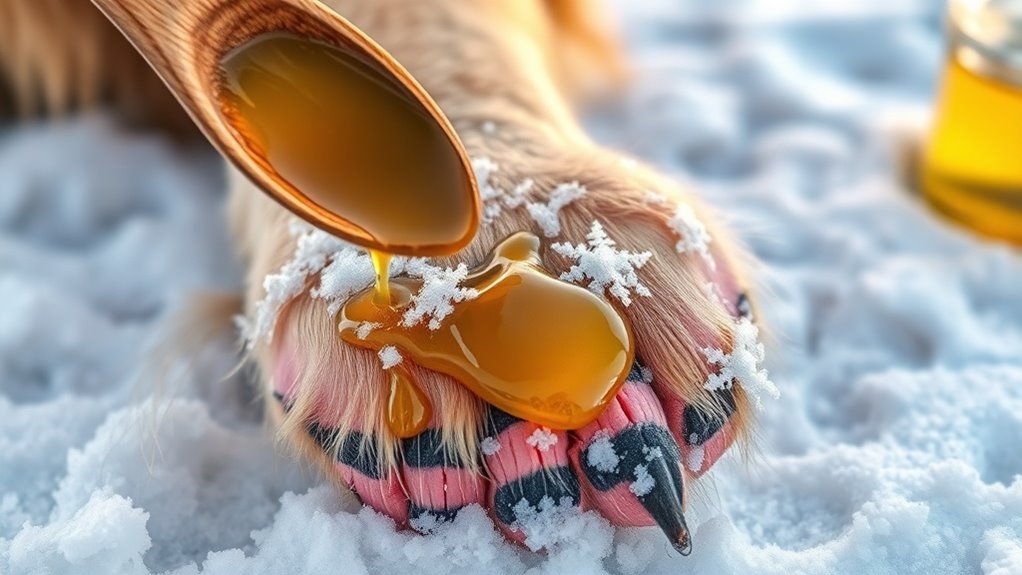
• Warm a small amount of coconut oil between your palms until it liquefies
• Gently massage into each paw pad, covering the entire surface
• Apply 10-15 minutes before heading outside
• Reapply after walks lasting longer than 30 minutes
• Use daily throughout winter months for ongoing protection
Let the oil absorb for a few minutes before going out so your pet doesn’t slip on indoor floors. This pre-walk barrier treatment helps establish maximum protection before your pet’s paws encounter winter elements like snow, ice, and road salt.
Deeply Moisturizes and Heals Cracked Paw Pads
Try Coconut Oil to Soothe Dry, Cracked Paw Pads
Coconut oil may help restore moisture balance in your dog’s dry, cracked paw pads and can support healing within 3-5 days of consistent use. The natural fatty acids penetrate damaged tissue to nourish and soften rough skin.
Coconut oil contains lauric acid, which can provide gentle antimicrobial support to keep cracked paws clean while the medium-chain fatty acids work to improve tissue elasticity. Just as winter weather strips moisture from human skin, cold conditions can leave your pet’s paw pads dry and irritated.
How to apply it:
• Clean and dry your dog’s paws thoroughly before application
• Warm a small amount of coconut oil between your hands
• Massage gently into paw pads until absorbed
• Apply twice daily for best results
• Keep your dog from licking for 5-10 minutes after application
Store coconut oil at room temperature for easy application, or refrigerate for a cooling effect on inflamed paws.
Provides Antibacterial and Antifungal Protection for Winter Wounds
Try Coconut Oil to Protect Winter Paw Wounds****
Coconut oil may help create a protective barrier on your pet’s paws while supporting the healing of minor cracks and cuts from winter exposure. This natural solution can reduce the risk of infection from road salt and ice melt chemicals.
Coconut oil contains lauric acid, which may help protect against harmful bacteria and fungi by creating an inhospitable environment for these organisms. The oil’s fatty acids can support your pet’s natural healing process. Research shows that coconut oil’s antimicrobial properties work similarly on both human and animal skin, making it an effective natural treatment option.
How to apply it:
• Clean and dry your pet’s paws thoroughly after winter walks
• Warm a small amount of coconut oil between your fingers
• Gently massage into paw pads, focusing on cracked areas
• Apply 2-3 times daily, especially before and after outdoor exposure
• Let absorb for a few minutes before your pet walks on floors
Keep coconut oil at room temperature for easier application, and watch that your pet doesn’t lick it off immediately—distract them with a treat for best absorption.
Soothes Irritation From Snow and Cold Surface Exposure
Apply Coconut Oil to Soothe Winter Paw Pad Irritation
Cold weather and snow exposure can leave your pet’s paw pads dry, cracked, and sensitive. Coconut oil may help restore moisture and ease discomfort from ice, salt, and harsh surfaces, with visible improvement typically showing within 1-2 days.
Coconut oil contains natural fatty acids that can penetrate damaged skin and support the protective barrier. The lauric acid component may help calm irritation from ice crystals and de-icing chemicals.
How to use it:
• Warm a small amount of coconut oil between your fingers
• Gently massage into clean, dry paw pads for 30-60 seconds
• Focus on cracked or rough areas
• Apply once or twice daily, especially after outdoor walks
• Let your pet rest for 5 minutes so the oil absorbs before walking
Keep your pet from licking their paws immediately after application—distraction with a treat or toy helps the oil soak in better.
For general coat conditioning, use approximately 1 teaspoon coconut oil per 10 pounds of body weight when applying to larger skin barrier function areas beyond just the paws.
Conditions Paw Pads to Prevent Dryness and Splitting
Try Coconut Oil to Condition Dry, Cracked Paw Pads
Coconut oil may help soften rough paw pads and create a protective barrier that locks in moisture for several hours. Regular application can support healthier, more supple paw tissue and might reduce the appearance of minor cracks.
The natural fatty acids in coconut oil can penetrate the thick skin on paw pads and help nourish dried-out tissue. This creates a conditioning effect similar to how lip balm soothes chapped lips.
How to apply it:
• Clean your dog’s paws with lukewarm water and pat completely dry
• Scoop a small amount of solid coconut oil (about pea-sized per paw)
• Gently massage the oil into each pad using circular motions for 30 seconds
• Allow 5 minutes for absorption before your dog walks around
• Apply 2-3 times weekly or as needed during dry seasons
Keep your dog occupied with a treat or toy during the absorption period so they don’t immediately lick it all off.