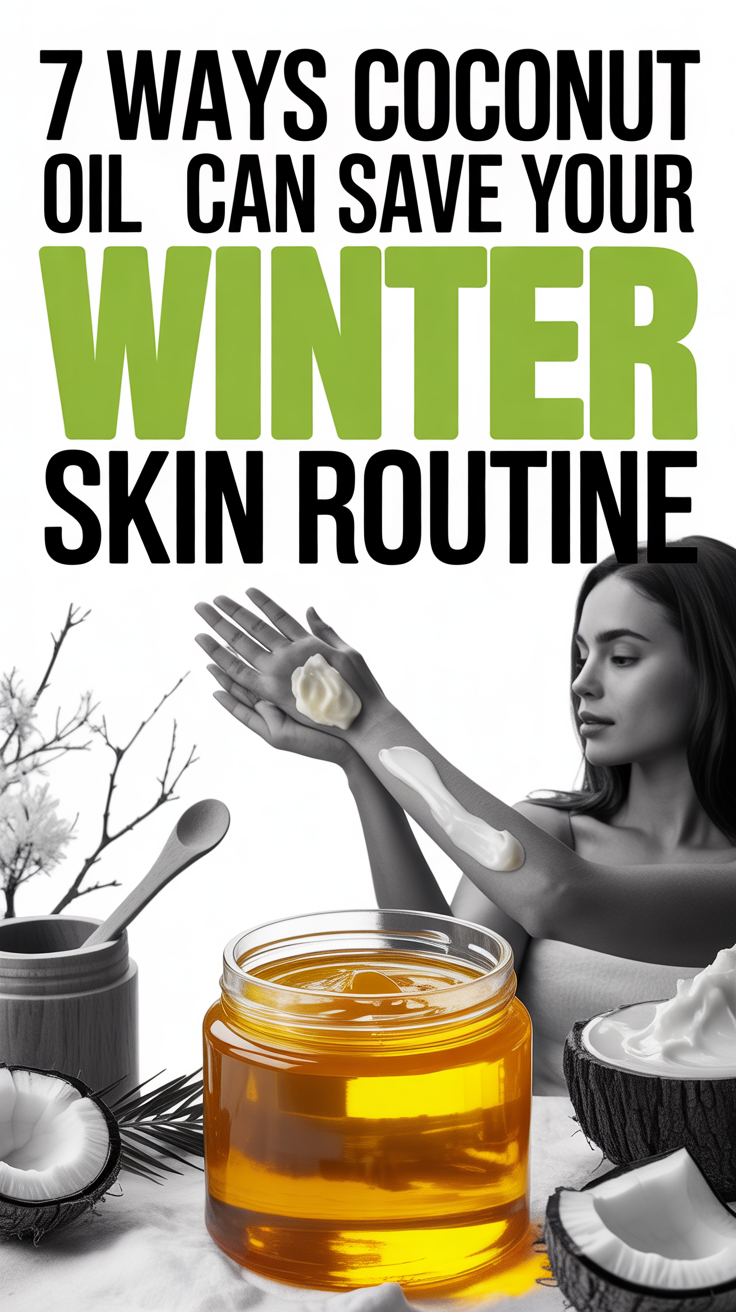
7 Ways Coconut Oil Can Save Your Winter Skin Routine
Winter weather wreaking havoc on your skin, leaving it dry, flaky, and uncomfortable? Coconut oil’s unique fatty acid profile—especially its high lauric acid content—may help address multiple winter skin concerns, from supporting your skin’s moisture barrier to soothing irritation naturally. These applications work with your skin’s biology and can show improvements relatively quickly. Here are seven evidence-based ways coconut oil might transform your winter skincare routine.
Deep Moisture Lock for Severely Dehydrated Skin
Try Coconut Oil to Lock in Deep Winter Moisture
Coconut oil may help reduce water loss from severely dehydrated skin by up to 40%, easing tightness and flaking that worsens during cold months. You might notice softer, more supple skin within 24-48 hours of consistent use.
Why it works: Coconut oil contains lauric acid and other fatty acids that create a protective seal on your skin’s surface, helping trap moisture inside while supporting your skin’s natural barrier repair process.
How to use it:
• Warm a dime-sized amount between your palms until it melts
• Apply to damp skin right after showering while pores are open
• Gently massage into the driest areas (face, elbows, hands)
• Let it absorb for 5-10 minutes before dressing
• Use once daily in evening, or twice daily for very dry skin
Quick tip: Look for unrefined, virgin coconut oil for the most skin-nourishing properties, and patch test on your inner arm first if you’re acne-prone. This natural solution can help restore your healthy glow even during the harshest winter conditions.
Natural Barrier Protection Against Cold Wind and Indoor Heating
Coconut oil’s saturated fatty acid composition enables it to form an occlusive lipid barrier on the stratum corneum, which helps prevent transepidermal water loss during winter months. This protective layer functions mechanically to shield skin from harsh environmental stressors, including cold wind exposure and the desiccating effects of heated indoor air.
Clinical evidence suggests that medium-chain triglycerides in coconut oil demonstrate antioxidant properties that may help mitigate oxidative stress caused by temperature fluctuations and low-humidity conditions. Research has documented coconut oil’s antimicrobial properties that work alongside its moisturizing effects to support compromised skin barrier function during winter eczema flare-ups.
Forms Protective Lipid Layer
Apply Coconut Oil to Protect Your Skin Barrier
Coconut oil may help shield your skin from winter’s drying effects by creating a protective layer that locks in moisture for hours, even when indoor heating drops humidity to uncomfortable levels.
The lauric acid in coconut oil fills tiny gaps between skin cells, forming a seal that prevents water from escaping. This keeps your skin hydrated despite cold, dry air both indoors and out.
How to use it:
• Warm a dime-sized amount between your palms
• Apply to slightly damp skin right after showering
• Focus on dry areas like elbows, knees, and hands
• Let it absorb for 2-3 minutes before dressing
• Use once or twice daily during winter months
Quick tip: For best results, apply while your skin is still slightly moist to trap extra hydration underneath the oil layer.
Locks in Skin Moisture
Try Coconut Oil to Lock in Skin Moisture
Coconut oil may help reduce moisture loss by creating a protective barrier on your skin, especially during harsh winter months when humidity drops. This natural moisturizer can keep skin hydrated for 8-12 hours after application.
Coconut oil contains fatty acids that form a breathable film over your skin, helping trap water while still allowing your skin to function normally.
How to use it:
• Apply coconut oil to clean, slightly damp skin after washing
• Use a small amount (about a dime-sized portion) and warm between palms
• Gently massage into skin using circular motions
• Focus on dry areas like elbows, knees, and hands
• Use once or twice daily, especially before bed
For best results, apply immediately after showering while your skin is still moist to seal in maximum hydration.
Combats Environmental Damage
Try Coconut Oil to Shield Skin from Winter Damage
Coconut oil creates a protective barrier that may help guard your skin against cold winds and indoor heating—two major moisture zappers during winter months. This natural oil could reduce water loss from your skin by forming a gentle shield on the surface.
Coconut oil contains fatty acids that work like a protective coat over your skin. This layer may help seal in moisture and keep harsh environmental conditions from drying out your face and body.
How to use it:
• Warm a dime-sized amount between your palms
• Apply to clean, slightly damp skin after showering
• Gently massage onto dry areas (face, hands, elbows)
• Use morning and evening, or as needed throughout the day
• Focus on exposed areas before heading outdoors
Let the oil absorb for 2-3 minutes before getting dressed—it may feel greasy at first but should sink in quickly.
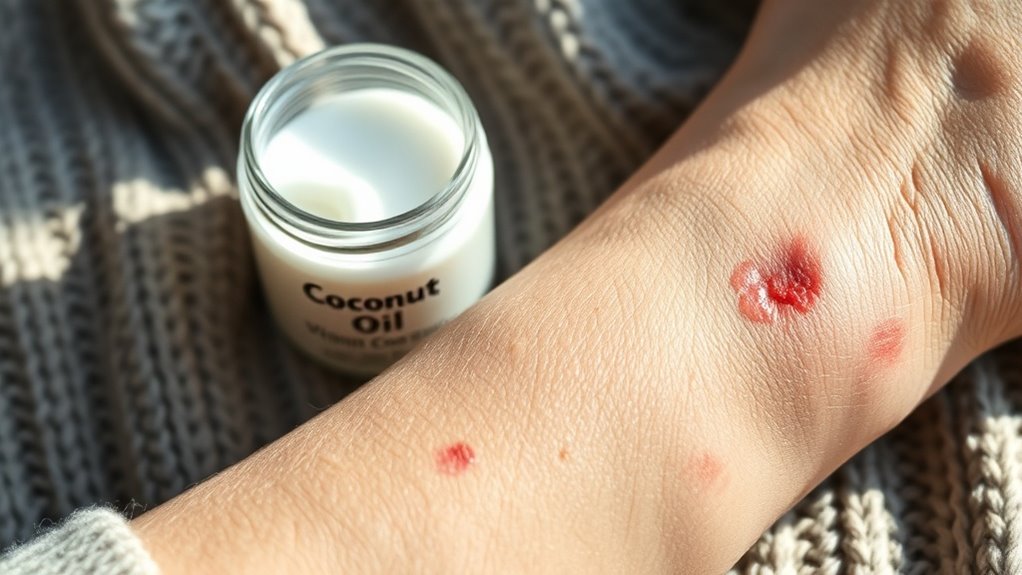
Soothing Relief for Cracked Hands and Chapped Lips
Try Coconut Oil to Soothe Cracked Hands and Chapped Lips
Coconut oil may help seal in moisture and create a protective barrier on damaged skin. It can support your skin’s natural healing process and might reduce discomfort from cracks and fissures within hours of application.
Coconut oil works because it contains fatty acids that can penetrate compromised skin barriers easily. Its natural properties may help protect vulnerable areas like hands and lips that lack their own moisture-producing glands.
How to use it:
• Warm a small amount of coconut oil between your palms
• Apply generously to clean, dry hands and lips
• Gently massage into cracked areas for 1-2 minutes
• Reapply 3-4 times daily, especially before bed
• Use consistently for several days to see improvement
Store coconut oil at room temperature so it stays soft and easy to apply whenever you need quick relief. For enhanced effectiveness, you can combine coconut oil with beeswax or calendula in homemade salve recipes that offer additional skin barrier repair benefits.
Overnight Face Treatment for Morning Radiance
Try Coconut Oil Overnight for Softer Skin
Applying a thin layer of coconut oil to your face before bed may help improve your skin’s moisture barrier over the 6-8 hours you sleep. The extended contact time allows the fatty acids to absorb into your skin’s outer layers, potentially leaving you with softer, more hydrated skin by morning.
Coconut oil contains natural fatty acids that can support your skin’s protective barrier. These components may help seal in moisture while you rest.
How to apply it:
• Cleanse your face thoroughly and pat dry
• Warm a small amount (pea-sized) between your fingertips
• Gently massage onto dry areas, avoiding the eye area
• Use a thin layer—less is more with this method
• Apply 2-3 times per week initially to test tolerance
Test on a small patch first if you’re prone to breakouts, as coconut oil may clog pores for some skin types. For optimal results, consider pairing your oil application with bedroom humidity levels maintained between 40-60% to enhance overnight moisture retention.
Body Oil Alternative That Won’t Break the Bank
Try Coconut Oil as an Affordable Body Moisturizer
Coconut oil may help lock in moisture for a fraction of the cost of commercial body oils—roughly $0.50-1.00 per ounce compared to $20-50 per bottle. Applied to damp skin right after showering, it could improve hydration levels and keep your skin soft throughout winter months.
The oil’s occlusive properties create a protective barrier on your skin’s surface that might reduce water loss and help seal in the moisture you just absorbed from your shower.
How to use it:
• Apply a small amount (about 1-2 teaspoons) to damp skin immediately after showering
• Gently massage into skin using upward circular motions
• Focus on dry areas like elbows, knees, and shins
• Wait 2-3 minutes before dressing to allow absorption
• Use daily or as needed for best results
Pro tip: Coconut oil solidifies in cool temperatures, so warm it between your palms before applying for easier spreading.
Gentle Makeup Remover That Nourishes While Cleansing
Coconut oil’s lipophilic properties enable it to effectively dissolve waterproof mascara and long-wear makeup formulations that water-based cleansers can’t remove. The oil’s composition of medium-chain fatty acids allows it to bind with cosmetic pigments and water-resistant polymers while maintaining a gentle profile suitable for the periorbital area.
Clinical observations indicate that fractionated coconut oil demonstrates minimal irritation potential when used for eye-area cleansing, though patch testing remains advisable for individuals with known sensitivities.
Dissolves Stubborn Waterproof Mascara
Try Coconut Oil to Remove Stubborn Waterproof Mascara
Coconut oil may help dissolve waterproof mascara in seconds by breaking down water-resistant formulas that regular cleansers can’t touch. The oil binds to mascara’s waxy ingredients and lifts them away gently without tugging at delicate lashes.
WHY IT WORKS: Coconut oil’s natural fats attract and break down the lipid-based compounds in waterproof mascara formulas. This “like dissolves like” principle allows the oil to penetrate and loosen even the most stubborn products.
HOW TO USE IT:
• Scoop a dime-sized amount of solid coconut oil onto your fingertips
• Gently massage onto closed eyelids and lashes in circular motions for 30 seconds
• Let it sit for 15-20 seconds to fully dissolve the mascara
• Wipe away with a warm, damp cloth or cotton pad
• Rinse your face with lukewarm water to remove any residue
Quick tip: Follow up with your regular face wash to ensure no oily film is left behind that could blur your vision.
Safe for Sensitive Eyes
Try Coconut Oil for Gentle Makeup Removal
Coconut oil may help dissolve waterproof makeup without tugging at delicate eye skin, making it a gentler option for people prone to irritation. Unlike many commercial removers, it works without harsh chemicals or artificial fragrances.
Coconut oil’s natural fatty acids break down makeup while moisturizing at the same time. Its simple composition means fewer ingredients that could trigger sensitivity around your eyes.
How to use it:
• Warm a small amount of solid coconut oil between your fingertips until it melts
• Gently press onto closed eyelids for 10-15 seconds to dissolve mascara and eyeliner
• Wipe away with a soft cotton pad using light downward strokes
• Rinse with lukewarm water and pat dry
• Use nightly as part of your cleansing routine
Stop using immediately if you notice any redness or discomfort, as everyone’s skin reacts differently.
DIY Winter Skin Recipes Using Coconut Oil as Your Base
Try Coconut Oil Night Cream for Deep Moisture
Combining coconut oil with shea butter creates a rich overnight treatment that may help seal in moisture and support your skin’s natural barrier during harsh winter months. This thick balm works while you sleep to soften rough, dry patches.
Why it works: Coconut oil contains fatty acids that can support skin’s protective layer, while shea butter adds extra sealing power to lock hydration in throughout the night.
How to use it:
• Mix equal parts melted coconut oil and shea butter in a small jar
• Apply a thin layer to cleansed face and body before bed
• Gently massage into extra-dry areas like elbows and knees
• Use 3-4 times per week or nightly for very dry skin
• Store at room temperature and warm between palms before applying
Tip: Apply to slightly damp skin right after showering to trap more moisture underneath.
Use Coconut Oil Sugar Scrub to Buff Away Flakes
Mixing coconut oil with fine sugar creates a gentle exfoliating treatment that may help remove dry, flaky skin while moisturizing at the same time. This simple scrub can smooth rough texture in just a few minutes.
Why it works: Sugar crystals physically lift away dead skin cells, while the coconut oil conditions and softens the fresh skin underneath without stripping natural oils.
How to use it:
• Combine 2 tablespoons coconut oil with 1 tablespoon fine sugar
• Apply to damp skin using gentle circular motions
• Focus on rough areas like knees, elbows, and heels
• Rinse with warm water after 1-2 minutes
• Use 1-2 times per week to avoid over-exfoliating
Note: Skip this if you have cuts, irritation, or active breakouts on the treatment area.
Apply Coconut Oil Vitamin E Serum for Extra Protection
Blending coconut oil with vitamin E oil creates a nourishing serum that may help protect winter-stressed skin from environmental damage. This lightweight blend can support your skin’s natural repair process.
Why it works: Vitamin E offers antioxidant properties that might help shield skin, while coconut oil delivers fatty acids that can support the skin barrier and ease dryness.
How to use it:
• Mix 1 tablespoon coconut oil with 2-3 vitamin E capsules (pierce and squeeze)
• Warm a few drops between your palms
• Press gently into face and neck after cleansing
• Use morning or night, or both for very dry skin
• Store in a dark glass bottle away from direct sunlight
Tip: This works well as a makeup primer for dry skin—just let it absorb for 5 minutes first.