7 Kitchen Ingredients That Soothe Irritated Winter Skin Fast
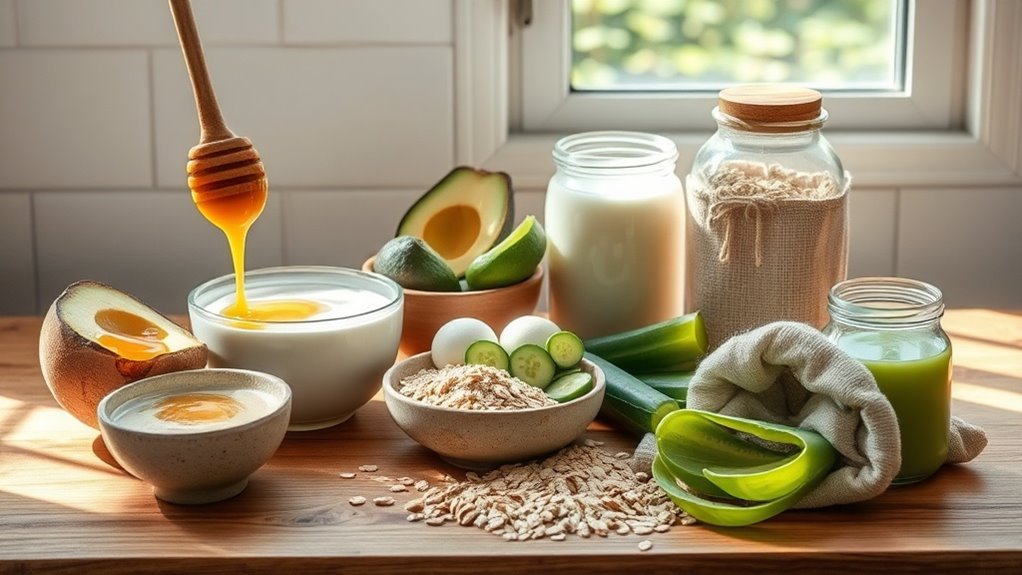
You’ve likely noticed how winter air strips your skin’s protective barrier, leading to inflammation, flaking, and discomfort that over-the-counter products can’t always resolve. Before investing in expensive dermatological treatments, you’ll want to ponder what clinical research reveals about common kitchen staples. Studies show that specific ingredients sitting in your pantry contain compounds—from medium-chain fatty acids to avenanthramides—that demonstrate measurable efficacy in restoring compromised skin.
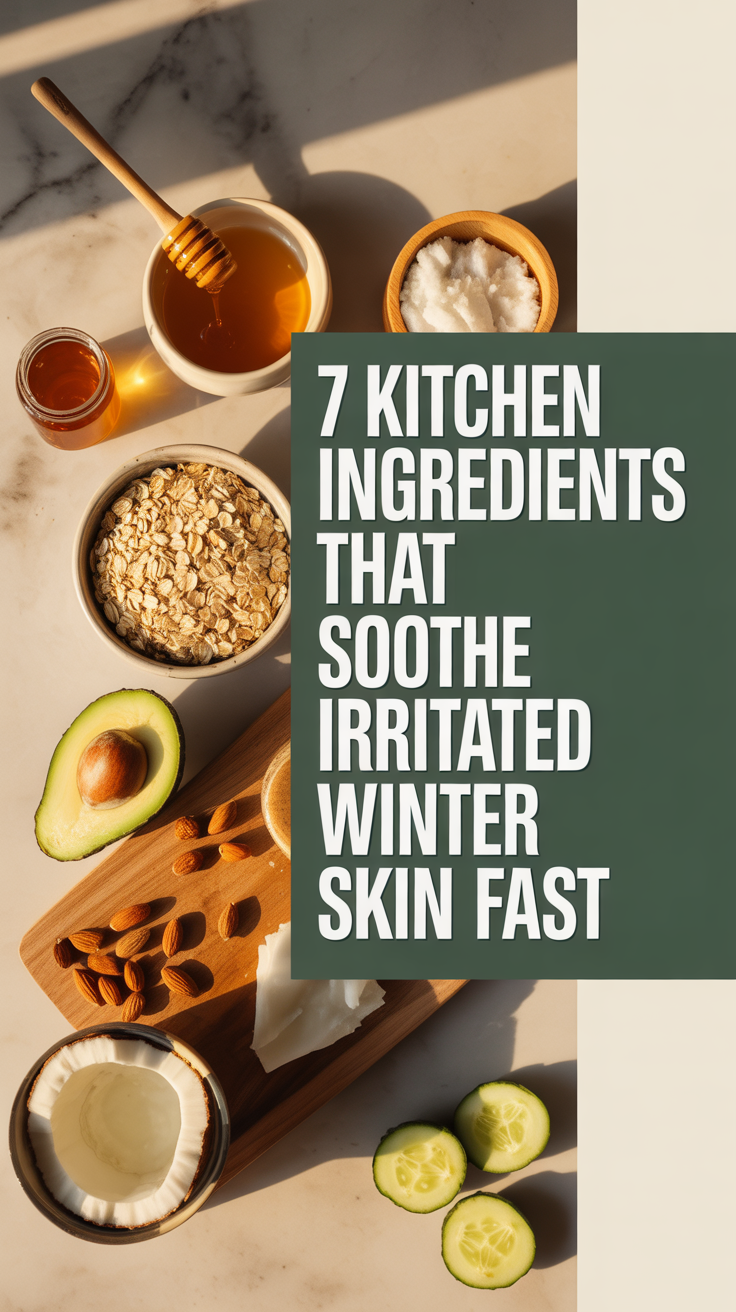
Honey: Nature’s Healing Humectant for Parched Skin
Dry winter air strips away the skin’s natural moisture barrier, leaving it vulnerable to inflammation and discomfort. Honey’s hygroscopic properties draw moisture into compromised epidermal layers while its antimicrobial compounds reduce inflammatory responses. You’ll find this kitchen ingredient soothes skin through documented wound-healing mechanisms.
Apply medical-grade honey topically for 15-20 minutes, though individual reactions vary. For persistent dry patches requiring intensive treatment, consider an overnight honey mask that allows extended contact time for deeper moisture penetration. Patch-test before widespread application to verify tolerance.
Oatmeal: The Gentle Anti-Inflammatory Soother
When winter temperatures drop, colloidal oatmeal’s avenanthramides—phenolic compounds unique to oats—demonstrate measurable anti-inflammatory effects on compromised skin barriers. You’ll obtain ideal results by grinding plain oats into fine powder, then mixing with lukewarm water to create topical paste.
Apply directly to affected areas for 15-20 minutes. For full-body relief, add 1 cup of ground oats to a standard bathtub filled with water at 98-100°F optimal temperature and soak for 15-20 minutes to support moisture retention and skin barrier repair. Clinical studies indicate reduced pruritus and erythema following consistent application, though you should discontinue use if irritation develops.
Coconut Oil: Deep Moisture Lock for Cracked Skin
Coconut oil contains medium-chain fatty acids, particularly lauric acid, which create an occlusive barrier that reduces transepidermal water loss on compromised skin. You’ll achieve ideal results by applying virgin coconut oil to damp skin within three minutes of bathing, when your stratum corneum is most receptive to emollient penetration.
When selecting coconut oil for dermatological use, you should prioritize cold-pressed, unrefined varieties that retain higher concentrations of beneficial phytochemicals and antioxidants. Research demonstrates that coconut oil’s antimicrobial properties work synergistically with its moisturizing effects to support skin barrier function during winter months.
Why Coconut Oil Works
The fatty acid profile of this tropical oil explains its efficacy as an occlusive barrier agent. You’ll find lauric acid comprises 45-50% of coconut oil’s composition, providing antimicrobial properties while medium-chain triglycerides penetrate the stratum corneum effectively.
Research indicates it reduces transepidermal water loss by 14-18%, though individual responses vary based on skin barrier integrity and application methodology.
Best Application Methods Daily
Because compromised skin barriers absorb topical applications inconsistently, you’ll achieve ideal results by applying virgin coconut oil to damp—not wet—skin within three minutes of bathing. Pat a thin layer onto affected areas using gentle pressure.
For severely cracked skin, apply twice daily: morning and evening. Occlusion with cotton gloves or socks enhances penetration on extremities. Discontinue use if irritation develops.
Choosing Quality Coconut Oil
Not all coconut oil products deliver therapeutic benefits for compromised skin barriers. You’ll need virgin or extra-virgin varieties—refined versions lack beneficial lauric acid and medium-chain fatty acids essential for antimicrobial protection.
Verify cold-pressed extraction methods on labels, as heat processing degrades bioactive compounds. Opt for organic certification when possible to minimize pesticide residues. Store in dark glass containers below 76°F to preserve antioxidant stability and prevent rancidity.
Yogurt: Probiotic Power for Skin Barrier Repair
When winter air compromises your skin’s protective barrier, plain yogurt delivers live Lactobacillus cultures that actively support epidermal restoration. You’ll need full-fat, unsweetened varieties containing active cultures.
Apply a thin layer to cleansed skin for 10-15 minutes before rinsing with lukewarm water. The lactic acid provides mild exfoliation while probiotics may help modulate inflammation.
Patch-test initially to confirm tolerance. For comprehensive barrier support, complement topical treatments by consuming omega-3 rich salmon twice weekly alongside probiotic-rich yogurt in your daily diet.
Avocado: Fatty Acid Therapy for Winter Dryness
While yogurt addresses barrier function through probiotics, avocado targets dryness through its lipid composition. You’ll benefit from its oleic acid content, which penetrates the stratum corneum effectively.
The fruit contains phytosterols that reduce transepidermal water loss. Apply mashed avocado topically for 15 minutes. Evidence suggests its fatty acid profile mimics sebum composition, though individual responses vary based on skin permeability and existing barrier integrity.
Cucumber: Cooling Hydration for Red, Inflamed Skin
Cucumber’s anti-inflammatory properties stem from its flavonoid and tannin content, which inhibit pro-inflammatory enzyme activity. You’ll benefit from its 95% water composition, delivering immediate hydration to compromised skin barriers.
Apply chilled cucumber slices directly to affected areas for 10-15 minutes. The ascorbic acid and caffeic acid components may reduce edema and erythema, though individual responses vary based on inflammation severity.
Olive Oil: Ancient Remedy for Extreme Dryness
Beyond topical cooling agents, lipid-rich emollients address the structural deficiencies that characterize xerotic winter skin. You’ll find olive oil’s oleic acid penetrates the stratum corneum effectively, restoring compromised barrier function. Extra virgin varieties contain polyphenols with documented anti-inflammatory properties.
Apply it to damp skin post-bathing for ideal occlusion. However, comedogenic potential exists, so you shouldn’t use it on acne-prone facial areas.