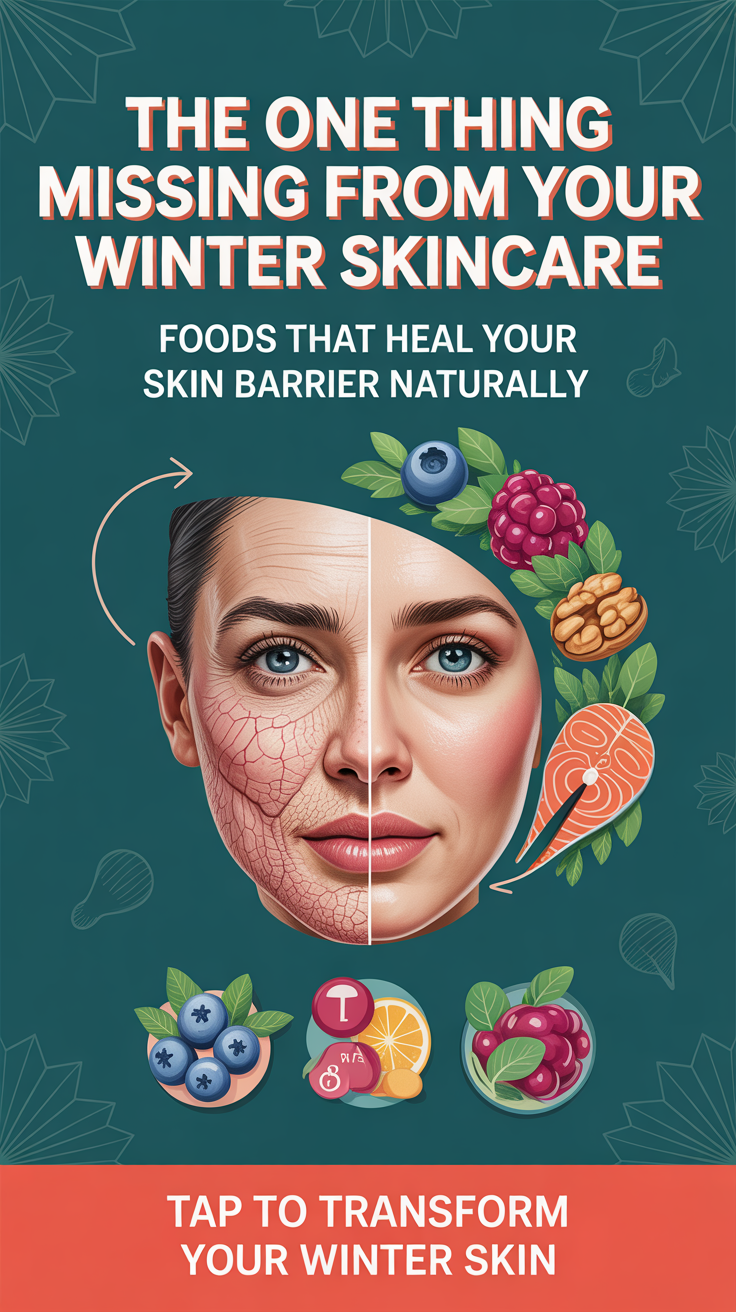
Your skin isn’t exactly thriving when temperatures drop and indoor heating runs constantly. During winter months, transepidermal water loss increases by up to 25%, while sebum production decreases drastically, compromising your stratum corneum’s structural integrity. You’ll need specific nutrients—particularly ceramide precursors, omega-3 fatty acids, and antioxidants—to maintain ideal barrier function. The question isn’t whether your diet affects winter skin health, but rather which foods deliver the most therapeutic compounds when your dermis needs them most.
Antioxidant-Rich Foods That Shield Your Skin From Winter Damage
When ambient temperatures drop and humidity levels decline, your skin’s lipid barrier experiences accelerated trans-epidermal water loss (TEWL) and increased oxidative stress from environmental aggressors.
Strategic consumption of foods healthy skin barrier function requires targeting specific antioxidant compounds. Vitamin C-rich citrus fruits and tomatoes neutralize reactive oxygen species while supporting collagen synthesis. Beta-carotene from sweet potatoes and carrots enhances barrier integrity through provitamin A conversion. Vitamin E in almonds protects membrane phospholipids from peroxidation. Pomegranate’s punicalagin compounds demonstrate direct collagen preservation effects. Omega-3 fatty acids from walnuts and chia seeds modulate inflammatory cascades, reducing barrier compromise during cold exposure. Bell peppers and strawberries provide additional vitamin C that may assist cellular repair and support skin’s natural defenses against winter environmental stressors. Zinc from whole wheat products regulates oil production and supports skin cell regeneration, maintaining optimal barrier function throughout winter months.
Essential Healthy Fats for Strengthening Your Skin’s Moisture Barrier
Your skin’s lipid barrier requires adequate dietary essential fatty acids to maintain structural integrity and prevent trans-epidermal water loss during cold weather exposure.
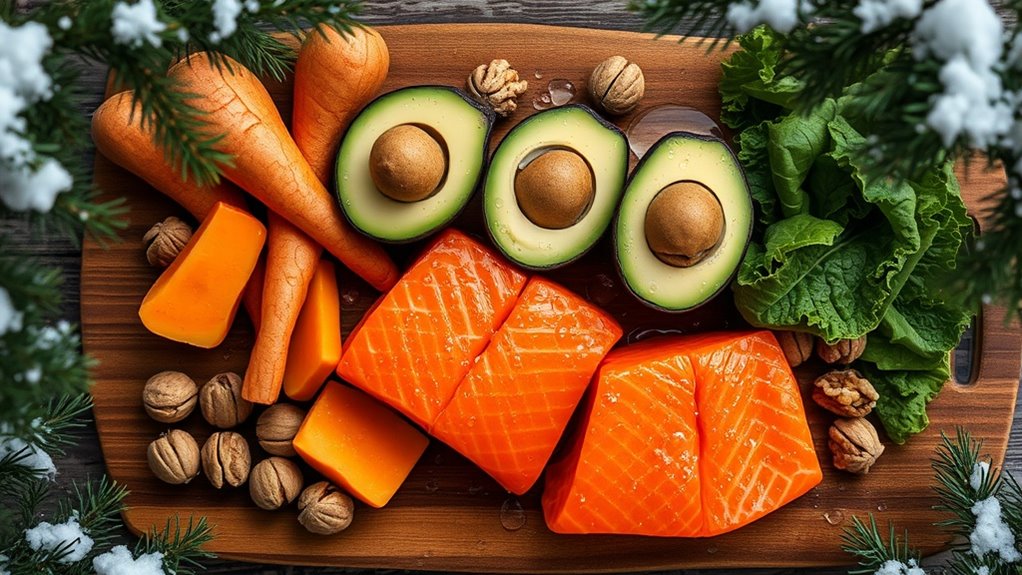
Omega-3 polyunsaturated fatty acids from sources like salmon, mackerel, and flaxseeds provide anti-inflammatory properties that strengthen cellular membrane function and reduce barrier permeability. Essential fatty acid deficiency creates visible symptoms including chronic dryness, flaking, and increased sensitivity.
Vitamin E and monounsaturated fats from avocados and nuts work synergistically to support sebum production, enhance moisture retention, and protect against oxidative damage that compromises barrier resilience in winter conditions. For optimal benefits, aim for 3.5oz salmon twice weekly alongside a quarter cup of mixed nuts as a daily snack to provide consistent essential fatty acid intake.
Omega-3 Rich Food Sources
The skin’s lipid barrier depends critically on adequate intake of omega-3 fatty acids—specifically alpha-linolenic acid (ALA), eicosapentaenoic acid (EPA), and docosahexaenoic acid (DHA)—to maintain perfect hydration and structural integrity during cold weather exposure.
You’ll obtain EPA and DHA through fatty fish including salmon, mackerel, herring, and sardines, which demonstrate superior bioavailability for barrier enhancement. Plant-based sources—walnuts, flaxseeds, chia seeds, and hemp seeds—provide ALA, though conversion to EPA and DHA remains limited. Marine oils like krill oil offer enhanced absorption. Supplementation with fish oil delivers concentrated omega-3s when dietary intake proves insufficient for ideal transepidermal water loss reduction. These essential fatty acids strengthen cell membranes, providing crucial protection against UV rays, pollution, and oxidative stress that intensify during winter months.
Vitamin E and Monounsaturated Fats
Beyond omega-3 fatty acids, vitamin E and monounsaturated fats constitute a complementary barrier-protective system that defends against oxidative stress while maintaining lipid membrane integrity during cold weather exposure. α-tocopherol, the most bioactive form of vitamin E, functions as a lipid-soluble antioxidant that intercepts free radicals within cell membranes before they compromise ceramide synthesis and disrupt lamellar bilayer organization. This mechanism shields skin cells from the damaging effects of oxidation that accelerate during temperature drops and low-humidity conditions.
Monounsaturated fatty acids from avocados, almonds, hazelnuts, and olive oil provide structural phospholipids essential for stratum corneum cohesion. You’ll optimize barrier function by consuming sunflower seeds, which deliver both α-tocopherol and oleic acid simultaneously. Clinical evidence demonstrates daily avocado intake enhances skin elasticity through combined vitamin E, monounsaturated fat, and vitamin C delivery, reducing transepidermal water loss during environmental challenge.
Hydrating Foods to Combat Cold Weather Dehydration
Your skin’s barrier function depends on systemic hydration, which you’ll maintain through water-rich vegetables like cucumber (95% water content) and spinach, both delivering fluid alongside vitamins K and A for barrier integrity.
Incorporate fruits with high water composition—pears (84.1g/100g) and citrus varieties—to supply hydration with vitamin C that supports collagen synthesis.
Leafy greens contribute both moisture and essential minerals including potassium and magnesium that regulate cellular water balance and strengthen your skin’s protective barrier during cold exposure. Sweet potatoes provide beta-carotene conversion to vitamin A, supporting skin cell renewal and maintaining a smooth, hydrated surface throughout winter months. Pairing these dietary choices with proper moisture barrier restoration through evening skincare ensures comprehensive hydration from both internal and external approaches.
Water-Rich Fruits and Vegetables
While cold weather diminishes thirst perception, maintaining adequate hydration remains critical for preserving stratum corneum integrity and transepidermal water loss (TEWL) regulation. Incorporate water-rich produce strategically: citrus fruits (92% water in grapefruit) deliver vitamin C for collagen synthesis; cucumbers (94% water) provide silica supporting dermal structure; tomatoes supply vitamins A and C alongside 94% water content.
Carrots’ beta-carotene (89% water) strengthens the epidermal barrier through vitamin A conversion. Winter pears (84% water) and apples (83-85% water) offer soluble fiber supporting gut-skin axis functionality. Leafy greens like spinach (90-99% water) provide vitamins A, C, and E, essential for maintaining barrier lipid homeostasis and cellular repair mechanisms.
Leafy Greens for Moisture
Dark leafy greens function as dual-action hydration agents through their exceptional water content (90-95%) and bioactive compounds that enhance dermal moisture retention at the cellular level. You’ll benefit from spinach’s ability to promote hyaluronic acid synthesis, directly supporting collagen formation and preventing transepidermal water loss (TEWL).
Vitamin C facilitates hydroxylation reactions necessary for collagen stabilization, while vitamin K protects existing collagen matrices from cold-induced degradation. Beta-carotene conversion to retinol accelerates cellular turnover, repairing winter-damaged epidermis. Folate supports DNA synthesis during keratinocyte renewal, maintaining barrier integrity.
Antioxidants (vitamins E and C) neutralize free radicals that compromise lipid membranes, preserving your skin’s moisture-retention capacity.
Vitamin-Packed Produce for Skin Cell Repair and Regeneration
The epidermis undergoes continuous cellular turnover, requiring consistent nutritional support to maintain ideal barrier function during cold weather stress.
Vitamin C from citrus fruits, bell peppers, and broccoli drives collagen synthesis while enhancing capillary integrity and photoprotection. Beta-carotene in carrots and sweet potatoes converts to vitamin A, regulating keratinocyte differentiation and barrier restoration. Vitamin E from nuts provides lipid-soluble antioxidant protection to cell membranes, working synergistically with ascorbic acid. Polyphenol-rich berries combat free radical damage and preserve structural proteins.
Zinc, selenium, and copper facilitate enzymatic processes essential for tissue repair and regeneration during environmental challenges. Consuming bone broth daily provides additional amino acids like glycine and proline that support the body’s natural collagen production pathways during winter months.
Immune-Boosting Nutrients That Enhance Skin Resilience
Cold weather compromises cutaneous immunity through multiple mechanisms: reduced circulation diminishes nutrient delivery to peripheral tissues, decreased humidity impairs antimicrobial peptide function, and environmental stress triggers inflammatory cascades that deplete immune reserves.
You’ll strengthen skin immunity through zinc (shellfish, legumes), which enhances natural killer cells and accelerates wound healing. Omega-3 fatty acids (EPA, DHA) reduce transepidermal water loss while modulating systemic inflammation. Selenium from Brazil nuts provides antioxidant protection against oxidative damage. Vitamin D regulates immune cell function within dermal layers, promoting barrier integrity. Polyphenols offer DNA repair mechanisms while reducing UV-induced immune stress through anti-inflammatory pathways.
Foods and Habits to Avoid for Optimal Winter Skin Health
While optimizing nutrient intake strengthens cutaneous resilience, dietary and behavioral patterns that compromise barrier function require equal attention during cold-weather months. Refined carbohydrates and high-glycemic foods elevate insulin levels, triggering sebaceous hyperactivity and pro-inflammatory cascades.
Dairy products exacerbate acne vulgaris and atopic dermatitis in susceptible individuals. Excessive alcohol and caffeine consumption induces transepidermal water loss, compromising stratum corneum integrity. Overwashing with surfactant-heavy cleansers strips essential lipids, while hot water dissolves intercellular ceramides. Inappropriate retinoid application on compromised skin intensifies irritation.
Limit high-fructose fruits that accelerate glycation-mediated collagen degradation. Persistent dermatological symptoms warrant professional evaluation.