While you’re slathering on expensive moisturizers from the outside, your skin’s real hydration crisis is happening at the cellular level. You’ll need specific nutrients—omega-3 fatty acids, antioxidants, and particular vitamins—to rebuild your compromised lipid barrier and retain moisture where it matters most. The clinical evidence points to a targeted nutritional approach that addresses the biochemical causes of winter skin damage. Here’s what you should actually be eating to transform your skin from within.
Omega-3 Fatty Acids: Your Skin’s Natural Moisture Barrier
When winter air strips moisture from your skin, omega-3 fatty acids work at the cellular level to fortify your skin’s lipid barrier—the protective layer that prevents water loss and shields against environmental damage. These essential fats reduce transepidermal water loss by 39% after 12 weeks of supplementation, while their anti-inflammatory properties calm winter-induced redness and irritation.
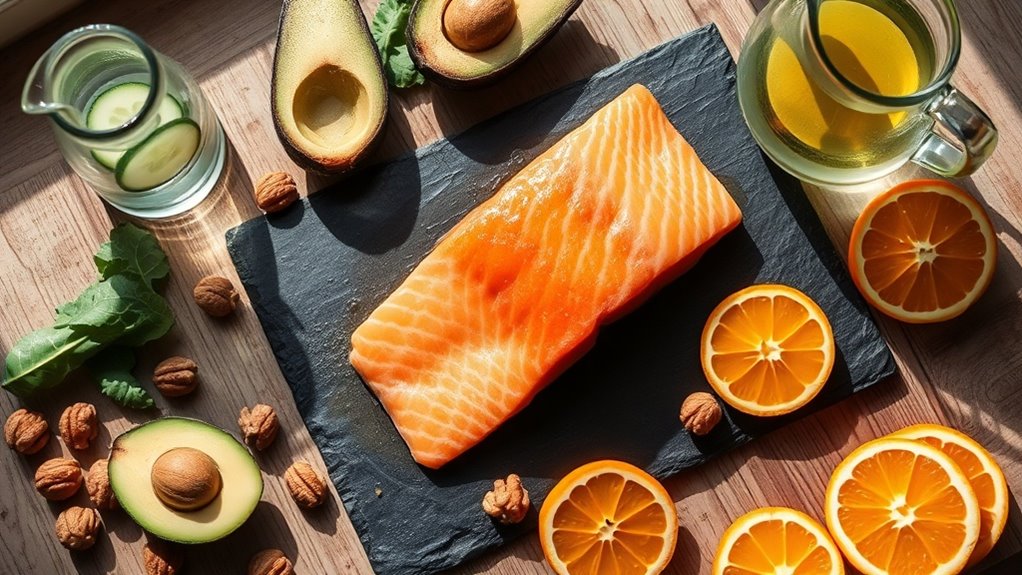
EPA and DHA from fatty fish also stimulate collagen synthesis, enhancing your skin’s moisture retention capacity. Wild-caught salmon provides both omega-3s and collagen-supporting nutrients, making it an ideal choice at 3-4 oz twice weekly for comprehensive skin protection. Because your body’s conversion of ALA from plant sources to EPA and DHA is limited, prioritizing marine sources ensures you get the most bioavailable forms of these skin-protecting fats. Including omega-3-rich foods for dry winter skin—like salmon, mackerel, and flaxseed oil—provides the building blocks your barrier needs to lock in hydration and resist seasonal environmental stressors.
Antioxidant-Rich Foods That Combat Winter Skin Damage
Antioxidants neutralize free radicals that accelerate skin aging and compromise your skin’s barrier function during winter months. You’ll find the most potent skin-protective antioxidants—vitamins C and E, polyphenols, and beta-carotene—in colorful fruits, vegetables, and certain plant-based foods.
Meeting daily antioxidant intake goals through strategic food choices strengthens your skin’s defense against oxidative stress, UV damage, and inflammation that worsen winter dryness. Pomegranates deliver concentrated polyphenols and vitamin C that actively reduce inflammation and repair damaged skin cells for improved texture. Incorporating citrus fruits, bell peppers, and strawberries into your winter diet provides essential nutrients that support cellular repair and maintain healthier-looking skin during cold months.
How Antioxidants Protect Skin
Winter’s harsh conditions accelerate free radical formation in your skin, but dietary antioxidants provide a scientifically validated defense mechanism. These compounds neutralize reactive oxygen species before they damage cellular DNA, proteins, and membranes.
Your skin’s endogenous enzymes—superoxide dismutase, catalase, and glutathione peroxidase—work alongside dietary antioxidants like vitamins C and E to detoxify free radicals. CoQ10 inhibits IL-6 production, reducing matrix metalloproteinases that degrade collagen and cause wrinkles.
Antioxidant modulate NF-kB and MAPK signaling pathways, controlling inflammation and photoaging while reinforcing your skin barrier. This maintains moisture retention, supports cellular regeneration, and prevents premature aging manifestations. Beta-carotene converts to Vitamin A in your body, promoting skin cell turnover for a smooth and clear complexion during winter months.
Top Antioxidant-Rich Foods
Your skin’s antioxidant defense system depends directly on specific nutrients from whole foods. Blueberries provide anthocyanins that reduce oxidative stress, while pomegranates deliver polyphenols protecting against UV damage.
Citrus fruits supply vitamin C for collagen synthesis, and tomatoes offer lycopene for moisture retention. Sweet potatoes contain beta-carotene for hydration, and leafy greens provide vitamins A, C, E, and K for cellular repair.
Almonds and walnuts deliver vitamin E and omega-3s for membrane protection. Turmeric’s curcumin and dark chocolate’s flavonoids combat inflammation and oxidative damage. Green tea’s antioxidants eliminate free radicals that contribute to flaky skin and fine lines during winter months. These nutrient-dense foods strengthen your skin’s natural antioxidant capacity throughout winter.
Daily Antioxidant Intake Goals
Meeting specific nutrient benchmarks strengthens your skin’s defense against winter’s oxidative assault. Aim for 75-90 mg vitamin C daily to support collagen synthesis and UV protection. You’ll need 15 mg vitamin E to safeguard cell membranes from oxidative damage.
Include 8-11 mg zinc for cellular regeneration and 55 mcg selenium for wrinkle prevention. Carotenoids like beta-carotene (3-6 mg) and lycopene (up to 75 mg) offer photoprotective benefits. Lycopene from tomatoes and tomato-based products provides the highest concentration of this protective carotenoid. Combine these with 250-500 mg omega-3s (EPA and DHA) to reduce inflammation and maintain hydration.
These synergistic nutrients fortify your skin’s antioxidant capacity throughout winter months.
Healthy Fats That Lock in Skin Hydration
Your skin’s ability to retain moisture depends heavily on the quality of fats in your diet. Omega-3 fatty acids fortify cell membranes and reduce transepidermal water loss by supporting ceramide production in the lipid barrier.
Monounsaturated fats from sources like avocados and nuts work alongside vitamin E to lock in hydration and protect barrier lipids from oxidative damage caused by cold, dry winter air.
Aim for specific serving sizes like 3.5oz salmon twice weekly or 1/4 cup mixed nuts as afternoon snacks to ensure adequate healthy fat intake for optimal skin barrier function.
Omega-3s Strengthen Skin Barrier
Omega-3 fatty acids—particularly EPA and DHA—fortify your skin’s protective barrier by promoting keratinocyte differentiation, the cellular process essential for maintaining epidermal integrity. They upregulate structural proteins like filaggrin and loricrin, which lock in moisture and reduce transepidermal water loss. This improved barrier function directly prevents winter dryness and roughness.
Additionally, omega-3s metabolize into specialized pro-resolving mediators—resolvins and protectins—that suppress inflammatory cytokines responsible for eczema, psoriasis, and irritation. Clinical trials confirm supplementation improves atopic dermatitis severity scores while enhancing hydration and elasticity. Prioritize fatty fish like salmon and mackerel, or consider fish oil supplements to maintain ideal serum levels throughout cold months.
Monounsaturated Fats Retain Moisture
While omega-3s excel at reducing inflammation, monounsaturated fatty acids (MUFAs) function as your skin’s primary moisture-locking mechanism during winter months. These fatty acids decrease transepidermal water loss, directly strengthening your skin’s ceramide and lipid barrier layers to retain hydration against cold, dry air.
Oleic acid—the predominant MUFA in human sebum—improves skin suppleness and accelerates healing of winter-induced dryness. You’ll find ideal MUFAs in olive oil, avocados, and almonds, which reduce photoaging severity and oxidative stress. Regular intake prevents the tightness and brittleness characteristic of winter skin while supporting resilience against environmental stressors that compromise your moisture barrier.
Vitamin E Protects Lipids
The lipid barrier protecting your skin from winter’s harsh conditions requires constant defense against oxidative damage, and vitamin E serves as its primary guardian. Its chromanol-head group scavenges active oxygen radicals to prevent phospholipid peroxidation in cell membranes.
By partitioning into the hydrophobic core of your plasma membrane, vitamin E alters bilayer fluidity while maintaining structural integrity that locks in moisture. It suppresses matrix metalloproteinase activity, protecting both lipid and collagen structures from degradation.
Consume almonds, walnuts, avocados, and leafy greens—these vitamin E-rich foods fortify your skin’s lipid barrier, preventing moisture loss and oxidative damage throughout winter.
Water-Rich Foods for Internal Skin Moisturizing
When cold weather strips moisture from your skin’s outer layers, strategic food choices replenish hydration from within through direct cellular water delivery. Cucumbers (96% water) and tomatoes (95% water) provide vitamins A, C, and lycopene that support skin’s moisture barrier.
Watermelon and strawberries exceed 90% water content while delivering collagen-boosting vitamin C. Yogurt (80-89% water) combines hydration with probiotics that enhance nutrient absorption, indirectly benefiting skin integrity. Increasing daily water intake by two liters reduces transepidermal water loss and improves elasticity.
These hydrating foods release water gradually during digestion, sustaining skin moisture more effectively than beverages alone. Pairing water-rich foods with warming spices like ginger can further support your body’s adaptation to cold weather while maintaining optimal skin hydration levels.
Collagen-Building Nutrients for Skin Elasticity
Maintaining skin elasticity during winter requires strategic consumption of collagen-building nutrients that actively combat moisture loss and structural degradation. Vitamin C acts as an essential cofactor for collagen biosynthesis, stabilizing molecular structures through prolyl hydroxylase activity. You’ll find this critical nutrient abundantly in citrus fruits, bell peppers, and leafy greens.
Amino acids like proline and glycine from bone broth and chicken provide foundational building blocks, while zinc and copper facilitate collagen cross-linking and repair. Omega-3 fatty acids from oily fish reduce inflammation and preserve collagen integrity. Antioxidants including vitamins E and A protect existing collagen from oxidative damage, maintaining firmness throughout harsh winter conditions.
Strategic Meal Timing and Serving Sizes for Maximum Skin Benefits
Beyond selecting nutrient-dense foods, you’ll maximize your skin’s winter resilience by strategically timing meals and controlling portion sizes throughout the day. Consuming smaller, frequent meals stabilizes blood sugar, reducing inflammation and sebum overproduction that compromise skin hydration.
Align breakfast with dawn to optimize glucose uptake and nutrient delivery for skin regeneration. Distribute omega-3 fatty acids, antioxidants, and water-rich foods across multiple meals to maintain steady anti-inflammatory effects and internal hydration.
Avoid large evening meals that spike insulin and oxidative stress, disrupting your skin’s barrier function. Moderate portions enhance nutrient absorption while supporting moisture retention and repair.
Foods That Sabotage Your Winter Skin Health
While you’ve carefully selected skin-nourishing foods, certain dietary choices actively undermine your winter skin health through multiple physiological mechanisms. Refined sugars and high-glycemic foods damage collagen and elastin while promoting inflammation through insulin spikes. Dairy products worsen acne and trigger inflammatory flare-ups in susceptible individuals.
Processed and fried foods generate oxidative stress, accelerating premature aging and barrier dysfunction. Excess sodium disrupts moisture balance, causing facial puffiness and dehydration. Alcohol and caffeine deplete hydration by inhibiting water retention hormones and constricting blood vessels. These foods collectively impair your skin’s regenerative capacity, exacerbating winter dryness and diminishing overall dermal integrity.