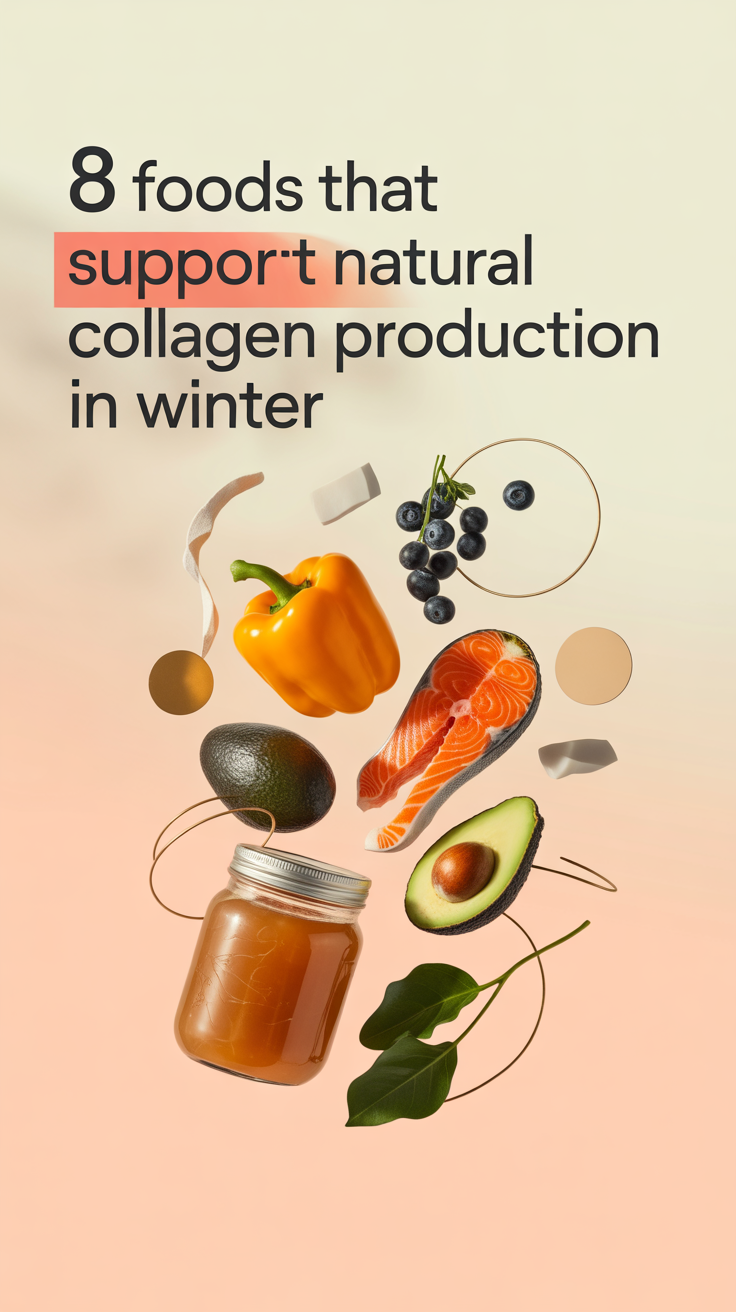

8 Foods That Support Natural Collagen Production in Winter
Watching your skin lose its winter glow while fine lines become more noticeable? Eight specific foods may help support your body’s natural collagen production from the inside out—including bone broth, citrus fruits, leafy greens, and wild-caught salmon. These nutrient-rich options can work within weeks by providing the amino acids, vitamin C, and antioxidants your skin needs to maintain its structure. The best part: you’re likely already familiar with most of these ingredients. Here’s what can deliver real results this season.
Bone Broth: The Ultimate Collagen-Rich Foundation
Drink Bone Broth to Support Collagen Production in Winter
Bone broth may help boost your body’s natural collagen levels through its rich concentration of collagen types I, II, and III. This warming beverage can support skin resilience during harsh winter months when cold air and indoor heating stress your complexion.
The prolonged simmering of animal bones and connective tissue releases glycine and proline—amino acids that support your body’s collagen-building pathways. These compounds work together to nourish skin structure from within.
For optimal results, consume 8-12 oz bone broth daily to support your body’s natural collagen synthesis during the winter season.
How to use bone broth for winter skin support:
• Drink 1-2 cups of warm bone broth daily, preferably in the morning or evening
• Choose high-quality broth made from grass-fed beef or organic chicken bones
• Simmer homemade broth for 12-24 hours to maximize collagen extraction
• Add sea salt and herbs for flavor without reducing benefits
• Store in portions for easy daily use throughout the week
Consistency matters most—aim for daily consumption during winter months when your skin needs extra support.
Wild-Caught Salmon: Omega-3s for Skin Structure
Wild-caught salmon delivers essential nutrients that directly support your body’s collagen synthesis through its rich zinc and copper content, minerals that activate enzymes vital for cross-linking collagen fibers.
The omega-3 fatty acids in salmon strengthen your skin’s lipid barrier while marine collagen peptides enhance absorption and bioavailability, leading to measurable improvements in skin elasticity and hydration.
You’ll find these benefits particularly valuable during winter months when cold, dry air compromises your skin’s moisture retention and structural integrity.
For optimal results, consume 3.5oz salmon twice weekly to maintain consistent nutrient levels that support your skin’s natural collagen production throughout the winter season.
Zinc and Copper Content
Eat Salmon for Collagen-Building Minerals
Fatty fish like salmon can help strengthen your skin’s structure by delivering zinc and copper—two trace minerals that support natural collagen production. A 3-ounce serving provides about 0.6mg zinc and 0.3mg copper, working together to maintain skin firmness.
Zinc helps your body form the amino acids that make up collagen’s framework, while copper activates enzymes that bind collagen fibers together for stronger, more resilient skin.
How to Add Salmon to Your Routine
• Eat 3-4 ounces of wild-caught salmon 2-3 times per week
• Grill, bake, or pan-sear with minimal oil to preserve mineral content
• Pair with vitamin C-rich foods like lemon or bell peppers for enhanced collagen support
• Try other fatty fish like mackerel, sardines, or rainbow trout as alternatives
Aim for wild-caught varieties when possible, as they typically contain higher mineral concentrations than farmed options.
Marine Collagen Peptide Benefits
Eat Salmon to Protect Your Skin’s Collagen Structure
Salmon provides omega-3 fatty acids that may help shield your collagen fibers from breakdown and damage. You’ll get both EPA and DHA, which can support skin barrier function and hydration while potentially reducing collagen loss from sun exposure.
These omega-3s work by calming inflammatory processes that can degrade collagen in your skin’s deeper layers. This might help maintain your skin’s firmness and density over time.
How to add salmon to your routine:
• Eat 3-4 ounces of cooked salmon 2-3 times per week
• Choose wild-caught varieties when possible for higher omega-3 content
• Grill, bake, or pan-sear with minimal oil to preserve nutrients
• Pair with vitamin C-rich vegetables like bell peppers or broccoli
• Try canned wild salmon as an affordable, convenient option
Wild-caught salmon typically contains more beneficial omega-3s than farm-raised varieties, so check labels when shopping.
Winter Skin Hydration Boost
Try Wild-Caught Salmon to Lock in Winter Moisture
Wild-caught salmon may help your skin retain moisture for up to 24 hours by strengthening its protective barrier. During cold months when indoor heating and low humidity strip away natural oils, omega-3 fatty acids work to reduce water loss by 10-15%.
Why it works: Omega-3s (EPA and DHA) support your skin’s natural lipid layer and boost ceramide production, which acts like waterproof mortar between skin cells to keep hydration locked in.
How to use it:
• Eat 3-4 ounces of wild-caught salmon 2-3 times weekly
• Choose baked, grilled, or pan-seared preparations over fried
• Pair with vitamin C-rich vegetables like bell peppers to enhance collagen support
• Look for sockeye or coho varieties for highest omega-3 content
• Consider canned wild salmon as an affordable alternative
Quick tip: You might notice softer, more supple skin within 2-3 weeks of consistent consumption.
Citrus Fruits: Vitamin C Powerhouses for Collagen Synthesis
Your body requires vitamin C as an essential cofactor for the enzymes prolyl hydroxylase and lysyl hydroxylase, which stabilize collagen’s triple helix structure during synthesis.
Winter citrus fruits like oranges, grapefruits, and mandarins provide abundant ascorbic acid, with a single medium orange delivering approximately 70 mg of vitamin C.
You’ll need 75-90 mg daily for baseline collagen production, though research suggests 200 mg may optimize tissue saturation and support enhanced synthesis rates.
Consuming 1 cup of fresh citrus daily can also support healthy mucous membranes, which rely on adequate collagen for structural integrity in dry winter conditions.
Vitamin C’s Collagen Role
Increase Vitamin C to Support Collagen Production****
Vitamin C may help your body build stronger collagen, the protein that keeps skin firm and joints healthy. Getting enough through diet or supplements could support better collagen formation throughout your body.
Vitamin C activates specific enzymes that help weave collagen molecules together properly. Without it, your body might produce weaker collagen that doesn’t hold up as well in skin, tendons, and connective tissue.
How to use vitamin C for collagen support:
• Eat citrus fruits, bell peppers, or strawberries daily for natural vitamin C
• Consider 500-1000mg vitamin C supplements if dietary intake is low
• Take vitamin C with meals to improve absorption
• Divide doses throughout the day rather than all at once
• Pair with protein-rich foods since collagen needs both nutrients
Consistency matters most—your body can’t store vitamin C, so regular daily intake helps maintain steady collagen production.
Best Winter Citrus Options
Eat Blood Oranges to Support Collagen Production
Blood oranges may help boost your body’s collagen synthesis with 70mg of vitamin C per medium fruit, delivering the nutrients your skin needs most during winter months. This citrus variety provides concentrated vitamin C when your immune system and skin barrier need extra support.
Blood oranges contain high levels of ascorbic acid, which your body uses as a building block for collagen formation. Vitamin C acts as a cofactor in the enzymatic process that helps your body create and maintain strong connective tissue.
How to use blood oranges for collagen support:
• Eat 1-2 fresh blood oranges daily during winter months
• Consume the whole fruit rather than juicing to preserve fiber and bioactive compounds
• Add segments to morning yogurt or salads for better nutrient absorption
• Pair with protein-rich foods to maximize collagen synthesis
• Choose fresh over processed for highest vitamin C content
Store blood oranges at room temperature for 3-4 days or refrigerate for up to 2 weeks to maintain freshness.
Try Cara Cara Oranges for Daily Vitamin C Needs
Cara cara oranges can provide 100% of your daily vitamin C requirement in a single serving, supporting your body’s natural collagen production during cold weather. This pink-fleshed citrus delivers immune and skin benefits when your body needs them most.
The high vitamin C concentration in cara caras helps trigger the biochemical processes your body uses to form and repair collagen. Fresh consumption preserves the vitamin’s potency better than juice or supplements.
How to eat cara cara oranges effectively:
• Consume one medium cara cara orange per day for full vitamin C benefits
• Eat within 30 minutes of peeling to minimize nutrient loss
• Include the white pith for additional bioflavonoids that support vitamin C absorption
• Add to meals with healthy fats to enhance nutrient uptake
• Buy fresh and use within 1-2 weeks for maximum potency
Cara caras taste sweeter and less acidic than regular oranges, making them easier on sensitive stomachs.
Add Grapefruit for Steady Collagen Support
Half a grapefruit may help support collagen production with 38mg of vitamin C, offering a lower-sugar citrus option for your winter wellness routine. This tart fruit delivers meaningful vitamin C levels without the higher natural sugar content of oranges.
Grapefruit’s vitamin C content helps your body maintain steady collagen synthesis throughout the day. The fruit’s bioactive compounds work alongside vitamin C to support skin health and connective tissue repair.
How to include grapefruit in your routine:
• Eat half a grapefruit with breakfast or as an afternoon snack
• Sprinkle with a pinch of sea salt to balance tartness naturally
• Avoid juicing—eat fresh segments with membranes intact for fiber benefits
• Consume 3-4 times weekly if eating other vitamin C sources daily
• Section the fruit the night before for quick morning prep
Check with your healthcare provider before eating grapefruit regularly if you take prescription medications, as it may interact with certain drugs.
Choose Clementines for Convenient Vitamin C
Clementines can provide 36mg of vitamin C per fruit, making them an easy, portable option for supporting collagen production throughout your day. These small citrus fruits offer quick, mess-free nutrition when you need a vitamin C boost.
The concentrated vitamin C in clementines helps fuel your body’s ongoing collagen formation processes. Their compact size and easy-peel skin make consistent daily consumption simple and convenient.
How to use clementines for collagen support:
• Eat 2-3 clementines daily to reach optimal vitamin C levels
• Keep a bowl at room temperature for grab-and-go snacking
• Pack in lunch bags or purses for afternoon vitamin C top-ups
• Pair with nuts or seeds for balanced energy and nutrient absorption
• Buy in bulk during peak winter season for best value and freshness
Clementines typically contain fewer seeds than other mandarin varieties, making them faster and easier to eat.
Daily Intake Recommendations
Eat One Orange Daily for Collagen Support
An orange a day may help your body produce the collagen it needs for healthy skin and joints. With 70mg of vitamin C, one medium orange covers most of the 75-90mg adults need daily for basic collagen synthesis.
Vitamin C acts as a crucial building block in your body’s natural collagen production process. Without enough of it, your skin and connective tissues can’t form new collagen efficiently.
How to incorporate oranges:
• Eat one medium orange with breakfast or as a mid-morning snack
• Choose whole fruit over juice to get fiber benefits too
• Peel and segment ahead of time for grab-and-go convenience
• Pair with protein-rich foods to support overall collagen formation
• Aim for consistent daily intake rather than sporadic large amounts
For enhanced skin benefits, you can increase to 200mg vitamin C daily by adding a second citrus serving.
Try Grapefruit for a Morning Collagen Boost
Half a grapefruit provides 44mg of vitamin C and can support your collagen needs when combined with other vitamin C sources. This refreshing option works well as part of a balanced breakfast routine.
The vitamin C in grapefruit helps activate enzymes your body uses to weave collagen fibers together in skin and connective tissue.
How to enjoy grapefruit:
• Cut a grapefruit in half and eat with a spoon for breakfast
• Sprinkle with a tiny bit of honey if you prefer less tartness
• Combine with an orange or clementines to reach your daily vitamin C goal
• Eat 2-3 times weekly if you’re rotating citrus varieties
• Choose ruby red or pink varieties for added antioxidants
Check with your doctor before eating grapefruit regularly if you take any medications, as it can interact with some prescriptions.
Snack on Two Clementines for Quick Vitamin C
Two small clementines deliver 36mg of vitamin C and make an easy afternoon snack that supports collagen production. They’re portable, pre-portioned, and require no prep work.
These mini citrus fruits provide the vitamin C your body needs to maintain existing collagen and create new proteins for skin elasticity.
How to use clementines:
• Keep a bowl on your counter for easy access throughout the day
• Pack 2-3 in your bag for on-the-go snacking
• Eat alongside nuts or yogurt for a balanced collagen-supporting snack
• Enjoy 1-2 times daily to supplement other vitamin C sources
• Peel and separate segments for kids’ lunchboxes
Pair clementines with other citrus fruits throughout the week to easily reach the 75-90mg daily vitamin C target.
Drink 6 Ounces of Fresh Orange Juice with Meals
Fresh-squeezed orange juice provides 62mg of vitamin C per 6-ounce serving and may help support your body’s collagen-building process. It’s a quick way to get vitamin C, especially at breakfast.
The concentrated vitamin C in fresh juice gets absorbed rapidly, giving your body the nutrients it needs for ongoing collagen synthesis throughout the day.
How to use citrus juice:
• Squeeze fresh oranges or buy 100% juice without added sugars
• Stick to 6 ounces (about 3/4 cup) to avoid excess natural sugars
• Drink with protein-rich meals to support collagen formation
• Consume in the morning for best nutrient absorption
• Choose whole fruit most days and juice occasionally for variety
Whole citrus fruits contain beneficial fiber that slows sugar absorption, so prioritize eating fruit over drinking juice when possible.
Add Mandarin Segments to Meals for Extra Vitamin C
Three mandarin segments give you 26mg of vitamin C and can complement other citrus sources to help meet your collagen-supporting needs. They’re sweet, mild, and easy to add to various dishes.
Even smaller amounts of vitamin C contribute to your body’s continuous collagen production, which happens throughout the day as tissues repair and renew.
How to use mandarin segments:
• Toss segments into green salads for a sweet citrus burst
• Mix into yogurt or oatmeal at breakfast
• Add to grain bowls or stir-fries for brightness
• Eat as a light dessert after dinner
• Combine with other citrus varieties to reach 75-90mg daily
Mandarin segments work best as a supplemental vitamin C source rather than your only citrus choice for the day.
Leafy Greens: Chlorophyll and Antioxidant Support
Eat Leafy Greens to Boost Collagen Production Naturally
Leafy greens like spinach, kale, and Swiss chard may help your body produce more collagen while protecting what you already have. These vegetables work in two ways: supporting new collagen formation and defending existing collagen from breaking down.
The chlorophyll in these greens can increase collagen precursors in your body, while their vitamin C content supports the process that turns basic proteins into usable collagen. Their natural antioxidants help shield your skin’s collagen from daily damage.
These antioxidant-rich foods can assist cellular repair processes that contribute to healthier-looking skin during winter months.
How to add them to your routine:
• Eat 1-2 cups of raw or cooked leafy greens daily
• Blend spinach or kale into morning smoothies for easy absorption
• Sauté Swiss chard with garlic as a side dish at lunch or dinner
• Add fresh greens to salads, omelets, or grain bowls
• Mix varieties throughout the week for broader nutrient coverage
Lightly steaming these greens can actually make some nutrients more available to your body than eating them raw.
Bell Peppers: Year-Round Vitamin C Availability
Eat Red Bell Peppers to Boost Collagen Production Naturally
Red bell peppers can support your body’s collagen synthesis with nearly three times the vitamin C found in an orange—about 190mg per cup, or 211% of your daily needs. This makes them one of the most efficient whole-food sources for maintaining skin elasticity and firmness.
Vitamin C acts as a key cofactor in collagen formation, helping your body convert amino acids into usable collagen proteins. The vitamin A in peppers may also help activate collagen-related genes.
How to add bell peppers to your routine:
• Eat 1 cup of chopped raw red pepper daily for maximum vitamin C
• Add sliced peppers to salads, wraps, or grain bowls
• Snack on pepper strips with hummus between meals
• Use yellow or orange varieties as alternatives (140-155mg vitamin C per cup)
• Store whole peppers in the fridge for up to 2 weeks without nutrient loss
Choose red peppers over yellow or orange when possible for the highest collagen-supporting vitamin C content.
Berries: Antioxidant Protection Against Winter Damage
Eat Berries to Protect Collagen From Winter Damage
Berries may help shield your skin from winter’s harsh effects by delivering concentrated antioxidants that combat free radical damage. One cup of mixed berries daily can support your skin’s structural integrity during cold, dry months.
Berries contain ellagic acid and anthocyanins that work alongside vitamin C to protect existing collagen fibers while supporting new collagen formation. These compounds neutralize the oxidative stress that accelerates collagen breakdown in winter conditions.
How to add berries to your winter routine:
• Eat 1 cup of mixed fresh or frozen berries daily (blueberries, strawberries, raspberries)
• Add to morning oatmeal, yogurt, or smoothies for easy absorption
• Choose organic when possible to minimize pesticide exposure
• Combine different berry types to maximize antioxidant variety
• Keep frozen berries on hand for consistent year-round availability
Frozen berries retain their antioxidant content and may be more budget-friendly during winter months.
Nuts: Essential Amino Acids and Healthy Fats
Eat Almonds to Support Collagen Cross-Linking
Almonds deliver 0.5g of lysine per ounce, an essential amino acid that may help strengthen collagen fibers in your skin. A small handful daily could support firmer, more resilient skin over time.
Lysine acts like a building block that helps collagen molecules bind together properly. Without enough lysine, your body can’t form strong, stable collagen structures.
How to add almonds to your routine:
• Eat 1 ounce (about 23 almonds) daily as a snack
• Sprinkle chopped almonds over yogurt or oatmeal at breakfast
• Blend into smoothies for a protein boost
• Choose raw or dry-roasted varieties without added oils
Pair almonds with vitamin C-rich foods like berries to enhance collagen production even more.
Try Walnuts to Reduce Skin Inflammation
Walnuts provide alpha-linolenic acid (ALA), an omega-3 fat that may help calm skin inflammation and support a smoother complexion. Eating them regularly could ease redness and irritation over several weeks.
ALA converts to anti-inflammatory compounds in your body that can soothe irritated skin from the inside out. This helps create a better environment for healthy collagen formation.
How to include walnuts daily:
• Eat a small handful (1 ounce or 7 whole walnuts) each day
• Add chopped walnuts to salads or grain bowls
• Mix into homemade trail mix with dried fruit
• Toast lightly and sprinkle over roasted vegetables
Store walnuts in the refrigerator to keep their beneficial oils fresh and prevent rancidity.
Add Cashews for Copper-Activated Collagen Support
Cashews contain copper that activates lysyl oxidase, an enzyme your body needs to properly form collagen and elastin fibers. Just one ounce may help provide about 70% of your daily copper needs.
Copper acts like a switch that turns on specific enzymes responsible for linking collagen fibers together. Without it, collagen stays weak and unstable.
How to eat cashews for benefits:
• Snack on 1 ounce (about 18 cashews) daily
• Blend into homemade cashew cream for cooking
• Add to stir-fries or grain dishes
• Choose unsalted varieties to avoid excess sodium
Cashews are softer than other nuts, making them easier to blend into smoothies or plant-based sauces.
Eat Brazil Nuts for Antioxidant Protection During Collagen Synthesis
Brazil nuts supply exceptional amounts of selenium, a mineral that may help protect your skin cells from damage during collagen production. Just 1-2 nuts daily could provide all the selenium you need.
Selenium supports antioxidant enzymes that shield collagen from breaking down as it’s being formed. This helps preserve the collagen your body works hard to create.
How to use Brazil nuts safely:
• Limit intake to 1-2 Brazil nuts per day (high selenium content)
• Eat them as a standalone snack in the morning
• Chop and add to homemade granola in small amounts
• Rotate with other nuts throughout the week
More isn’t better with Brazil nuts—stick to 1-2 daily to avoid consuming too much selenium.
Choose Pistachios to Prevent Collagen Degradation
Pistachios offer vitamin E, a powerful antioxidant that may help protect existing collagen from breaking down too quickly. An ounce provides about 6% of your daily vitamin E needs while supporting skin resilience.
Vitamin E neutralizes free radicals that attack and damage collagen fibers. This helps your skin maintain its structure and bounce longer.
How to enjoy pistachios regularly:
• Snack on 1 ounce (about 49 kernels) daily
• Choose shelled pistachios for portion control
• Add to yogurt parfaits or cottage cheese
• Sprinkle crushed pistachios over salads or roasted fish
Look for unsalted varieties if you’re watching sodium intake, or rinse salted ones briefly before eating.
Seeds: Zinc and Copper for Collagen Formation
Eat Pumpkin Seeds to Support Collagen Production
Pumpkin seeds may help boost your body’s collagen-making process thanks to their zinc content—about 2.2mg per ounce. This mineral can support the enzymes your body uses to build new collagen and repair skin tissue.
Zinc activates specific proteins that help your cells produce and organize collagen fibers. Without enough zinc, your body struggles to maintain healthy collagen levels in skin, joints, and connective tissues.
How to add them to your routine:
• Eat 1-2 ounces of raw or lightly toasted pumpkin seeds daily
• Sprinkle them on salads, yogurt, or oatmeal
• Blend into smoothies or trail mix
• Choose unsalted varieties to avoid excess sodium
• Store in an airtight container to preserve freshness
Pair with vitamin C-rich foods like citrus or bell peppers for better collagen support.
Add Sunflower Seeds for Stronger Collagen
Sunflower seeds provide copper, a mineral that might help strengthen your existing collagen structure. Copper can support the cross-linking process that makes collagen fibers more stable and durable in your skin and tissues.
Your body uses copper to form bonds between collagen strands, creating a stronger network. This process helps maintain skin elasticity and joint flexibility as you age.
Simple ways to eat them:
• Snack on 1-2 tablespoons of raw sunflower seeds daily
• Add to baked goods or homemade granola
• Mix into stir-fries or grain bowls
• Choose raw or dry-roasted versions without added oils
• Keep refrigerated to prevent oils from going rancid
Combining sunflower seeds with zinc-rich foods may offer more complete collagen support.
Try Sesame Seeds for Collagen Protection
Sesame seeds deliver both zinc and copper while providing antioxidants that might help protect your collagen from breaking down. These nutrients work together to support both collagen production and preservation.
The antioxidants in sesame seeds can help neutralize free radicals that damage existing collagen. Meanwhile, the minerals support your body’s natural repair and rebuilding processes.
Easy ways to use them:
• Toast 1-2 tablespoons and sprinkle on vegetables or rice
• Blend into tahini for spreading or dipping
• Add to salad dressings or sauces
• Mix into smoothies or energy balls
• Use both white and black varieties for different nutrient profiles
Raw or lightly toasted sesame seeds retain more nutrients than heavily processed versions.