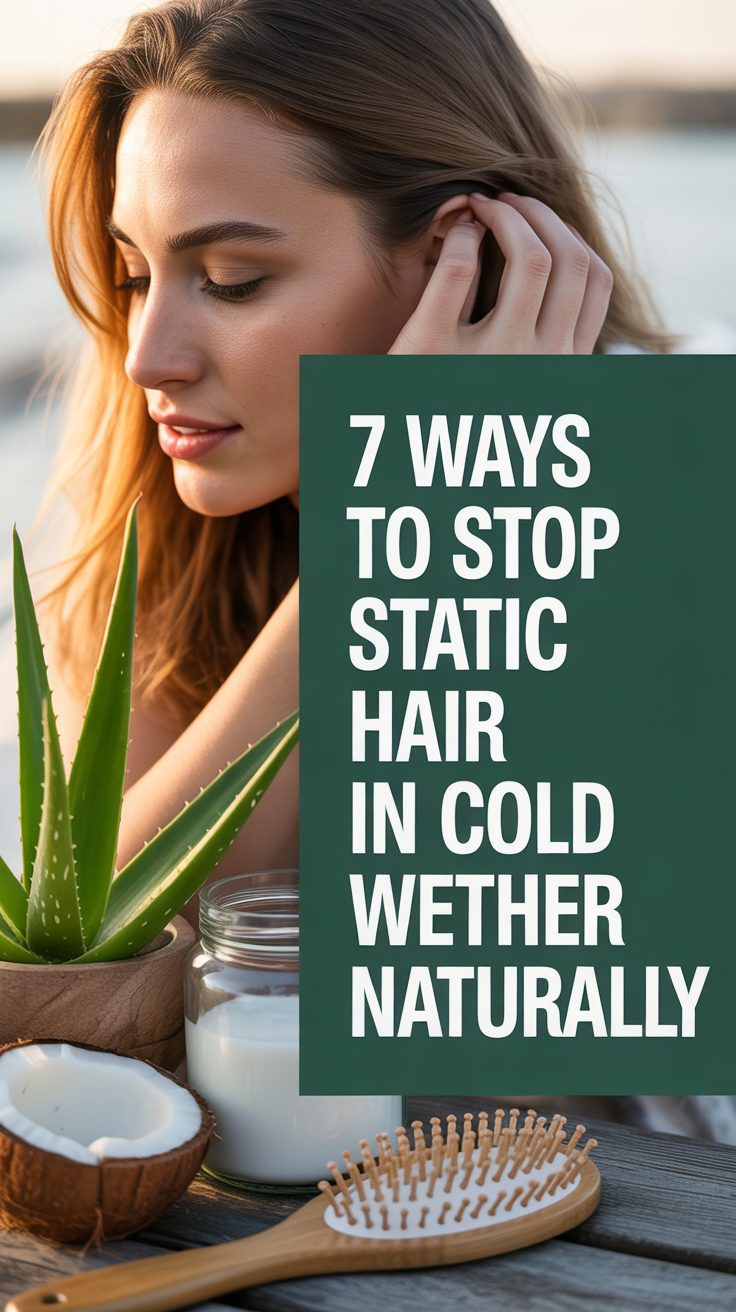

7 Ways to Stop Static Hair in Cold Weather Naturally
You’ve probably noticed your hair standing on end just as you’re heading out for an important meeting—that’s winter static at work. When cold air strips moisture from your strands, you’re left battling flyaways and unmanageable frizz that no amount of brushing can tame. The good news is you don’t need expensive salon treatments or chemical-laden products to restore order. These seven natural techniques will help you regain control over your winter hair woes.
Use Coconut Oil as a Natural Hair Moisturizer
Coconut oil penetrates the hair shaft more effectively than most commercial conditioners, making it an exceptional defense against winter’s moisture-depleting conditions.
Apply a dime-sized amount to your palms, then distribute through mid-lengths and ends while hair’s slightly damp. This technique creates a protective barrier that seals in hydration and neutralizes electrical charges causing flyaways.
For optimal results, warm the oil between your hands before application—this improves absorption and manageability. You’ll notice immediate smoothness as the oil’s fatty acids restore your hair’s natural lipid layer, helping you stop static hair naturally without synthetic additives or harsh chemicals.
Winter’s harsh conditions often lead to breakage and slow growth, making coconut oil an essential treatment for maintaining healthy hair throughout the cold season.
Apply Apple Cider Vinegar Rinse to Balance Hair Ph
When cold weather strips away your hair’s protective acid mantle, an apple cider vinegar rinse restores the optimal pH range of 4.5-5.5, effectively neutralizing the alkaline buildup that amplifies static electricity.
Mix one tablespoon of raw, unfiltered apple cider vinegar with eight ounces of distilled water. After shampooing, pour this solution through your hair, concentrating on mid-lengths to ends. Allow it to penetrate for two minutes before rinsing thoroughly with cool water.
This treatment closes your hair cuticles, creating a smooth surface that reduces friction and static charge accumulation. Apply this rinse twice weekly during winter months for optimal results.
Beyond reducing static, this same diluted apple cider vinegar solution can help address scalp irritation commonly experienced during harsh winter conditions.
Create a DIY Leave-In Conditioner With Natural Ingredients
A properly formulated leave-in conditioner creates a protective barrier that locks in moisture while neutralizing static charges throughout the day.
Leave-in conditioner forms an invisible shield around each strand, sealing in hydration and eliminating flyaways from morning until night.
Combine two tablespoons of aloe vera gel with one tablespoon of argan oil and five drops of lavender essential oil in a spray bottle. Add eight ounces of distilled water and shake vigorously.
Apply this mixture to damp hair, focusing on mid-lengths and ends. The humectant properties of aloe vera attract moisture, while argan oil’s fatty acids smooth the cuticle layer.
For an alternative approach, you can also use coconut oil treatments by applying 1 tablespoon to shoulder-length hair about 20 minutes before washing to reduce static buildup.
Store your conditioner refrigerated for up to two weeks, ensuring optimal freshness and efficacy.
Switch to Silk or Satin Pillowcases
While daytime treatments address static during waking hours, your nighttime routine plays an equally important role in preventing morning flyaways. Cotton pillowcases create friction against your hair shaft, generating static electricity and causing cuticle damage. You’ll eliminate this friction by switching to silk or satin alternatives.
These smooth-surfaced materials allow your hair to glide effortlessly during sleep, maintaining cuticle integrity and moisture retention. Silk offers natural temperature regulation and hypoallergenic properties, while satin provides a budget-friendly synthetic option. Both materials reduce electron transfer between fabric and hair, significantly minimizing static buildup.
Replace your pillowcases weekly to maintain optimal cleanliness and anti-static benefits. Static issues intensify during dry winter months when indoor heating reduces humidity levels and increases the likelihood of electron buildup on surfaces.
Make a Homemade Anti-Static Hair Spray
Creating your own anti-static hair spray delivers immediate control over flyaways without exposing your strands to commercial aerosols and silicone buildup. Combine one cup distilled water with one tablespoon leave-in conditioner in a spray bottle, shaking thoroughly before each application.
Mist lightly onto your brush before styling, or spray directly onto problem areas from twelve inches away. The conditioning agents neutralize electrical charges while moisture weighs down rebellious strands.
For enhanced effectiveness, add three drops of argan oil to boost humidity retention. This formulation remains stable for two weeks when refrigerated, providing cost-effective static management throughout winter months. Just as facial oils require only 3-4 drops for optimal absorption, using minimal amounts prevents product buildup while maximizing anti-static benefits.
Increase Indoor Humidity Levels
Beyond topical treatments, your home’s environmental conditions play a significant role in static hair formation during winter months. Dry indoor air strips moisture from your hair shaft, creating electrical charge buildup. You’ll need to maintain 40-50% relative humidity for optimal results.
Implement these humidity-boosting strategies:
-
Position a cool-mist humidifier in your bedroom – you’ll notice softer, more manageable hair within days
-
Place water bowls near heating vents – this cost-effective solution delivers immediate moisture distribution
-
Introduce moisture-loving houseplants – they’ll naturally regulate humidity while purifying your breathing space
Monitor levels using a hygrometer to ensure consistent moisture maintenance throughout winter.
Avoid Synthetic Fabrics and Plastic Hair Tools
Since synthetic materials generate substantial electron transfer upon contact, switching to natural-fiber clothing and non-plastic styling tools eliminates primary static conductors. Replace polyester scarves and acrylic hats with cotton, silk, or wool alternatives that won’t strip electrons from your hair shafts.
Transition from plastic combs and brushes to wooden, boar bristle, or metal options—these materials prevent charge accumulation during styling. When selecting hair accessories, choose fabric-wrapped elastics over rubber bands. Store metal tools in humid environments to maintain their anti-static properties.
This material substitution strategy directly addresses friction-induced charging mechanisms, reducing flyaway strands and maintaining smooth cuticle alignment throughout winter months.
Frequently Asked Questions
Why Does Cold Weather Cause More Static in Hair Than Warm Weather?
Cold air holds less moisture, drying your hair’s cuticle. Dry hair creates friction, friction generates electrons, and electrons build static charge. You’ll notice increased flyaways because winter’s low humidity strips your strands of natural moisture and protective oils.
How Long Does It Take to See Results From Natural Anti-Static Treatments?
You’ll notice immediate relief from natural anti-static treatments like leave-in conditioners and hair oils. However, for long-term humidity restoration and cuticle repair, you’ll see optimal results within two to three weeks of consistent application.
Can Drinking More Water Help Reduce Static Hair From the Inside Out?
Yes, you’ll benefit from increased hydration. Studies show 60% of winter static stems from dehydration. When you’re properly hydrated, your hair’s moisture barrier strengthens, reducing electron buildup and minimizing static charge naturally from within.
Does Hair Type Affect How Much Static Electricity Builds up in Winter?
Yes, your hair type significantly affects static buildup. Fine, straight hair develops more static than thick, coarse, or curly textures because it has less natural oil distribution and reduced friction resistance, making electrons transfer more easily in dry winter conditions.
Are There Specific Foods That Help Prevent Static Hair Naturally?
You’ll benefit from omega-3-rich foods like salmon and walnuts—they’re moisture magnets for your hair shaft. Think of them as internal conditioners, increasing your scalp’s natural oil production by 30% to combat winter static effectively.