8 Natural Remedies for Winter Joint Stiffness and Discomfort
When winter temperatures drop, you’ll notice your joints respond with increased stiffness and discomfort—a physiological reaction to cold-induced vasoconstriction and synovial fluid changes. While conventional treatments exist, evidence-based natural interventions can provide measurable relief without the side-effect profile of pharmaceutical options. Understanding which remedies demonstrate clinical efficacy, proper dosing protocols, and realistic timeframes for symptom improvement will determine whether you’re managing your joint health effectively or simply following ineffective trends.
Warm Turmeric Milk for Daily Joint Support
When joint stiffness intensifies during cold months, turmeric milk—also called golden milk—provides measurable anti-inflammatory benefits through its active compound curcumin. You’ll need one teaspoon of turmeric powder mixed with warm milk and black pepper to enhance curcumin absorption by 2,000%. Studies demonstrate 500-1,000mg daily curcumin reduces joint inflammation markers significantly. Consume this remedy before bedtime for optimal results.
Adding cinnamon and ginger amplifies anti-inflammatory properties. Among winter joint stiffness remedies, this traditional preparation stands out for documented efficacy. You should maintain consistency for 8-12 weeks to observe clinical improvements in mobility and reduced morning stiffness. For optimal bioavailability, combine 1 teaspoon turmeric powder with 1/4 teaspoon black pepper in 8oz warm coconut milk.
Anti-Inflammatory Ginger Tea to Ease Stiffness
Fresh ginger root contains gingerols and shogaols—bioactive compounds that inhibit COX-2 enzymes and reduce prostaglandin production in inflamed joint tissues. You’ll achieve therapeutic effects by consuming 2-3 grams daily.
Preparation protocol:
-
Slice 1-inch fresh ginger root into thin pieces
-
Steep in 8 ounces boiling water for 10 minutes
-
Strain and consume twice daily on empty stomach
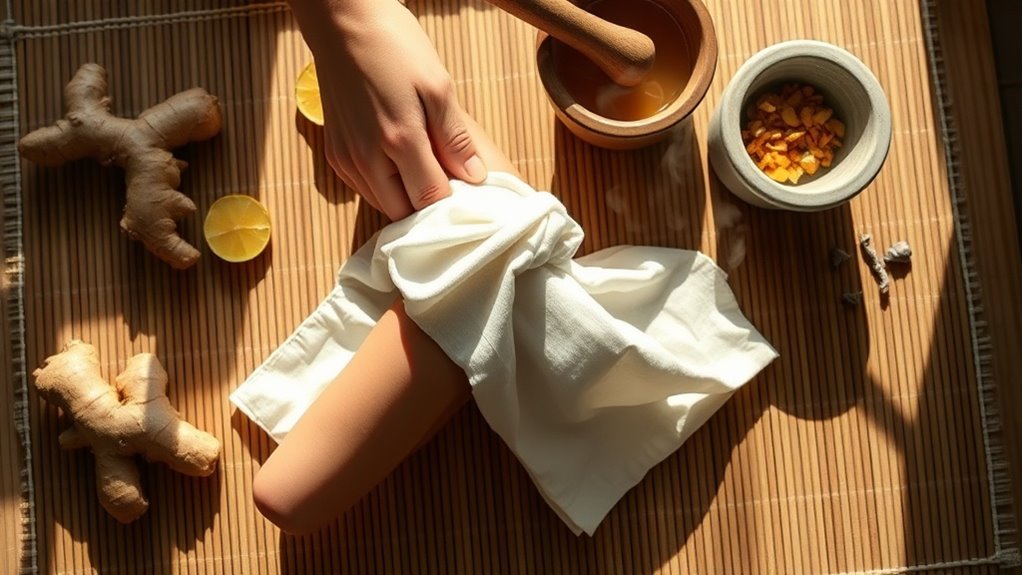
Clinical studies demonstrate ginger’s efficacy matches NSAIDs for osteoarthritis symptoms without gastrointestinal side effects. You can add Ceylon cinnamon for enhanced anti-inflammatory synergy. For external application, you can also prepare a warming ginger compress using 2 tablespoons fresh grated ginger per cup of hot water and apply to affected joints for 15-20 minutes. Monitor symptoms weekly to assess response.
Therapeutic Epsom Salt Baths for Deep Relief
Magnesium sulfate (Epsom salt) penetrates skin barriers through transdermal absorption, delivering therapeutic magnesium directly to inflamed periarticular tissues.
You’ll achieve optimal results by dissolving two cups in bathwater at 92-100°F, maintaining immersion for 15-20 minutes. This concentration creates a hypertonic environment that reduces synovial edema while magnesium modulates inflammatory cytokines and relaxes smooth muscle tissue surrounding affected joints.
You should repeat treatments three times weekly during symptomatic periods. Contraindications include open wounds, dermatological conditions, cardiovascular instability, and pregnancy. Monitor skin integrity post-treatment and discontinue if irritation develops. For enhanced effectiveness, schedule your Epsom salt soaks approximately 20 minutes before bedtime to maximize relaxation and support overnight joint recovery. Document symptom changes to assess therapeutic efficacy.
Gentle Joint Massage With Warming Oils
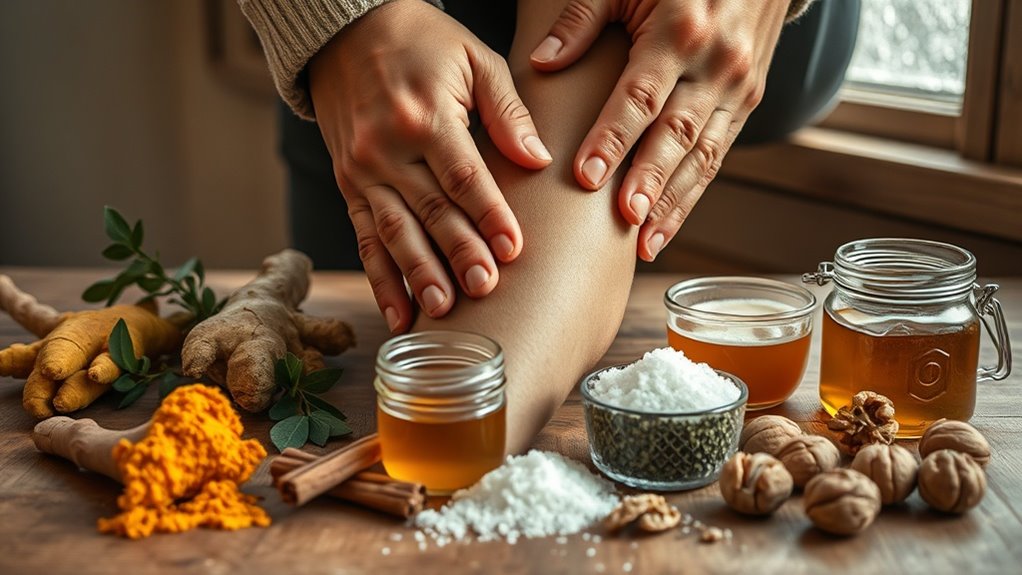
Topical application of warming botanical oils enhances circulation to stiff joints while providing mechanical manipulation of periarticular structures. You’ll achieve optimal results by selecting oils with documented anti-inflammatory properties:
Warming botanical oils deliver dual benefits: improved circulation to stiff joints and targeted manipulation of surrounding connective tissues.
-
Ginger oil – Contains gingerols that inhibit cyclooxygenase pathways
-
Capsaicin-infused oil – Depletes substance P, reducing nociceptive signaling
-
Eucalyptus oil – Provides cineole for penetrating analgesic effects
Apply firm, circular pressure along joint margins for 5-7 minutes. You’re targeting synovial fluid movement and fascial release. Pre-warm oils to 37°C for enhanced tissue penetration. For maximum efficacy, blend eucalyptus oil with a carrier like coconut oil using proper dilution ratios of 8-10 drops per 2 tablespoons of base oil. Contraindications include active inflammation or broken skin.
Targeted Stretching Routines for Better Mobility
While thermal applications and massage address immediate stiffness, you’ll need systematic flexibility work to maintain long-term joint mobility during cold months. Focus on dynamic stretching after warming tissues for 5-10 minutes.
Target major joint complexes: hip flexors, shoulder rotators, and ankle dorsiflexors—areas most susceptible to cold-induced restriction. Hold static stretches for 30 seconds minimum to achieve measurable fascia elongation.
Perform gentle range-of-motion exercises twice daily, progressing through pain-free zones. Document baseline flexibility measurements to track improvement. Consistent stretching reduces synovial fluid viscosity and maintains cartilage nutrition through mechanical compression cycles. For upper body stiffness, incorporate gentle neck stretches with 5-10 repetitions to address tension that commonly develops in cold weather.
Omega-3 Rich Foods to Combat Inflammation
Beyond mechanical interventions, your diet directly modulates the inflammatory cascade affecting winter joint function. Omega-3 fatty acids—specifically EPA and DHA—inhibit pro-inflammatory cytokines and reduce synovial inflammation markers.
Omega-3 fatty acids target the inflammatory cascade at the cellular level, directly reducing joint inflammation through cytokine inhibition.
Prioritize these evidence-backed sources:
-
Fatty fish (salmon, mackerel, sardines): 2-3 servings weekly provide therapeutic omega-3 concentrations
-
Walnuts: 1 ounce daily delivers alpha-linolenic acid for modest anti-inflammatory effects
-
Ground flaxseed: 2 tablespoons mixed into foods enhances omega-3 bioavailability
Clinical trials demonstrate that consistent omega-3 intake (≥2g daily) decreases joint tenderness and morning stiffness duration. You’ll typically observe measurable improvements within 8-12 weeks of dietary modification.
Heat Therapy Applications for Immediate Comfort
When cold weather exacerbates joint stiffness, thermotherapy provides rapid symptomatic relief by increasing local blood flow and reducing pain signal transmission. You’ll achieve optimal results by applying heat for 15-20 minutes at temperatures between 104-113°F.
Moist heat penetrates deeper than dry applications, making warm compresses and hydrotherapy particularly effective. You can utilize heating pads, warm baths, or paraffin wax treatments targeting affected joints.
Apply heat before physical activity to enhance tissue elasticity and range of motion. However, you must avoid thermotherapy during acute inflammation or if you’ve compromised circulation, as contraindications include recent injuries and vascular disorders.
Herbal Supplements for Long-Term Joint Health
Although heat therapy addresses immediate discomfort, herbal supplements target the underlying inflammatory processes that compromise joint integrity during winter months. Evidence supports specific botanical interventions:
-
Curcumin (500-1000mg daily) – Inhibits COX-2 enzymes and reduces synovial inflammation
-
Boswellia serrata (300-500mg) – Blocks leukotriene synthesis, preventing cartilage degradation
-
Ginger extract (250mg) – Suppresses inflammatory cytokines and prostaglandin production
You’ll require 8-12 weeks for measurable clinical improvement. Standardized extracts ensure consistent bioactive compounds. Monitor for potential drug interactions, particularly with anticoagulants. Laboratory markers (CRP, ESR) can objectively track your inflammatory response to supplementation.
Frequently Asked Questions
Why Does Cold Weather Make Joint Pain and Stiffness Worse?
Your joints aren’t deliberately conspiring against you, though it feels that way. Cold weather decreases barometric pressure, causing tissue expansion and nerve compression. Reduced temperatures also thicken synovial fluid, limiting joint lubrication and increasing stiffness you’re experiencing.
How Can I Tell if My Joint Pain Requires Medical Attention?
You should seek medical attention if you’re experiencing severe pain, joint swelling, redness, warmth, fever, sudden inability to move the joint, or if symptoms persist beyond two weeks despite home care measures.
Can Dehydration Contribute to Increased Winter Joint Stiffness?
Yes, dehydration can worsen your joint stiffness. When you’re dehydrated, your body produces less synovial fluid, reducing joint lubrication. You’ll also experience decreased cartilage cushioning, which intensifies discomfort and restricts movement, particularly during winter months.
Are There Specific Vitamins That Help Prevent Seasonal Joint Discomfort?
While you might think supplements won’t make measurable differences, you’ll find vitamin D₃ (2000-4000 IU daily) and omega-3 fatty acids (1000-2000mg EPA/DHA) demonstrate clinically significant reductions in inflammatory markers and joint pain scores.
Does Wearing Compression Clothing Help Reduce Joint Pain in Cold Weather?
Compression clothing may provide modest relief by improving circulation and reducing swelling, but evidence for cold-weather joint pain prevention remains limited. You’ll likely find better results combining compression with proven therapies like heat application and gentle movement exercises.