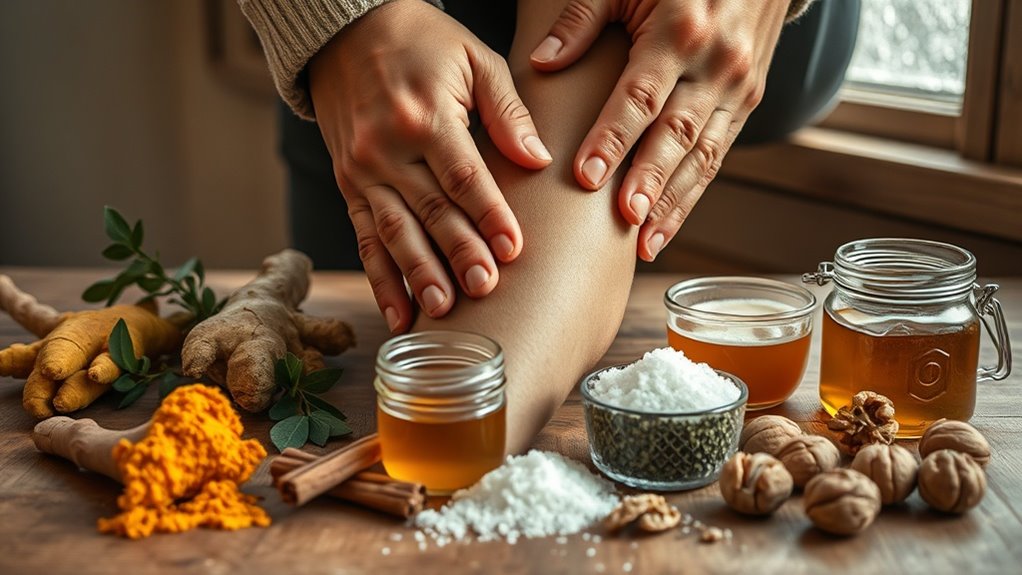

When cold weather strikes, your trapezius and levator scapulae muscles contract involuntarily, restricting blood flow and triggering the inflammatory cascade you’re experiencing as stiffness. You don’t need pharmaceutical interventions to address this myofascial tension. Five evidence-based natural remedies can systematically target the underlying mechanisms—vasoconstriction, muscle spasm, and localized inflammation—that perpetuate your discomfort. Each treatment works through distinct physiological pathways to restore proper tissue function and mobility. Here’s how to implement them effectively.
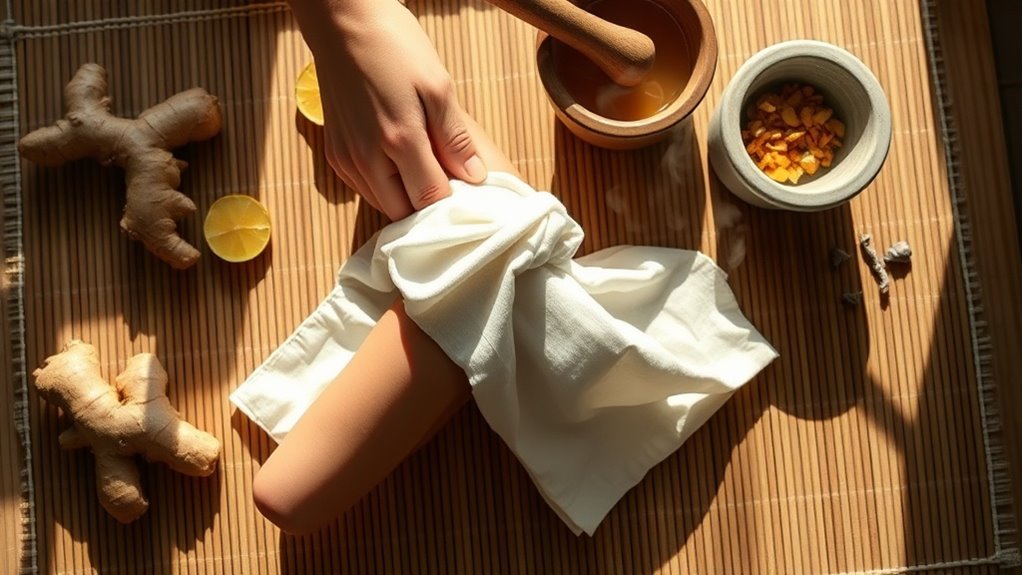
Warm Compress Therapy: Melting Away Muscle Tension With Strategic Heat Application
Thermotherapy functions through vasodilation of blood vessels within the trapezius, levator scapulae, and sternocleidomastoid muscles, increasing local circulation by up to 40% and accelerating metabolic waste removal from contracted tissue.
You’ll apply heat for 15-20 minutes directly to affected cervical regions. Use moist heat sources—heated towels, gel packs, or hot water bottles—maintaining temperatures between 104-113°F. Position compresses along the posterior neck base and upper shoulder girdle.
You’re targeting myofascial trigger points where muscle fibers remain chronically shortened. These winter stiff neck remedies work best when you repeat applications every 2-3 hours during acute symptom phases. Cold weather causes muscles to contract and stiffen, which is why consistent heat therapy applications become especially critical during harsh winter conditions when environmental temperatures contribute to increased muscle tension.
Gentle Neck Stretches: Targeted Movements to Release Tightness and Restore Mobility
While heat therapy addresses muscle tension through increased circulation, active stretching mechanically lengthens contracted muscle fibers and resets proprioceptive feedback loops in the cervical spine.
Execute these targeted mobilizations:
-
Lateral flexion stretch: Depress ipsilateral shoulder while drawing contralateral ear toward shoulder, targeting upper trapezius and levator scapulae
-
Chin tuck retractions: Posteriorly translate C1-C2 to counteract forward head posture
-
Rotation stretch: Turn head 45-60 degrees, engaging sternocleidomastoid and scalene muscles
-
Suboccipital release: Apply gentle cervical extension to decompress occipital-atlas junction
Hold each position 30 seconds. Perform bilateral stretches three times daily. For optimal results, combine these targeted stretching routines with therapeutic massage using warming oils to enhance muscle relaxation and joint mobility.
Anti-Inflammatory Turmeric Treatments: Harnessing Golden Spice Power for Pain Relief
Beyond mechanical interventions, curcumin—turmeric’s primary bioactive compound—inhibits cyclooxygenase-2 (COX-2) and nuclear factor kappa B (NF-κB) pathways, effectively reducing prostaglandin synthesis in inflamed cervical tissues.
| Administration Method | Dosage Protocol | Bioavailability Enhancement |
|—————————|———————|———————————-|
| Golden milk infusion | 500mg turmeric + black pepper | Piperine increases absorption 2000% |
| Liposomal curcumin capsules | 1000mg daily (divided doses) | Phospholipid encapsulation optimizes delivery |
| Topical turmeric paste | 2:1 turmeric-to-coconut oil ratio | Transdermal penetration targets trapezius inflammation |
| Turmeric-ginger tea | Fresh root combination | Synergistic gingerol compounds amplify relief |
| Standardized extract supplements | 95% curcuminoids concentration | Pharmaceutical-grade potency |
You’ll experience measurable reduction in cervical muscle rigidity within 48-72 hours. For optimal therapeutic effect, consume golden milk before bedtime to allow anti-inflammatory compounds to work during restorative sleep when muscle repair naturally occurs.
Peppermint Oil Massage: Essential Oil Techniques for Deep Muscle Relaxation
When menthol—peppermint oil’s primary monoterpene—contacts dermal thermoreceptors, it activates TRPM8 (transient receptor potential melastatin 8) channels, producing immediate analgesic effects in hypertonic cervical musculature.
Optimal application protocol:
-
Dilute 3-5% peppermint oil in carrier medium (sweet almond, jojoba)
-
Apply firm petrissage strokes along trapezius attachments bilaterally
-
Focus on levator scapulae insertion points at superior medial scapular angles
-
Maintain 8-12 minute treatment duration for maximal penetration
You’ll experience vasodilation followed by local hypothermia, reducing inflammatory mediators while relaxing contracted muscle fibers. This dual thermal response significantly decreases myofascial trigger point sensitivity. For comprehensive relief, consider pairing topical massage with a warming peppermint foot soak to promote circulation and full-body relaxation after long days of physical strain.
Targeted Heat Therapy Applications: Precision Warming Methods for Lasting Comfort
After cooling sensations subside from topical menthol applications, therapeutic heat provides complementary physiological benefits through different mechanisms. Targeted thermotherapy increases tissue perfusion, enhancing oxygen delivery to hypertonic cervical musculature. You’ll achieve optimal results through precision application.
| Heat Modality | Target Depth | Duration |
|——————-|——————|————–|
| Moist heating pad | Superficial fascia | 15-20 minutes |
| Infrared lamp | Mid-dermal layer | 10-15 minutes |
| Microwavable compress | Deep muscle tissue | 20-25 minutes |
Apply heat directly to trapezius insertion points, levator scapulae origins, and splenius capitis bellies. Maintain temperatures between 104-113°F to promote vasodilation without thermal injury. You’ll experience reduced muscle spindle activity and improved extensibility. Similar to how colloidal oatmeal soaks work at precise temperatures for skin barrier repair, maintaining consistent therapeutic warmth ensures optimal tissue response during heat therapy sessions.
Frequently Asked Questions
Can Winter Weather Actually Cause Neck and Shoulder Stiffness?
Yes, cold temperatures cause vasoconstriction and muscle tension. Consider Sarah, a 42-year-old who developed cervical myofascitis after winter commutes—her trapezius and levator scapulae contracted defensively. You’ll experience similar muscular guarding when exposed to prolonged cold environments.
How Long Does Winter-Related Neck Stiffness Typically Last?
Winter-induced cervical and trapezius stiffness typically resolves within 48-72 hours with proper intervention. You’ll need consistent heat therapy, gentle myofascial release, and anti-inflammatory protocols. If your symptoms persist beyond one week, you should seek professional musculoskeletal assessment.
When Should I See a Doctor for Neck Pain?
You should consult a physician if cervical pain persists beyond two weeks, radiates down your upper extremities, accompanies neurological deficits like numbness, occurs with fever, or results from trauma requiring diagnostic imaging and therapeutic intervention.
Are There Preventive Measures to Avoid Winter Neck Stiffness?
Think of prevention as winterproofing your cervical spine. You’ll maintain optimal trapezius flexibility through daily stretching protocols, ensure proper scapular posture, keep your neck thermally insulated, stay hydrated, and perform regular range-of-motion exercises targeting cervical musculature.
Can Dehydration Worsen Winter Neck and Shoulder Tension?
Yes, dehydration compromises your intervertebral disc hydration and reduces synovial fluid viscosity, impairing cervical and shoulder joint lubrication. You’ll experience decreased tissue elasticity and increased muscular tension. Maintain adequate hydration to optimize musculoskeletal function and prevent myofascial restrictions.