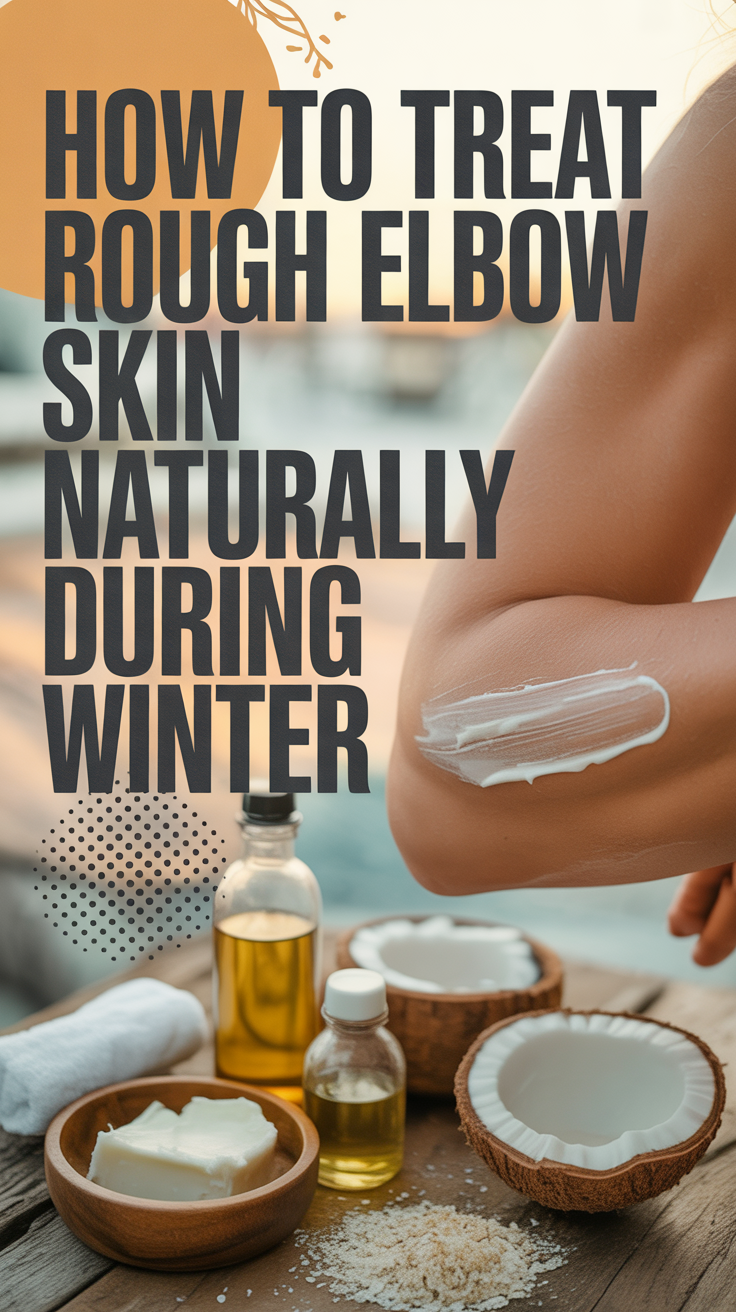
How to Treat Rough Elbow Skin Naturally During Winter.
You’ve probably never considered that your elbows lack sebaceous glands, making them particularly vulnerable to transepidermal water loss during winter months. This anatomical deficit, combined with decreased ambient humidity and indoor heating systems, creates the perfect conditions for hyperkeratosis and xerosis. While you’re likely familiar with basic moisturizing techniques, there’s a specific protocol sequence involving exfoliation timing, occlusive barrier application, and humectant layering that’ll transform your treatment outcomes—if you understand the dermatological mechanism behind each intervention.
Understanding Why Winter Weather Causes Rough Elbow Skin
Winter’s cold, dry air strips moisture from the stratum corneum—the outermost layer of skin—leading to transepidermal water loss (TEWL) that’s particularly pronounced at the elbows. You’ll notice this because elbows have fewer sebaceous glands, reducing natural lipid production.
Indoor heating further decreases humidity levels, exacerbating dryness. The epidermis becomes compromised when its barrier function weakens, causing rough, scaly patches. Your elbow skin’s constant friction against clothing and surfaces accelerates keratinocyte turnover, creating thickness and roughness.
Understanding these mechanisms helps you treat rough elbow skin effectively through targeted interventions that restore the skin’s moisture barrier and prevent further dehydration. Fortunately, natural remedies like coconut oil and shea butter can help restore skin barrier function and promote moisture retention without harsh chemicals.
Coconut Oil Massage Treatment for Deep Moisturization
Because coconut oil contains medium-chain fatty acids—primarily lauric acid (47%)—it penetrates the stratum corneum more effectively than longer-chain lipids, providing occlusive and emollient properties that address compromised barrier function. Apply virgin coconut oil to dampened elbows using circular motions for 2-3 minutes to enhance absorption through mechanical action.
The antimicrobial properties of lauric acid also prevent secondary bacterial colonization in fissured skin. For optimal therapeutic effect, perform this treatment twice daily, covering treated areas with cotton sleeves for 30 minutes post-application. You’ll notice improved skin pliability within 5-7 days of consistent use. Research demonstrates that coconut oil’s natural moisturizing properties help support skin barrier function, making it particularly effective during harsh winter conditions when elbow skin becomes most vulnerable to dryness and cracking.
Oatmeal Exfoliating Scrub Recipe and Application Method
How does colloidal oatmeal (Avena sativa) achieve its keratolytic effect on hyperkeratotic elbow skin? The β-glucans and avenanthramides penetrate the stratum corneum, softening corneocyte adhesions while providing anti-inflammatory benefits.
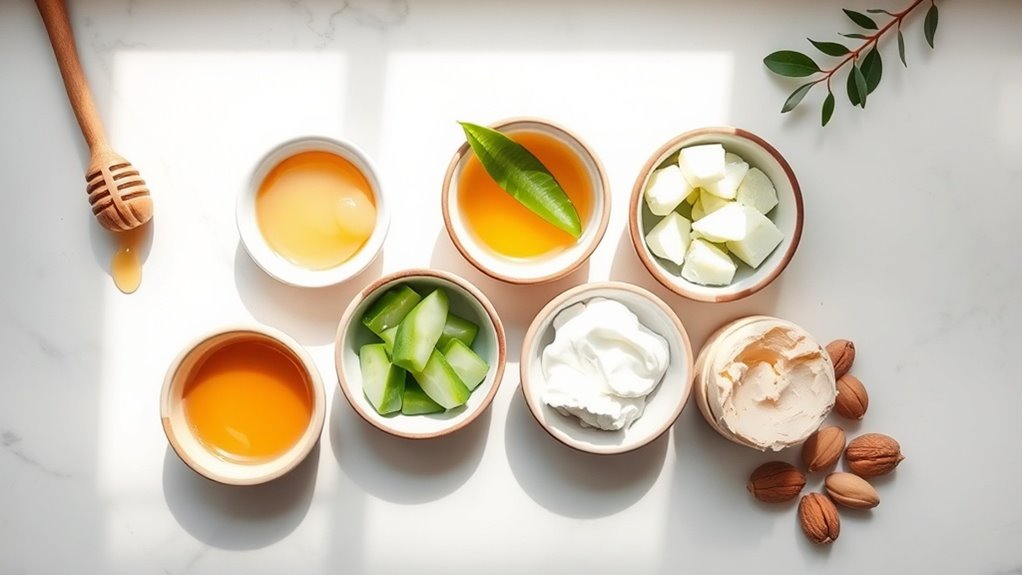
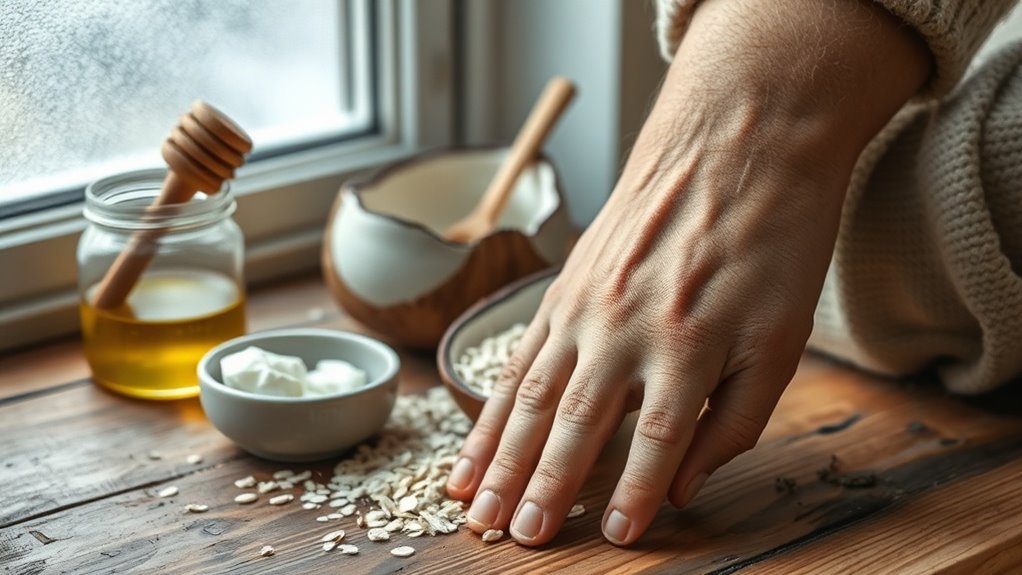
You’ll need: 2 tablespoons finely ground colloidal oatmeal, 1 tablespoon raw honey (humectant properties), 1 teaspoon coconut oil. Mix ingredients into a paste. Apply to dampened elbows using circular motions for 2-3 minutes, focusing on lichenified areas. The mechanical exfoliation removes dead keratinocytes while oatmeal’s saponins gently cleanse. Rinse thoroughly with lukewarm water.
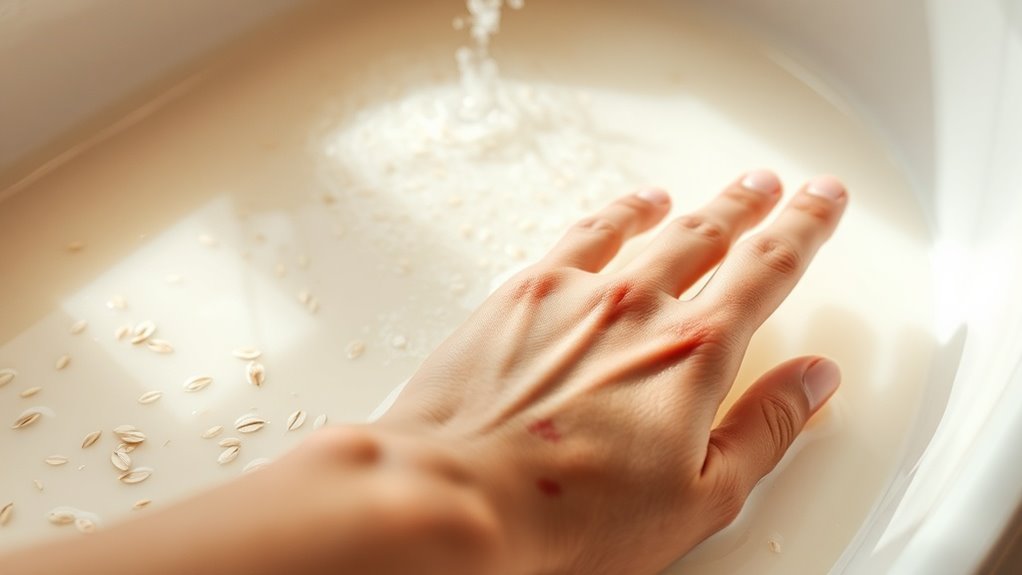
Perform this treatment twice weekly for optimal desquamation and epidermal barrier restoration. For more intensive relief, you can also add this same oat mixture to a full bathtub soak using the standard ratio of 1 cup ground oats in water temperatures between 98-100°F for 15-20 minutes.
Honey-Glycerin Mask for Intensive Hydration
While exfoliation addresses surface hyperkeratosis, maintaining optimal skin hydration requires occlusive and humectant interventions between treatments. You’ll combine two tablespoons raw honey with one tablespoon pharmaceutical-grade glycerin. Apply this emollient mask to elbows for 20 minutes, allowing humectant properties to attract moisture while honey’s antimicrobial compounds prevent secondary infection in fissured skin.
| Ingredient | Mechanism | Duration | Frequency |
|————|———–|———-|———–|
| Raw Honey | Humectant retention | 20 minutes | 3×/week |
| Glycerin | Moisture binding | 20 minutes | 3×/week |
Rinse with lukewarm water and immediately seal hydration with emollient cream to prevent transepidermal water loss. For those experiencing particularly stubborn winter skin patches, leaving the honey-glycerin treatment on overnight can provide enhanced relief for severely dry elbows.
Aloe Vera Gel Treatment Benefits and Usage
Fresh aloe vera gel provides multiple therapeutic mechanisms for treating winter-damaged elbow skin through its polysaccharide content and bioactive compounds. You’ll extract gel directly from the leaf’s inner portion, applying it to affected areas twice daily.
The mucopolysaccharides penetrate the stratum corneum, enhancing moisture retention while stimulating fibroblast activity for collagen synthesis. Leave the gel on your elbows for 20 minutes before rinsing. You can combine it with vitamin E oil for enhanced penetration.
The plant’s auxins and gibberellins accelerate wound healing and reduce inflammation. For optimal results, use 2-3 tablespoons of pure aloe gel every 4-6 hours to support natural skin repair and moisture restoration. Store fresh gel refrigerated for maximum potency retention.
Shea Butter Application Technique for Barrier Protection
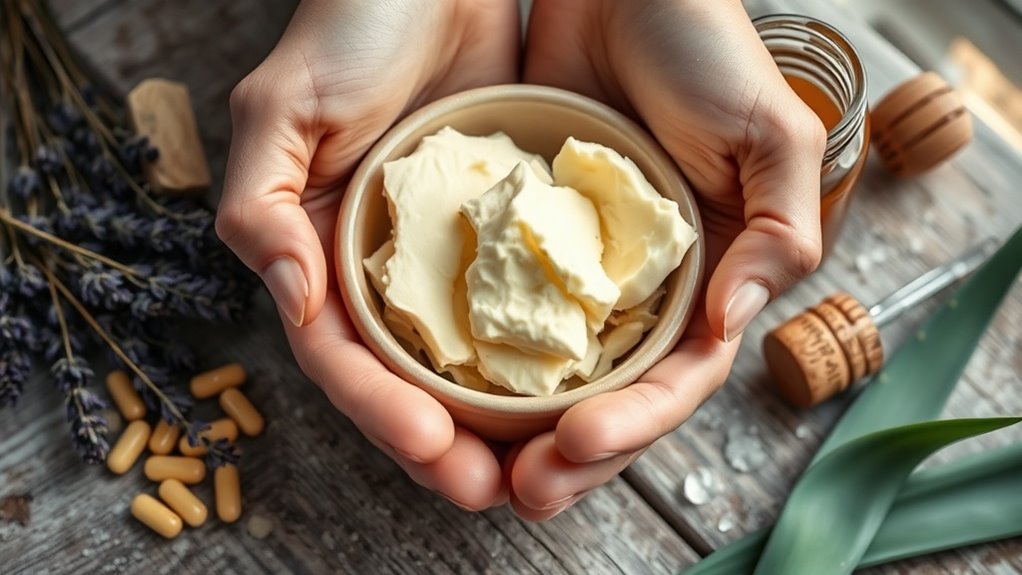
Unrefined shea butter contains approximately 60% fat composition—primarily stearic and oleic acids—that creates an occlusive barrier preventing transepidermal water loss on compromised elbow skin. You’ll apply it using the “damp skin technique”: after bathing, pat elbows semi-dry, leaving residual moisture.
Warm a quarter-sized amount between your palms until liquefied, then massage onto each elbow using circular motions for 60 seconds to enhance penetration. The fatty acid profile mimics your skin’s natural lipid structure, facilitating cellular repair.
Apply twice daily—morning and evening—for optimal barrier restoration. Clinical studies demonstrate significant improvement in skin hydration within 48 hours of consistent application.
Overnight Olive Oil Therapy Protocol
Extra-virgin olive oil delivers polyphenolic compounds and squalene that penetrate the stratum corneum during extended contact periods, making overnight application particularly effective for severe elbow dryness.
Implementation protocol:
-
Warm 1-2 teaspoons of oil between your palms for enhanced absorption
-
Massage thoroughly onto elbows using circular motions for 2-3 minutes
-
Cover treated areas with cotton gauze secured by medical tape
-
Wear long-sleeved cotton clothing to prevent bedding stains
-
Remove wrapping upon waking and cleanse with lukewarm water
You’ll observe significant improvement in skin texture and hydration after 3-5 consecutive applications.
Prevention Tips to Maintain Smooth Elbows Throughout Winter
While therapeutic interventions restore compromised elbow skin, establishing consistent protective measures prevents recurrence of xerosis and hyperkeratosis throughout winter months.
Sustained prevention protocols safeguard against seasonal xerosis relapse more effectively than reactive treatment cycles alone.
You’ll maintain optimal barrier function by applying emollients immediately post-bathing when transepidermal water loss peaks. Limit shower duration to five minutes using lukewarm water, as prolonged exposure strips natural moisturizing factors.
You should incorporate humectifiers maintaining 40-50% relative humidity in heated environments. Wear breathable fabrics preventing mechanical friction against elbows.
You’ll support dermal integrity through adequate hydration—consuming eight glasses daily—and omega-3 supplementation. Implement weekly gentle exfoliation using chemical exfoliants rather than abrasive physical methods that compromise stratum corneum integrity.
Frequently Asked Questions
Can Vitamin Deficiencies Cause Rough Elbow Skin During Winter Months?
Yes, you’ll find that deficiencies in vitamins A, E, and B-complex can worsen rough elbow skin during winter. You should consider supplementation and consuming nutrient-rich foods while maintaining proper hydration to support your skin’s barrier function and cellular repair.
How Long Does It Take to See Improvement in Elbow Texture?
You’ll typically notice softening within 7-14 days of consistent emollient application. A patient with xerosis showed marked improvement after applying urea cream twice daily for ten days, demonstrating how regular moisturization accelerates epidermal barrier repair and stratum corneum hydration.
Are There Specific Fabrics That Worsen Elbow Skin Dryness in Winter?
Yes, you’ll find wool and synthetic fabrics like polyester worsen elbow dryness through friction and reduced breathability. They’ll strip natural oils and trap heat. You should opt for soft cotton or silk garments that minimize irritation and moisture loss.
Should I See a Dermatologist for Severely Cracked Elbow Skin?
Yes, you should consult a dermatologist if you’re experiencing severely cracked elbows with bleeding, oozing, persistent pain, or signs of infection. They’ll assess for underlying conditions like eczema or psoriasis and prescribe appropriate medical-grade treatments.
Does Drinking More Water Actually Help With Dry Elbow Skin?
Yes, you’ll notice improvements. Adequate hydration maintains your skin’s moisture barrier and increases elasticity. You should drink 8-10 glasses daily while applying topical emollients, since internal hydration alone won’t sufficiently treat localized elbow dryness.