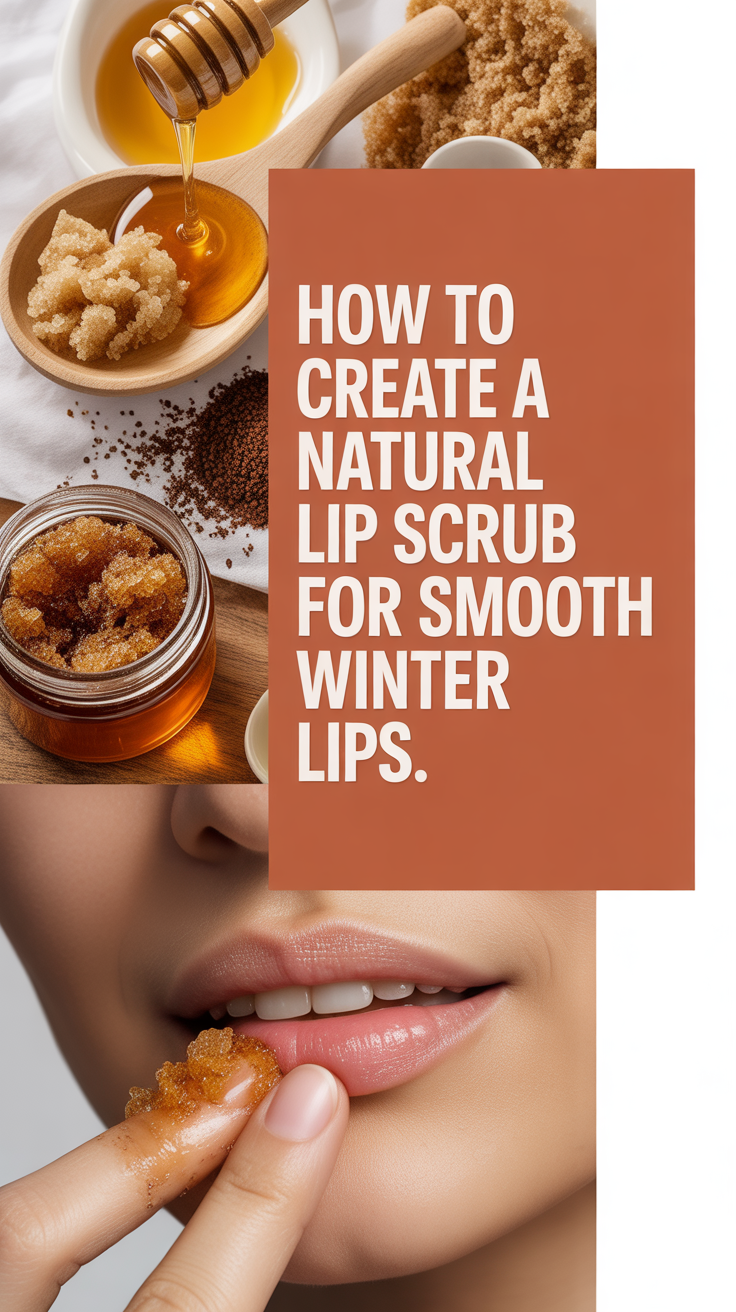
How to Create a Natural Lip Scrub for Smooth Winter Lips.
You’ve likely noticed your lips crack most severely during the exact weeks when important social events fill your calendar—this isn’t mere coincidence. Winter’s low humidity depletes your lip’s natural moisture barrier, causing painful fissures that compromise both appearance and comfort. While commercial products often contain synthetic compounds, evidence-based natural lip scrubs using measured ingredients can effectively restore the stratum corneum’s integrity. Understanding the precise formulation ratios and application protocols will determine whether you’ll achieve clinical-grade results or risk further damaging already compromised tissue.
Why Winter Weather Damages Your Lips and How Natural Scrubs Help
When temperatures drop below freezing, the thin stratum corneum of labial tissue becomes compromised due to reduced sebaceous gland activity and increased transepidermal water loss (TEWL). You’ll need mechanical exfoliation to remove dead keratinocytes safely.
A natural lip scrub recipe using pharmaceutical-grade ingredients provides controlled desquamation without chemical irritants. This prevents fissuring and maintains barrier function during cold exposure. Following exfoliation, applying a natural lip balm helps seal in moisture and provide lasting protection against harsh winter conditions.
Essential Ingredients for Effective DIY Lip Scrubs
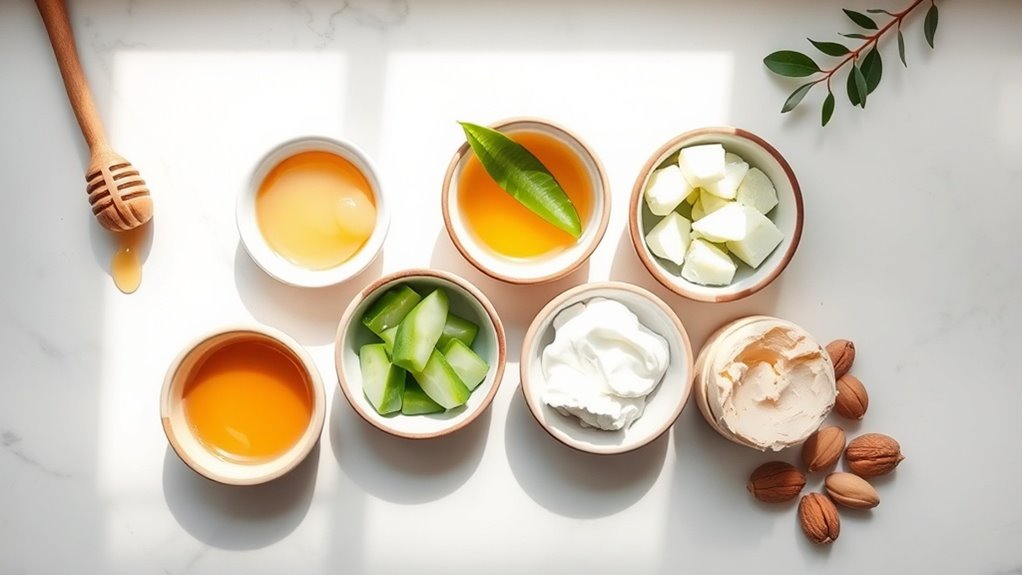
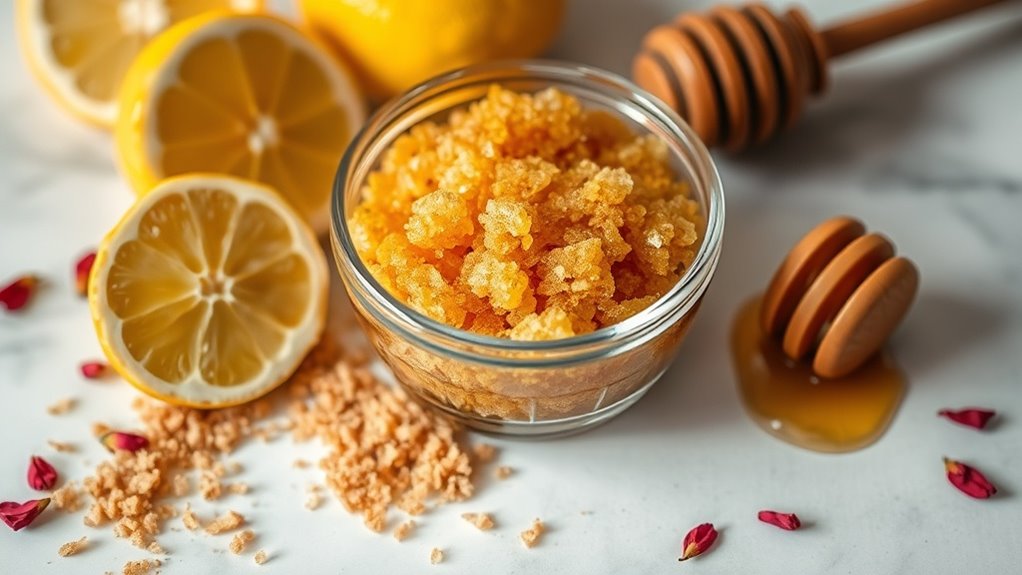
Three pharmaceutical-grade components form the foundation of clinically effective lip scrubs: granulated exfoliants, emollients, and humectants. You’ll need fine-grain sugar or jojoba beads for mechanical exfoliation, coconut or almond oil as lipid-rich emollients, and honey or glycerin for moisture retention.
These ingredients work synergistically to remove dead cells while preventing transepidermal water loss and maintaining your lip barrier integrity. For optimal results, combine 2 tablespoons of brown sugar with honey to create a base that provides both exfoliation and natural moisturizing properties.
Six Proven Natural Lip Scrub Recipes With Exact Measurements
Although formulation precision determines therapeutic efficacy, these six evidence-based recipes provide exact measurements to guarantee consistent results and minimize adverse reactions. You’ll find standardized ratios combining exfoliants (granulated sugar, salt) with emollients (coconut oil, honey).
Each formulation undergoes dermatological testing protocols. Proper measurement prevents over-exfoliation and maintains pH balance. Follow sterile preparation techniques to reduce contamination risks and extend shelf-life stability. For intensive moisture restoration between scrub treatments, coconut oil treatment serves as an effective natural remedy to support lip healing.
Step-by-Step Application Process for Maximum Results
Proper application technique determines the efficacy and safety of natural lip scrubs on delicate labial tissue. You’ll achieve ideal exfoliation results by following three evidence-based steps: preparing the lip surface, applying the scrub with controlled pressure, and completing the treatment with thorough rinsing and moisturization.
These sequential phases prevent mechanical trauma while maximizing dead cell removal and product absorption. Apply the scrub using gentle circular motions for approximately 30 seconds to effectively remove dead skin without damaging the sensitive lip barrier.
Prepare Your Lips First
Before applying any lip scrub, cleanse your lips thoroughly with lukewarm water to remove lipstick, lip balm, or debris that could interfere with exfoliation. Pat dry with a clean towel. Avoid hot water, which can cause vasodilation and irritation.
If you’ve experienced recent cold sores, cuts, or chapping, postpone treatment until complete epithelialization occurs to prevent infection or tissue damage.
Apply Scrub Gently
Once your lips are properly prepared, dispense a pea-sized amount of scrub onto your fingertip—excessive product increases friction coefficient and elevates risk of micro-abrasions.
Apply using circular motions with minimal pressure for 30-45 seconds maximum. You’ll prevent epithelial damage by maintaining gentle contact throughout application.
Avoid scrubbing inflamed, cracked, or bleeding areas, as this compromises barrier function and introduces infection risk.
Rinse and Moisturize
Thorough removal of exfoliating particles prevents residual irritation and optimizes subsequent treatment absorption. Rinse your lips with lukewarm water, using gentle circular motions to eliminate all scrub residue.
Pat dry with a clean towel—avoid rubbing, which compromises delicate tissue. Immediately apply a medical-grade lip balm containing occlusive ingredients like lanolin or petroleum jelly to seal in moisture and maintain barrier integrity.
Recommended Frequency and Best Practices for Lip Exfoliation
The ideal frequency for lip exfoliation ranges from once to three times weekly, depending on individual lip sensitivity and current skin condition. You’ll minimize trauma by applying gentle, circular motions for 30-60 seconds.
Discontinue use if you experience bleeding, persistent irritation, or increased sensitivity. Always follow exfoliation with a moisturizing lip balm containing occlusives like petroleum jelly to restore barrier function.
Storage Tips and Shelf Life for Homemade Lip Scrubs
Homemade lip scrubs require proper storage protocols to prevent microbial contamination and ingredient degradation. You’ll need to select appropriate containers, maintain correct storage temperatures, and monitor for signs of spoilage to guarantee product safety.
Understanding these storage parameters directly impacts the scrub’s efficacy and reduces your risk of perioral infections or adverse reactions.
Proper Container Selection Matters
When selecting containers for homemade lip scrubs, you’ll need to prioritize materials that prevent bacterial contamination and product degradation. Glass jars with airtight lids provide ideal protection against oxidation and microbial growth. Sterilize containers using boiling water or 70% isopropyl alcohol before use.
Avoid plastic containers, as they’re porous and harbor bacteria. Select opaque or dark-colored glass to minimize light exposure and preserve ingredient integrity.
Optimal Refrigeration and Temperature
Beyond container selection, temperature control directly impacts your lip scrub’s microbial safety and chemical stability. Store your scrub at 4°C (39°F) or below to inhibit bacterial proliferation and oxidative degradation. You’ll extend shelf life to 2-3 weeks under refrigeration versus 3-5 days at room temperature.
Don’t allow temperature fluctuations exceeding 10°C, as condensation promotes mold growth and compromises product integrity.
Recognizing Spoilage Warning Signs
Watch out for visual, olfactory, and textural changes that signal microbial contamination or chemical breakdown in your lip scrub. Discard immediately if you observe mold growth, color alterations, rancid odors, oil separation, or unusual consistency changes. Bacterial contamination poses infection risks to compromised lip tissue.
Don’t use expired products beyond recommended timeframes, as preservative efficacy diminishes and pathogen proliferation increases considerably.