Your immune system actually begins its defense preparations in your gut, where 70% of immune cells reside—not in your bloodstream as you’d expect. While you’ve likely heard about vitamin C and rest, the real game-changers involve strategic nutrient timing and lesser-known compounds that work synergistically. There’s a specific sequence to implementing these natural interventions, and if you miss the optimal window before symptoms appear, you’ll lose most of their protective benefits.
Vitamin C-Rich Foods and Supplementation for Immune Defense
While vitamin C won’t prevent colds outright, research shows it can reduce symptom duration by 8-14% in adults who maintain adequate levels before illness strikes. You’ll find optimal amounts in citrus fruits, bell peppers, broccoli, and strawberries.
Aim for 75-90mg daily through whole foods first, as they provide complementary phytonutrients that boost immune system naturally. If you’re considering supplementation, doses above 200mg show diminishing returns due to absorption limits. Spread intake throughout the day rather than taking megadoses.
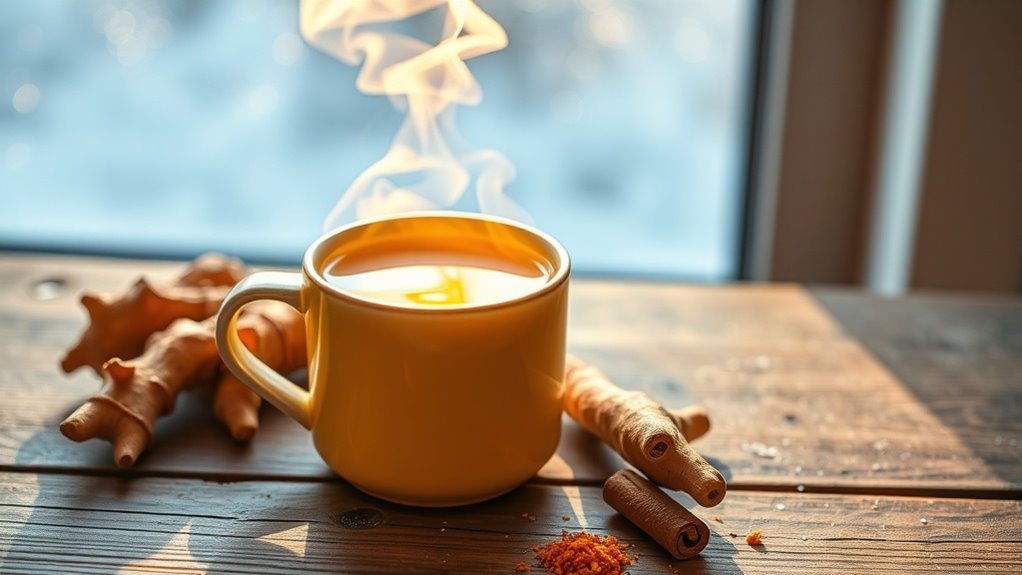
For additional immune support, consider incorporating turmeric’s anti-inflammatory properties through golden milk preparations that combine 1 teaspoon turmeric powder with 1/4 teaspoon black pepper in warm coconut milk for enhanced bioavailability.
Elderberry Syrup: Timing and Dosage Guidelines
Several studies indicate elderberry extract can reduce cold and flu duration by 2-4 days when taken within 48 hours of symptom onset. You’ll find standardized elderberry syrup most effective when following evidence-based protocols.
Research shows elderberry extract may shorten cold and flu symptoms by 2-4 days when started early.
Dosage Guidelines:
-
Preventive use: Take 1 tablespoon (15ml) daily during cold season
-
Active infection: Increase to 1 tablespoon four times daily for 3-5 days
-
Children’s dosing: Reduce to 1 teaspoon per dose for ages 2-12
You shouldn’t exceed recommended doses, as excessive consumption may cause digestive upset. For optimal absorption, take elderberry syrup 30 minutes before meals to maximize its immune-supporting benefits. Consult your healthcare provider before use if you’re pregnant, immunocompromised, or taking immunosuppressants.
Zinc Lozenges and Supplementation Protocols
Zinc supplementation can shorten cold duration by an average of 33% when you start taking it within 24 hours of symptom onset, according to meta-analyses of randomized controlled trials.
You’ll need zinc acetate or gluconate lozenges delivering 13-23mg per dose, taken every two hours while awake. Don’t exceed 100mg daily or use for more than five days, as excessive zinc interferes with copper absorption and immune function.
For preventive supplementation, take 8-11mg daily through food sources or supplements. Avoid nasal zinc products—they’re linked to permanent anosmia. Always take zinc lozenges on a full stomach to minimize nausea.
Consider pairing zinc with elderberry syrup taken twice daily with meals, as this combination may provide complementary immune support through different mechanisms during cold season.
Probiotic Yogurt and Gut Health Connection
Because approximately 70% of your immune cells reside in your gut, maintaining a healthy microbiome directly influences your body’s defense mechanisms against respiratory infections. Probiotic-rich yogurt containing live Lactobacillus and Bifidobacterium strains can strengthen this gut-immune connection.
Consider these evidence-based approaches:
-
Daily consumption: 6-8 ounces of plain yogurt with active cultures provides beneficial bacteria
-
Strain selection: Look for products containing multiple probiotic species, particularly Lactobacillus rhamnosus GG
-
Timing matters: Consume yogurt consistently for at least 4 weeks before cold season
Choose unsweetened varieties, as excess sugar can compromise immune function and counteract probiotic benefits. Additionally, supporting your respiratory system’s first line of defense through foods healthy mucous membranes can complement your gut health efforts, especially in dry indoor environments during cold season.
Garlic Remedies for Natural Immune Support
While often relegated to flavoring dishes, garlic contains allicin—a sulfur compound that activates immune cells and demonstrates antimicrobial properties against common cold viruses. You’ll maximize allicin by crushing raw garlic and letting it sit for 10 minutes before consumption.
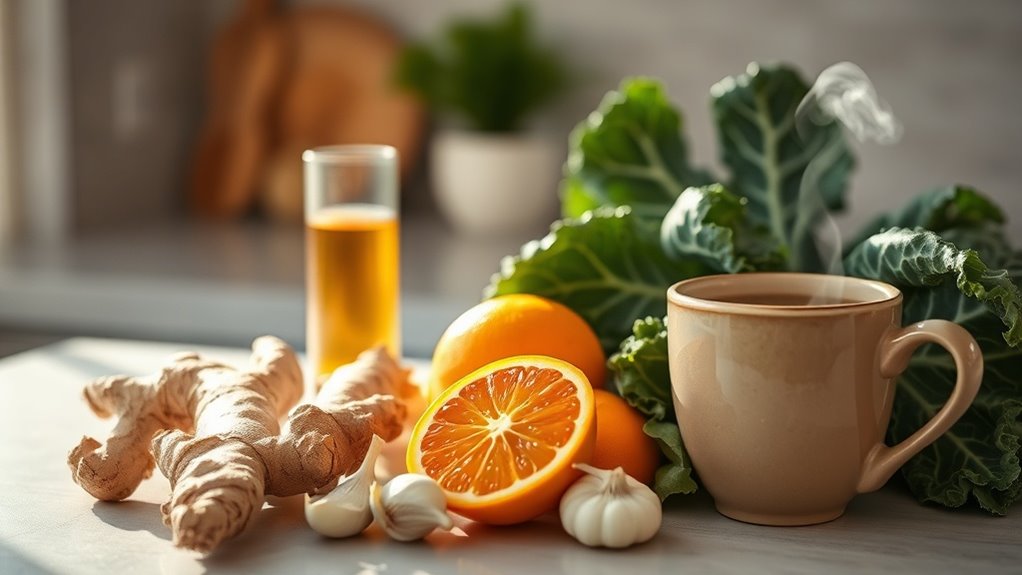
Research suggests 2-3 cloves daily may reduce cold frequency and duration. If raw garlic’s intensity overwhelms you, aged garlic extract supplements offer similar benefits with milder taste. However, garlic can interact with blood-thinning medications and cause digestive discomfort in sensitive individuals. For additional immune support during winter months, consider pairing garlic with ginger tea, which provides thermogenic properties through compounds like gingerol that enhance circulation and body warming. Consult your healthcare provider before adding therapeutic amounts to your routine, especially if you’re taking prescription medications.
Green Tea Antioxidants and EGCG Benefits
Beyond garlic’s antimicrobial properties, green tea delivers a powerful immune-supporting compound called epigallocatechin gallate (EGCG), a catechin that enhances T-cell function and inhibits viral replication. You’ll maximize benefits by steeping green tea for three to five minutes at 160-180°F, preserving heat-sensitive catechins while extracting optimal EGCG concentrations.
Consider these evidence-based practices:
-
Consume 2-3 cups daily to achieve therapeutic EGCG levels (200-300mg)
-
Drink between meals, as iron and proteins reduce catechin absorption
-
Select high-quality loose leaf varieties containing higher polyphenol concentrations
Avoid adding milk, which binds to catechins and diminishes their bioavailability.
Sleep Optimization Strategies for Immune Function
How effectively can you fight off infections if you’re consistently sleeping fewer than seven hours per night? Research demonstrates that inadequate sleep reduces T-cell production and increases inflammatory cytokines.
You’ll optimize immune function by maintaining 7-9 hours nightly, establishing consistent sleep-wake times, and keeping your bedroom temperature between 60-67°F. Melatonin production requires darkness, so eliminate blue light exposure two hours before bed.
Magnesium glycinate (200-400mg) and L-theanine (200mg) may support sleep quality, though you should consult your healthcare provider before supplementation. Alcohol disrupts REM cycles and compromises immune surveillance, despite its sedative effects.
Combining Multiple Methods for Maximum Effectiveness
Although individual immune-supporting strategies provide measurable benefits, synergistic implementation amplifies your body’s defensive capabilities beyond what isolated interventions achieve. Research demonstrates that combining interventions creates multiplicative rather than additive effects.
Evidence-based combination protocols:
-
Sleep-nutrition synergy: Seven-plus hours nightly paired with vitamin D supplementation (1000-4000 IU) enhances T-cell function
-
Exercise-diet integration: Moderate activity with zinc-rich foods (oysters, pumpkin seeds) optimizes antibody production
-
Stress-sleep management: Meditation practices combined with consistent sleep schedules reduce cortisol-mediated immune suppression
Consult healthcare providers before implementing multiple interventions simultaneously, particularly when introducing supplements alongside existing medications.
Frequently Asked Questions
Does Stress Reduction Really Impact Immune System Strength During Cold Season?
Yes, chronic stress elevates cortisol levels, which suppresses your immune response and increases cold susceptibility. You’ll benefit from stress-management techniques like meditation, adequate sleep, and regular exercise—they’ve been shown to maintain healthier immune function during cold season.
Can Regular Exercise Help Prevent Colds and Flu Infections Naturally?
Yes, you’ll strengthen your immune defenses through moderate exercise—about 30 minutes daily. It enhances circulation of immune cells and reduces inflammation. However, don’t overdo it; excessive training can temporarily weaken immunity and increase infection risk.
Should I Get a Flu Shot Even While Using Natural Methods?
Yes, you’ll definitely want that flu shot—natural methods can’t outrun a mutating virus armed with evolutionary superpowers. Vaccines provide proven, specific immunity while nutrients support overall immune function. They’re complementary approaches, not competitors.
How Does Indoor Humidity Affect Immune Function in Winter Months?
Low indoor humidity dries your nasal passages, reducing their ability to trap pathogens. You’ll maintain better immune defenses by keeping humidity between 40-60%, which helps preserve your respiratory tract’s protective mucus barrier during winter months.
Are There Specific Breathing Exercises That Support Immune Health?
Yes, you’ll find diaphragmatic breathing and alternate nostril breathing can reduce stress hormones like cortisol, which suppresses immune function. These techniques improve lymphatic circulation and oxygenation, though they’re complementary to—not replacements for—proper nutrition and sleep.