You’ll be surprised to learn that pediatric respiratory infections account for over 20 million doctor visits annually in the United States alone. When your baby struggles with winter congestion, you’re naturally searching for safe, effective relief options that don’t rely solely on medication. A properly formulated chest rub can provide gentle comfort during those restless nights, but there’s a critical difference between adult formulations and what’s actually safe for your infant’s delicate skin and developing respiratory system.
Understanding Why Babies Need Special Chest Rub Formulations
Because infant skin is markedly thinner and more permeable than adult skin—up to 30% more absorptive in the first year of life—substances applied topically can enter a baby’s bloodstream more readily and potentially reach toxic concentrations.
You’ll need a gentle baby chest rub formulated without camphor, menthol, or eucalyptus oils, which can trigger respiratory distress in children under two. Safe ingredient selection isn’t optional—it’s essential.
Natural chest rubs can provide safe, cozy winter comfort for your little one without the harsh ingredients found in conventional products.
Essential Ingredients for a Safe and Effective Baby Chest Rub
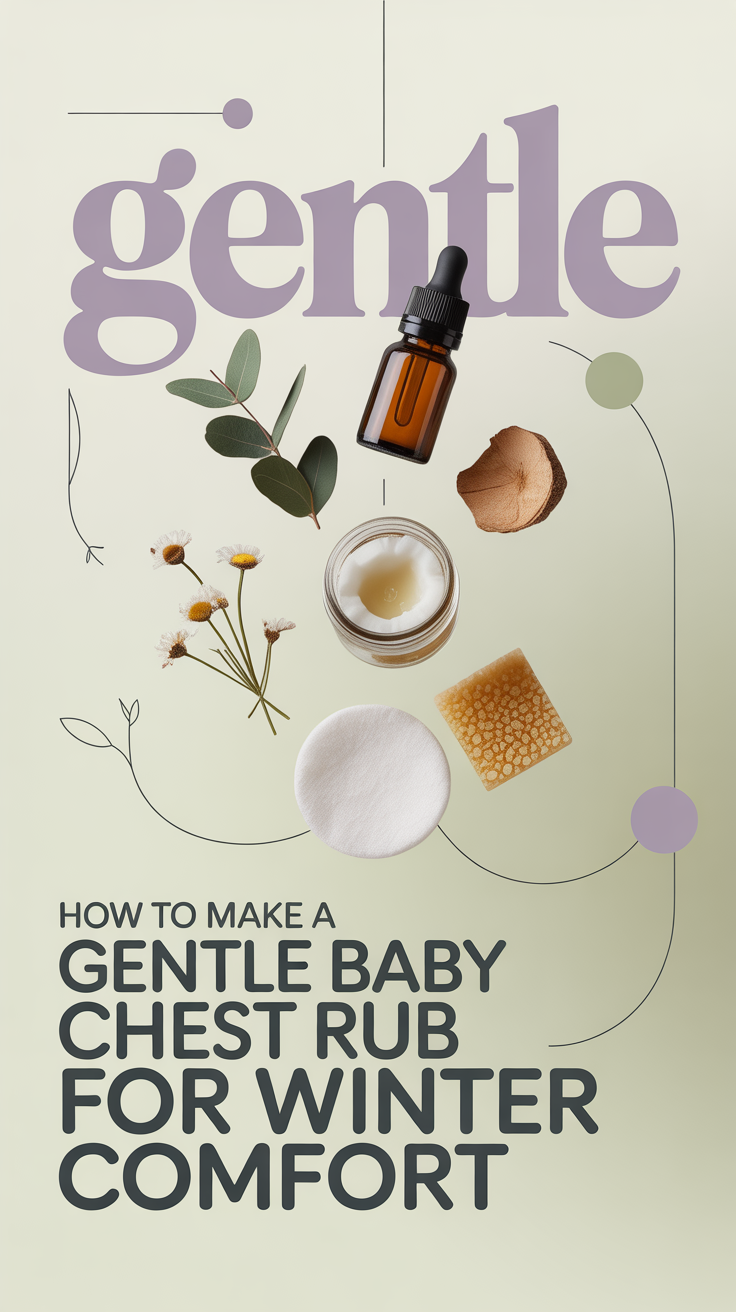
Three carrier oils form the foundation of any safe baby chest rub: fractionated coconut oil, sweet almond oil, and jojoba oil. You’ll need these diluted at 0.5-1% concentration for infants over three months.
Add therapeutic-grade essential oils like lavender (Lavandula angustifolia) or Roman chamomile (Chamaemelum nobile). Beeswax provides consistency, while vitamin E oil acts as a natural preservative, extending shelf life to six months. When selecting essential oils, research-supported tea tree oil treatments can also provide therapeutic benefits, though always ensure proper dilution ratios for infant safety.
Step-by-Step Instructions for Making Your Own Baby Chest Rub
Creating your own baby chest rub requires careful selection of ingredients that have been tested for infant safety. You’ll need to measure each component precisely to guarantee proper dilution ratios, as babies’ sensitive skin can’t tolerate the same concentrations adults use.
Proper mixing techniques and sterile storage containers are essential to prevent contamination and maintain the product’s effectiveness throughout the cold season. For maximum safety, maintain application temperatures between 98-102°F to ensure the compress provides comfort without risking thermal injury to delicate infant skin.
Gather Safe Natural Ingredients
When selecting ingredients for a homemade baby chest rub, you’ll need a carrier oil base, beeswax for consistency, and age-appropriate essential oils if using any at all. Choose organic coconut, olive, or sweet almond oil as your base. Purchase pharmaceutical-grade beeswax pellets for easier melting.
For babies under two years, omit essential oils entirely. Older children may tolerate diluted lavender at 0.5% concentration maximum.
Mix and Store Properly
Before you begin mixing, sterilize all utensils, containers, and work surfaces with rubbing alcohol to prevent bacterial contamination.
Melt your carrier oil and beeswax using a double boiler at low heat. Remove from heat, then add essential oils if using.
Pour immediately into dark glass jars. Allow cooling completely before sealing.
Label with preparation date. Store in cool, dark locations for up to six months.
Proper Application Techniques for Maximum Comfort
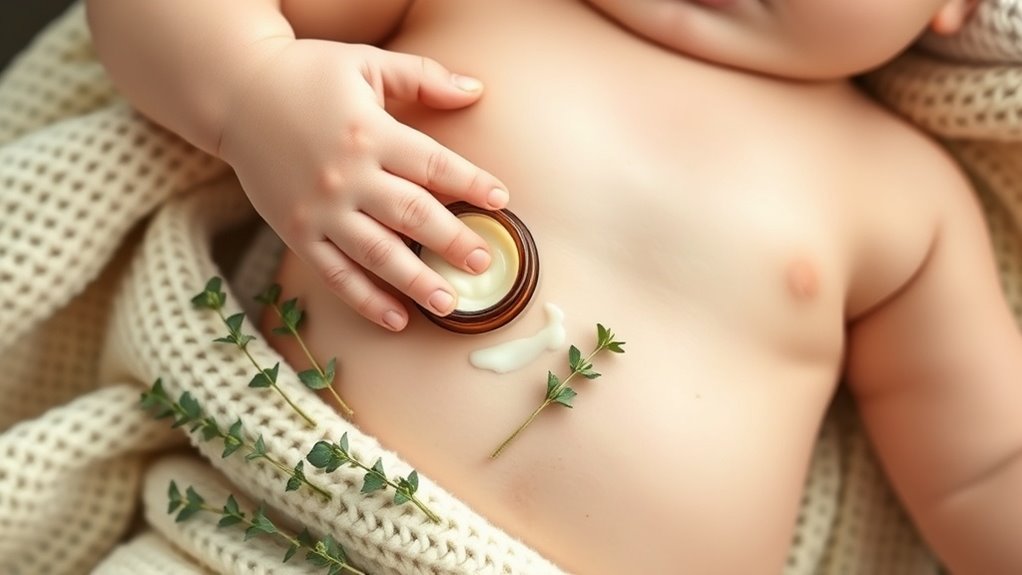
Before applying your homemade chest rub, warm it between your palms for 10-15 seconds to bring it to a comfortable temperature that won’t startle your baby. Use gentle circular motions to massage the rub onto your baby’s chest and upper back, applying light pressure to promote absorption without causing discomfort.
Keep the product at least two inches away from your baby’s nose, mouth, and eyes, as essential oils can irritate these sensitive areas and potentially cause respiratory distress if inhaled directly. For optimal results, apply the chest rub 20 minutes before bedtime to help promote respiratory comfort and support better sleep quality throughout the night.
Warm Rub Before Applying
To maximize comfort and prevent startling your baby, rub a small amount of the chest balm between your palms for 10-15 seconds until it reaches body temperature.
This warming technique provides several benefits:
- Prevents cold-shock response that can disrupt sleep
- Softens the balm for smoother, gentler application
- Activates essential oils gradually for better aromatherapeutic effect
- Allows you to test temperature sensitivity before skin contact
Gentle Circular Massage Motion
Once the balm reaches the right temperature, apply it using small, clockwise circular movements across your baby’s chest and upper back. Use light pressure—approximately 0.5 to 1 pound of force—to avoid respiratory distress. Keep movements slow and deliberate, spending 30-60 seconds per application.
Avoid the neck, face, and nostrils where concentrated vapors may irritate delicate mucous membranes.
Avoid Sensitive Face Area
While chest and back applications provide therapeutic benefits, keeping the balm away from your baby’s face represents a critical safety measure. Essential oils can irritate delicate facial skin and mucous membranes.
Maintain these safety zones:
- Keep products 3+ inches from nostrils to prevent respiratory irritation
- Avoid eye area completely, as oils can cause burning
- Never apply near mouth to prevent accidental ingestion
- Skip cheeks where babies frequently rub their hands
Safety Precautions and When to Avoid Using Chest Rubs
Before applying any chest rub to your baby, you must understand that children under two years old face heightened risks from certain essential oils and ingredients commonly found in commercial vapor rubs.
Never use products containing camphor, menthol, or eucalyptus on infants, as these can cause respiratory distress or seizures.
Consult your pediatrician before using any topical remedy if your baby has asthma, eczema, or underlying health conditions.
Storage Tips and Shelf Life for Homemade Baby Chest Rub
Because homemade chest rubs lack the preservatives found in commercial products, proper storage directly impacts both safety and effectiveness.
Follow these storage guidelines:
- Store in sterilized glass containers with airtight lids
- Keep at room temperature (68-72°F) away from direct sunlight
- Use within 3-6 months when made with essential oils
- Discard immediately if you notice discoloration, separation, or rancid odor