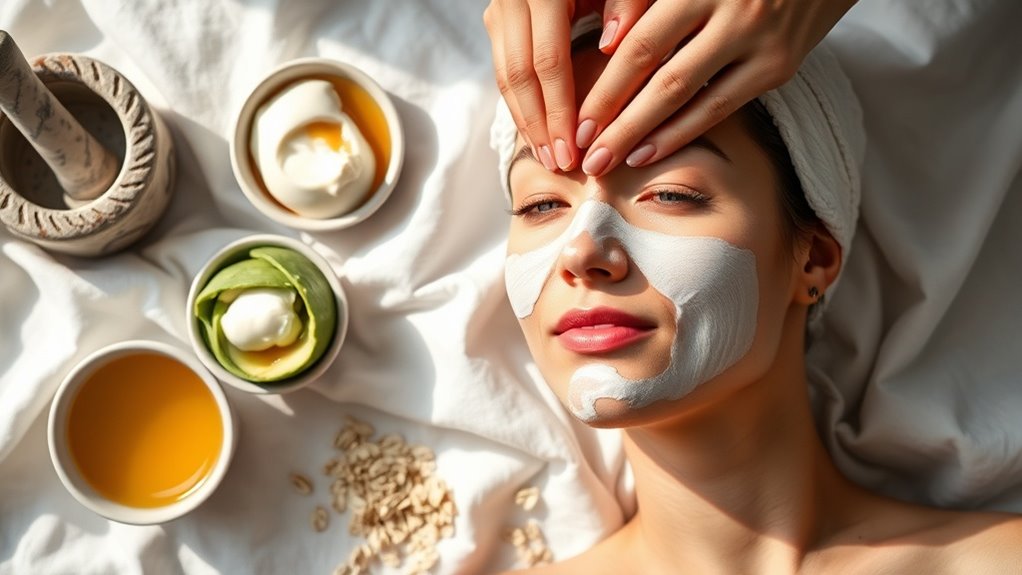
You’re losing up to 25% more moisture from your skin at night due to increased transepidermal water loss during sleep cycles. While commercial overnight masks offer convenience, you’ll find greater control over ingredient quality and concentration when formulating your own treatments at home. Understanding the science behind occlusive barriers, humectant ratios, and penetration enhancers will help you create clinically effective masks that address your specific dermatological concerns without the risks of unknown additives or sensitizing preservatives.
Benefits of Using Overnight Face Masks for Skin Hydration
While conventional moisturizers provide temporary hydration, overnight face masks deliver sustained occlusive therapy that optimizes transepidermal water loss (TEWL) reduction during your skin’s natural nocturnal repair cycle.
You’ll experience enhanced barrier function as the moisturizing overnight face mask creates a protective seal, allowing active ingredients to penetrate deeper. This extended contact time maximizes humectant efficacy, ensuring you’ll wake with visibly plumper, hydrated skin. For optimal results, apply your mask within 3 minutes of cleansing to lock in moisture while your skin’s moisture barrier is most receptive to hydration.
Essential Ingredients for DIY Moisturizing Overnight Masks
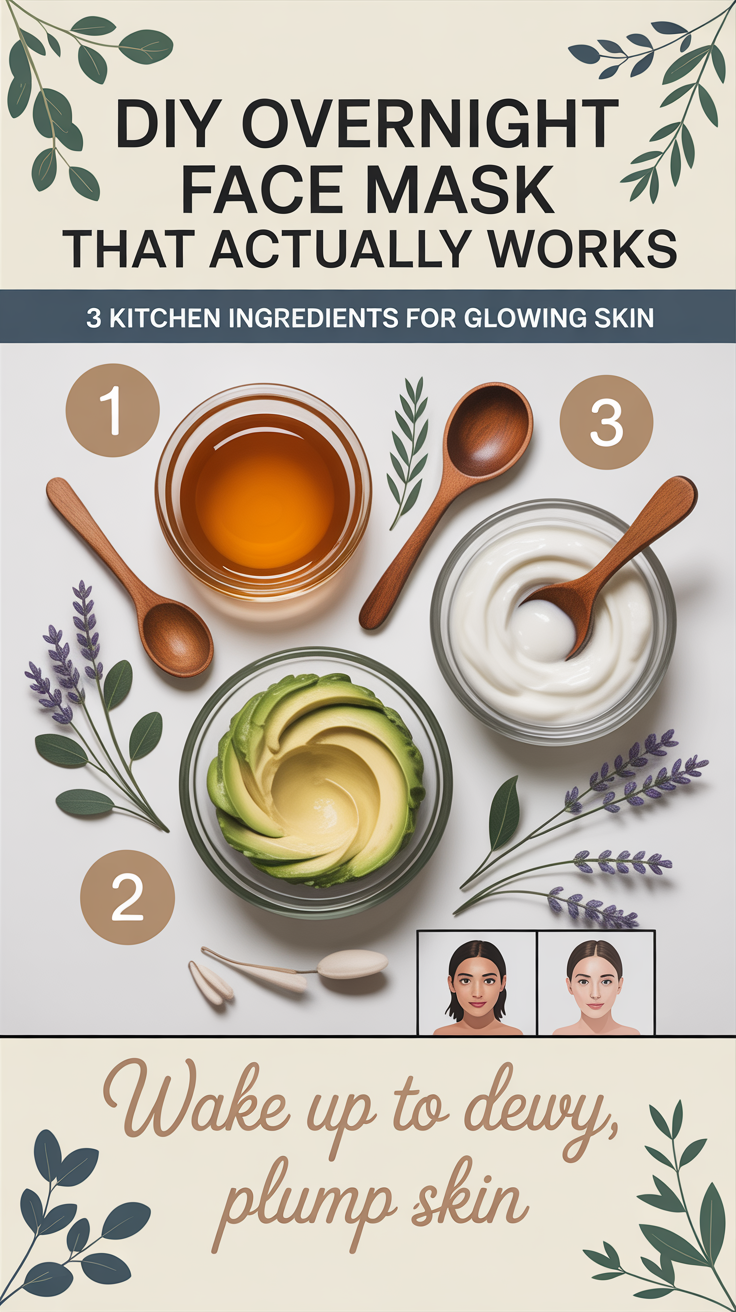
When formulating a safe and effective DIY overnight face mask, you’ll need three fundamental ingredient categories: occlusive or emollient base oils that create a protective barrier while delivering essential fatty acids, humectants that actively draw moisture into the stratum corneum, and botanical extracts that provide targeted nutrients without causing irritation.
Each component serves a distinct physiological function in maintaining transepidermal water loss (TEWL) and supporting skin barrier integrity during the critical overnight repair phase. Selecting clinically-tested, non-comedogenic ingredients appropriate for your specific skin type minimizes adverse reactions and maximizes therapeutic benefits. Popular evidence-based ingredients include raw honey mixed with ground oatmeal, which combine humectant properties with gentle exfoliation for enhanced overnight hydration.
Hydrating Base Oils Selection
The foundation of any effective overnight face mask lies in selecting appropriate base oils that deliver sustained hydration without compromising skin barrier function. You’ll want non-comedogenic options like jojoba oil (mimics sebum), squalane (penetrates efficiently), or rosehip seed oil (rich in essential fatty acids).
Patch-test new oils 24-48 hours before facial application to identify potential allergic reactions or sensitivities.
Natural Humectants to Include
Base oils provide the lipid component, but humectants actively draw moisture from the environment into your skin’s outer layers. Include glycerin at 5-10% concentration for proven water-binding capacity.
Hyaluronic acid (sodium hyaluronate) holds 1000x its weight in water. Honey contains natural enzymes and antimicrobial properties at 10-15% dilution. Aloe vera gel offers polysaccharides that enhance hydration retention effectively.
Nourishing Botanical Extracts
Botanical extracts frequently enhance overnight masks by delivering concentrated phytonutrients, antioxidants, and anti-inflammatory compounds that support skin barrier repair during sleep.
You’ll find chamomile extract reduces inflammation, green tea provides polyphenol protection, and calendula accelerates healing. Licorice root addresses hyperpigmentation, while rosehip extract supplies vitamin C for collagen synthesis. Always perform patch testing, as botanical extracts can trigger allergic reactions despite their natural origin.
Step-by-Step Recipes for Homemade Overnight Face Masks
Creating effective overnight face masks at home requires precise measurements, proper ingredient selection, and adherence to sterile preparation techniques. You’ll need sanitized tools and pharmaceutical-grade ingredients to minimize contamination risks.
Essential preparation protocols:
– Sterilize all mixing bowls and utensils with 70% isopropyl alcohol
– Perform patch testing 24 hours before facial application
– Store preparations in airtight containers below 4°C
– Discard unused portions after 72 hours
– Document ingredient concentrations for reproducibility
For winter dryness relief, consider incorporating raw honey into your overnight mask formulation, as it provides intensive hydration for stubborn dry patches that develop during harsh winter conditions.
How to Properly Apply and Remove Overnight Face Masks
While proper formulation establishes efficacy, application technique directly influences therapeutic outcomes and minimizes adverse reactions.
You’ll cleanse your face thoroughly, then apply a thin, uniform layer avoiding ocular and perioral regions. Don’t exceed recommended contact time.
Upon waking, you’ll remove the mask using lukewarm water and a soft cloth, followed by gentle patting dry to prevent mechanical irritation.
For enhanced hydration during harsh winter months, consider incorporating natural moisturizing ingredients that help restore your skin’s protective barrier overnight.
Best Practices and Timing for Overnight Mask Treatments
Ideal therapeutic benefit from overnight mask treatments requires strategic timing aligned with circadian dermatological cycles. You’ll optimize cellular regeneration by applying masks between 10 PM-2 AM when skin’s permeability peaks.
Essential protocols include:
- Conduct patch testing 24-48 hours before full-face application
- Cleanse thoroughly to remove barrier-disrupting pollutants
- Apply on slightly damp skin for enhanced absorption
- Maintain treatment duration at 6-8 hours
- Discontinue immediately if erythema or pruritus develops
Common Mistakes to Avoid When Using Overnight Face Masks
How can otherwise efficacious overnight mask treatments compromise skin barrier integrity? You’ll disrupt transepidermal water loss by over-applying product, which occludes pores and triggers comedogenesis. Don’t skip patch testing—you’ll risk contact dermatitis or allergic reactions.
Applying masks to unclean skin traps bacteria beneath occlusive layers. You’re compromising treatment efficacy when combining incompatible active ingredients like retinoids with AHAs, potentially causing irritation or pH-dependent deactivation.