How to Make a Soothing Chamomile Steam for Winter Sinus Relief.
When winter air turns dry and sinus passages swell with inflammation, chamomile’s time-honored healing properties offer gentle relief that modern decongestants can’t quite replicate. You’ll find that this simple botanical steam therapy draws on centuries of traditional plant wisdom, combining chamomile’s natural anti-inflammatory compounds with the therapeutic power of warm vapor. Before you reach for over-the-counter remedies, consider how this straightforward herbal preparation might transform your approach to seasonal congestion and restore comfortable breathing through nature’s own pharmacy.
Understanding the Benefits of Chamomile Steam for Sinus Relief
When sinus pressure builds and breathing becomes labored, chamomile steam offers a time-honored path to relief. This gentle herb’s anti-inflammatory compounds work through inhalation, soothing irritated nasal passages while promoting drainage.
You’ll find chamomile steam sinus relief particularly effective because the plant’s volatile oils—released through hot water—directly target congestion. It’s nature’s remedy for restoring comfortable breathing without harsh interventions.
For optimal results, use 2 tablespoons dried chamomile flowers per 4 cups of boiling water to achieve the therapeutic concentration needed for effective steam therapy.
Essential Supplies and Ingredients You’ll Need
You’ll find everything needed for chamomile steam therapy already waiting in your kitchen and herb cabinet. This traditional remedy requires only a heat-safe bowl, fresh or dried chamomile flowers, and boiling water to release the plant’s healing volatile oils.
Optional botanical additions like eucalyptus, peppermint, or thyme can enhance the steam’s decongestant properties while honoring time-tested herbal wisdom. For those experiencing skin irritation alongside sinus congestion, combining steam therapy with colloidal oatmeal soaks can address both respiratory and dermal winter discomforts simultaneously.
Basic Kitchen Equipment Needed
A simple bowl, a kettle, and fresh chamomile flowers are all that stand between you and relief from congested sinuses.
You’ll need a heat-safe ceramic or glass bowl large enough to capture rising steam. A standard kitchen kettle boils water efficiently.
Add a bath towel for draping over your head, creating a tent that concentrates the chamomile’s healing vapors around your respiratory passages.
Chamomile and Add-In Ingredients
For this healing steam, dried chamomile flowers work best—their concentrated volatile oils release more therapeutic compounds than fresh blooms. You’ll need two tablespoons per treatment.
Traditional add-ins include eucalyptus leaves for decongestion, peppermint for cooling relief, and thyme for its antimicrobial properties. Consider adding sea salt to help draw out inflammation and restore moisture balance in irritated nasal passages.
Classic Chamomile Flower Steam Method
The gentle art of steaming with chamomile flowers has graced kitchen tables and sickbeds for centuries, offering time-honored relief when sinuses grow congested and uncomfortable. You’ll steep two tablespoons of dried chamomile flowers in freshly boiled water, creating a fragrant infusion.
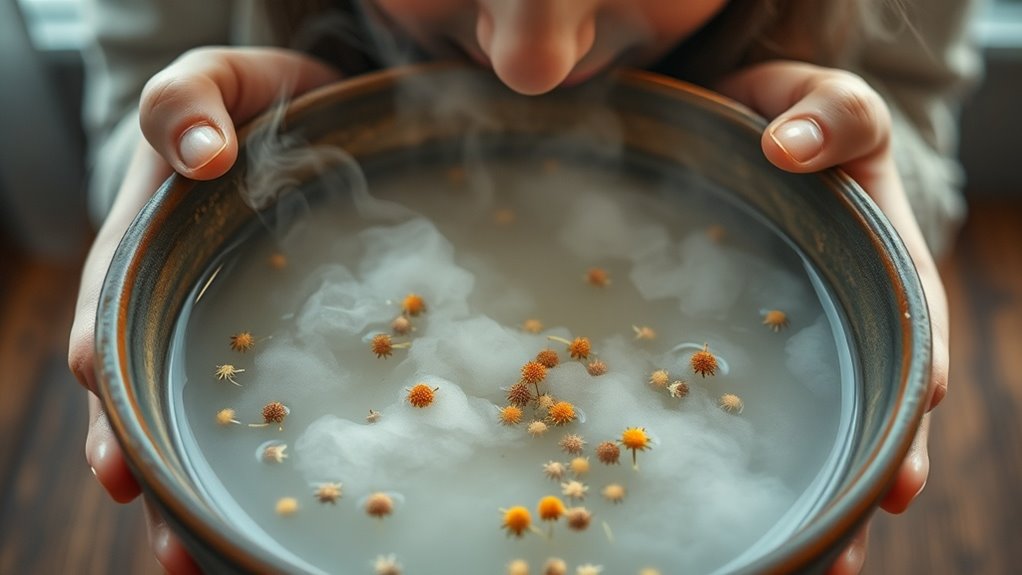
Drape a towel over your head, lean above the bowl, and breathe deeply. The plant’s volatile oils—bisabolol and chamazulene—work directly through your nasal passages. For additional respiratory support during winter months, consider alternating your chamomile steams with eucalyptus tea or peppermint leaf infusions, which traditional wellness practices have long valued for promoting clearer breathing.
Enhanced Chamomile Steam Variations With Essential Oils
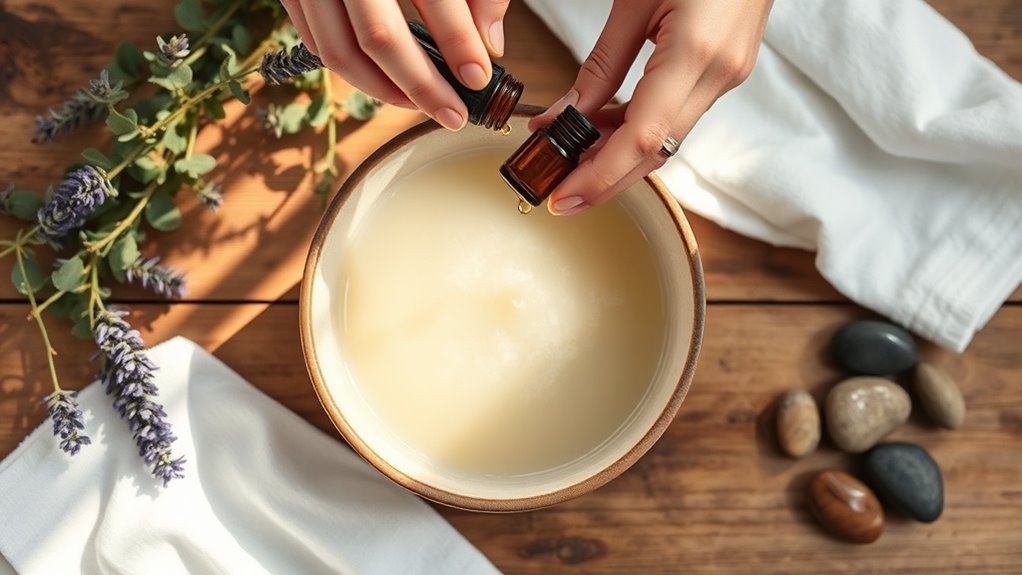
You can amplify chamomile’s sinus-clearing properties by adding complementary essential oils that traditional herbalists have paired with steam for generations. Eucalyptus, peppermint, and tea tree oils each bring unique respiratory benefits when properly diluted—typically 1-2 drops per bowl of steaming water.
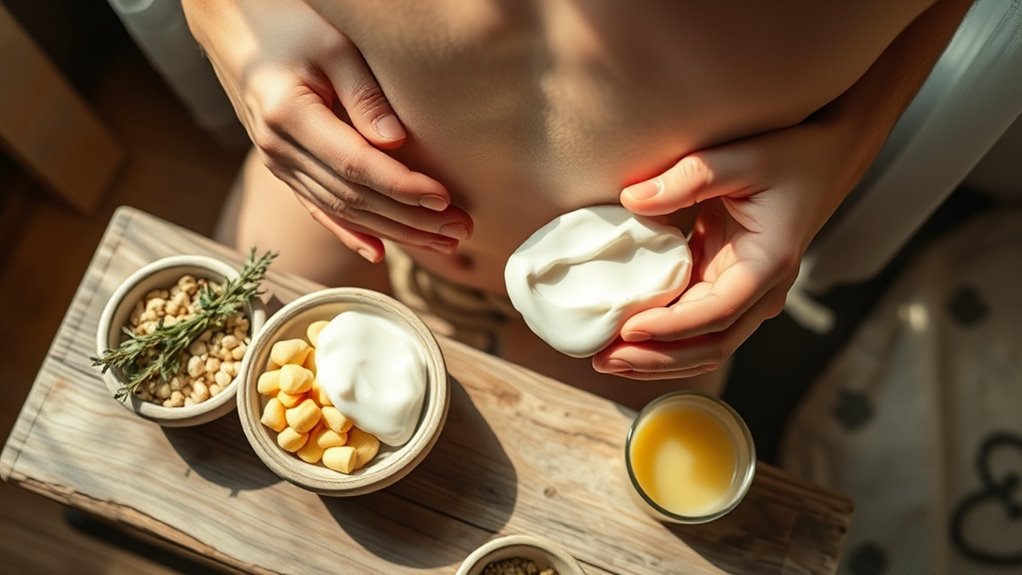
Understanding safe ratios protects your sensitive nasal passages while allowing these plant essences to work synergistically with chamomile’s natural anti-inflammatory compounds. For topical application after steaming, consider creating a eucalyptus-coconut oil blend using 2 tablespoons coconut oil with 10 drops eucalyptus oil to massage onto your chest for extended respiratory comfort.
Best Essential Oil Combinations
While chamomile alone offers remarkable sinus-clearing properties, combining it with complementary essential oils creates synergistic blends that target congestion from multiple angles.
You’ll find eucalyptus and peppermint excel at opening airways, while tea tree adds antimicrobial support. Lavender soothes inflamed passages when paired with chamomile. Try rosemary with thyme for deep respiratory relief, or blend frankincense with chamomile for anti-inflammatory benefits that address underlying tissue swelling.
Proper Dilution and Safety
Although essential oils concentrate nature’s healing compounds into potent drops, they require careful dilution to protect your delicate nasal passages from irritation.
Follow these traditional safety guidelines:
- Use only 2-3 drops per quart of steaming water
- Test steam distance before positioning your face closely
- Keep eyes closed throughout the session
- Discontinue if you experience any burning sensations
These botanical preparations demand respect alongside their healing benefits.
Step-by-Step Steaming Technique and Best Practices
Before immersing yourself in chamomile’s therapeutic vapors, gather your materials: a heat-safe bowl, freshly boiled water, two tablespoons of dried chamomile flowers (or four tablespoons of fresh), and a large towel.
Place the flowers in your bowl, pour water over them, and let steep for two minutes. Drape the towel over your head, creating a tent above the bowl. Breathe deeply for ten minutes, keeping your face eight inches from the steam.
Safety Precautions and When to Avoid Steam Therapy
Steam therapy harnesses chamomile’s healing properties, yet this gentle practice demands respect for your body’s signals and natural boundaries.
Avoid steam therapy if you’re experiencing:
- Active fever or acute respiratory infection
- Severe asthma or breathing difficulties
- Open facial wounds or recent skin procedures
- Cardiovascular conditions affecting heat tolerance
You’ll find steam most beneficial when your sinuses need gentle botanical support, not during medical emergencies requiring professional intervention.
Optimizing Your Steam Sessions for Maximum Relief
Understanding when to use steam therapy sets the foundation; now let’s explore how to harness chamomile’s full therapeutic potential during each session.
Steam for 10-15 minutes when sinuses feel congested. Use freshly dried chamomile flowers—they contain higher concentrations of essential oils than tea bags. Keep your face 8-10 inches from water to absorb volatile compounds without overwhelming delicate nasal passages.
Practice twice daily during acute symptoms.