What Foods Help Prevent Winter Cold Sores Naturally.
You’ve likely noticed that cold sores tend to flare up more frequently during winter months, but your dietary choices can markedly influence outbreak frequency. Research demonstrates that specific amino acids, particularly lysine, directly inhibit herpes simplex virus replication at the cellular level. Meanwhile, arginine-rich foods can trigger viral activation. Understanding the biochemical relationship between these nutrients and viral suppression will help you make strategic food selections that support your body’s natural defense mechanisms against recurrent cold sores.
Lysine-Rich Foods That Combat Cold Sore Outbreaks
Lysine, an essential amino acid, functions as a competitive inhibitor against arginine—the primary nutrient herpes simplex virus type 1 (HSV-1) requires for replication. Foods prevent cold sores by delivering concentrated lysine content that suppresses viral proliferation.
Poultry sources including chicken and turkey provide bioavailable lysine alongside complete protein profiles. Fish options such as cod, sardines, and salmon deliver lysine with anti-inflammatory omega-3 fatty acids.
Legumes including soybeans, lentils, and chickpeas offer plant-based lysine alternatives. Dairy products like nonfat yogurt combine lysine with immune-supporting nutrients. While lysine’s effectiveness remains uncertain in studies, these nutrient-dense foods provide substantial benefits for overall immune function.
Avocados and mangoes contribute lysine with additional antioxidant compounds that enhance antiviral defense mechanisms. Beyond dietary choices, focusing on immune system strengthening through proper nutrition helps reduce the frequency of cold sore outbreaks during winter months.
High-Arginine Foods to Limit During Winter Months
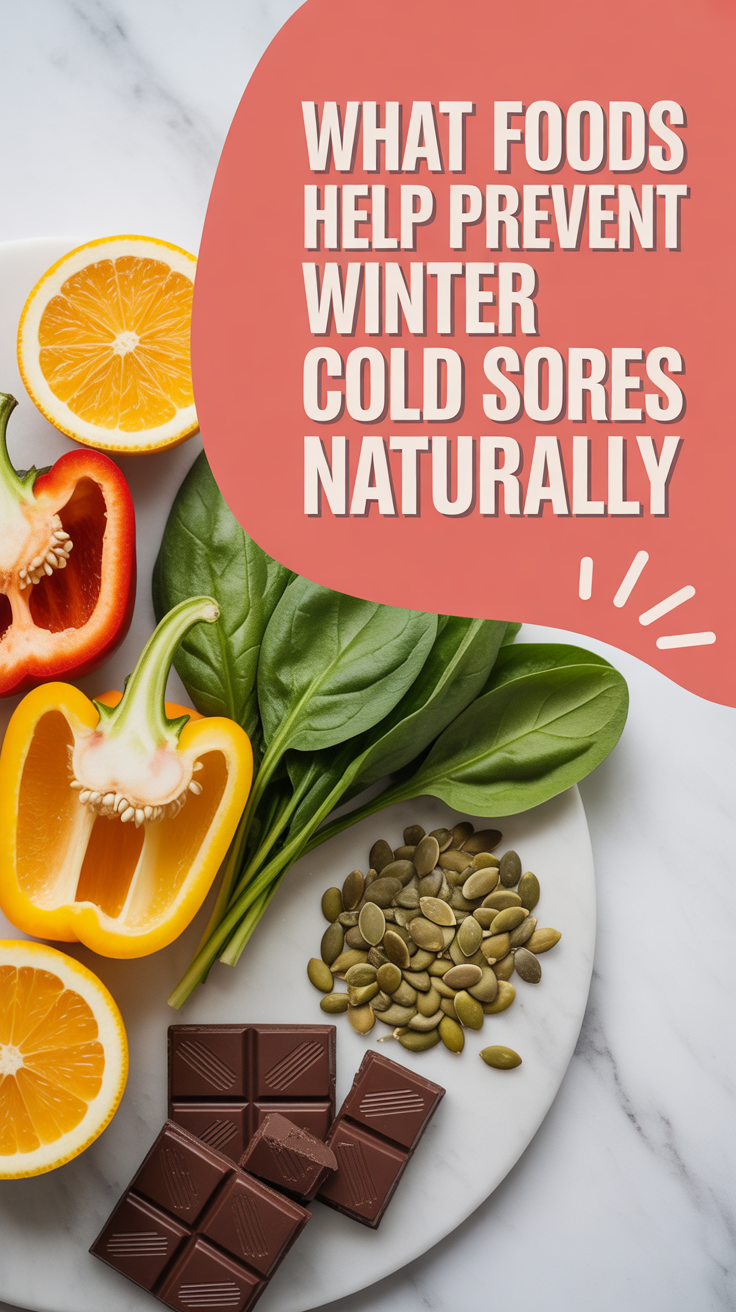
While lysine suppresses HSV-1 replication, arginine provides the substrate this virus requires for protein synthesis and genomic proliferation. You should limit almonds, walnuts, peanuts, pumpkin seeds, and sunflower seeds during winter months.
Chocolate products—particularly dark chocolate—contain concentrated arginine that activates viral replication. Oats, wheat germ, soybeans, and chickpeas warrant restriction. Winter squash varieties surprisingly elevate arginine intake.
Instead, choose quinoa and brown rice as lower-arginine grain alternatives. Opt for zucchini, carrots, and bell peppers over arginine-dense vegetables. Scrutinize muscle-building supplements and cocoa extracts for arginine content. Spirulina supplements, often added to smoothies for their nutrient density, should be avoided or used sparingly due to their high arginine content. Consider incorporating anti-inflammatory properties from turmeric-based beverages like golden milk to support your body’s natural defenses during winter months. Maintain a favorable lysine-to-arginine ratio to prevent outbreak recurrence.
Essential Vitamins and Minerals for Immune Defense
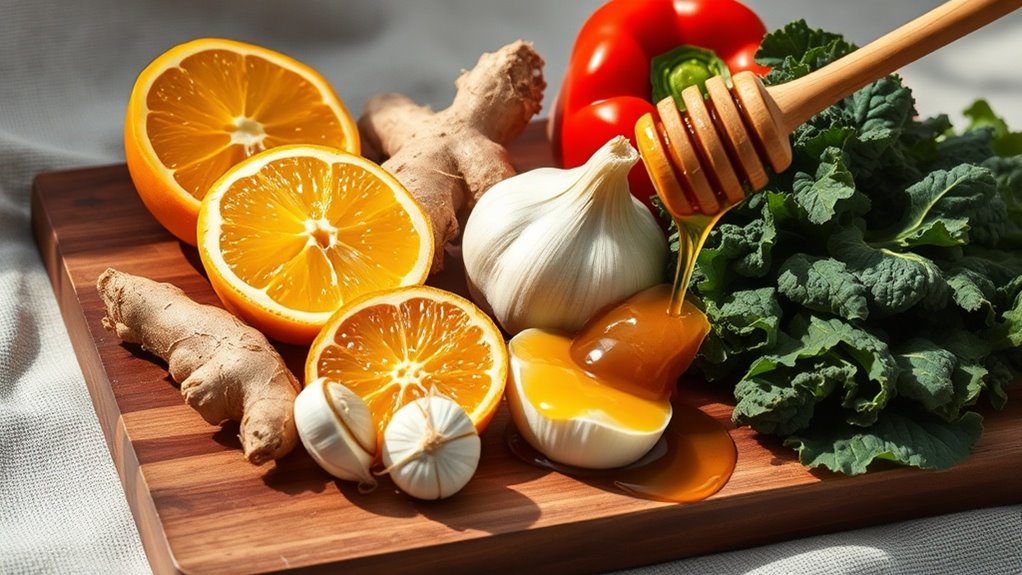
Beyond dietary amino acid ratios, specific micronutrients fortify your immune system’s capacity to suppress HSV-1 reactivation during winter months. Vitamin C enhances leukocyte formation while reducing oxidative stress from citrus fruits and berries.
B-complex vitamins (particularly B6 and B12) support T-cell production and nerve health through whole grains and lean proteins. Vitamin deficiencies can directly weaken immune functions, allowing the HSV-1 virus to grow and trigger cold sore outbreaks. Vitamin D modulates immune responses and activates viral defense mechanisms—critical when sunlight exposure diminishes.
Vitamin E protects skin barriers and accelerates lesion healing via nuts and seeds. Zinc facilitates cytokine production and tissue repair, while selenium provides antioxidant defense. Iron-rich foods strengthen immune resilience through enhanced oxygen transport and cellular energy production. These micronutrients collectively reduce outbreak frequency and duration.
Hydration and Lifestyle Habits That Support Skin Health
Adequate hydration maintains skin barrier integrity through cellular water balance, which directly influences your body’s resistance to HSV-1 reactivation. You’ll need 8-10 glasses daily, supplemented by water-rich foods like cucumbers and watermelon that deliver additional micronutrients. Limit alcohol and caffeine consumption to prevent dehydration-induced skin compromise.
Environmental protection proves equally critical—apply SPF lip balm to prevent UV-triggered outbreaks and use humidifiers during winter months to counteract heating-related moisture loss. Strategic placement of water bowls near heat sources provides a simple alternative for maintaining optimal 30-50% humidity when commercial humidifiers aren’t available. Avoid lip-licking, which accelerates epithelial drying. Cold, windy, or dry air strips natural moisture from the lips, making winter weather particularly challenging for preventing both chapped lips and cold sore outbreaks.
Implement stress-reduction techniques and maintain consistent sleep patterns, as chronic stress elevates cortisol levels that suppress immune function and increase outbreak susceptibility.
Supplements and Topical Remedies for Cold Sore Prevention
L-lysine supplementation offers targeted prophylaxis against HSV-1 reactivation through competitive inhibition of arginine, an amino acid required for viral replication. Effective dosing exceeds 1 gram daily, ideally combined with arginine restriction.
Zinc-oxide topical creams reduce outbreak duration when applied within 24 hours of symptom onset, while oral zinc supports immune function and antiviral defense. Vitamin C inactivates viral particles and enhances collagen synthesis; vitamin E provides anti-inflammatory support and accelerates healing.
Topical remedies including aloe vera gel, lemon balm extracts, propolis, and medical-grade Manuka honey demonstrate antiviral properties. Applying cold compresses at onset of tingling sensations may help slow outbreak progression and reduce associated inflammation. Consult healthcare providers before initiating supplementation protocols to guarantee appropriate dosing and safety.