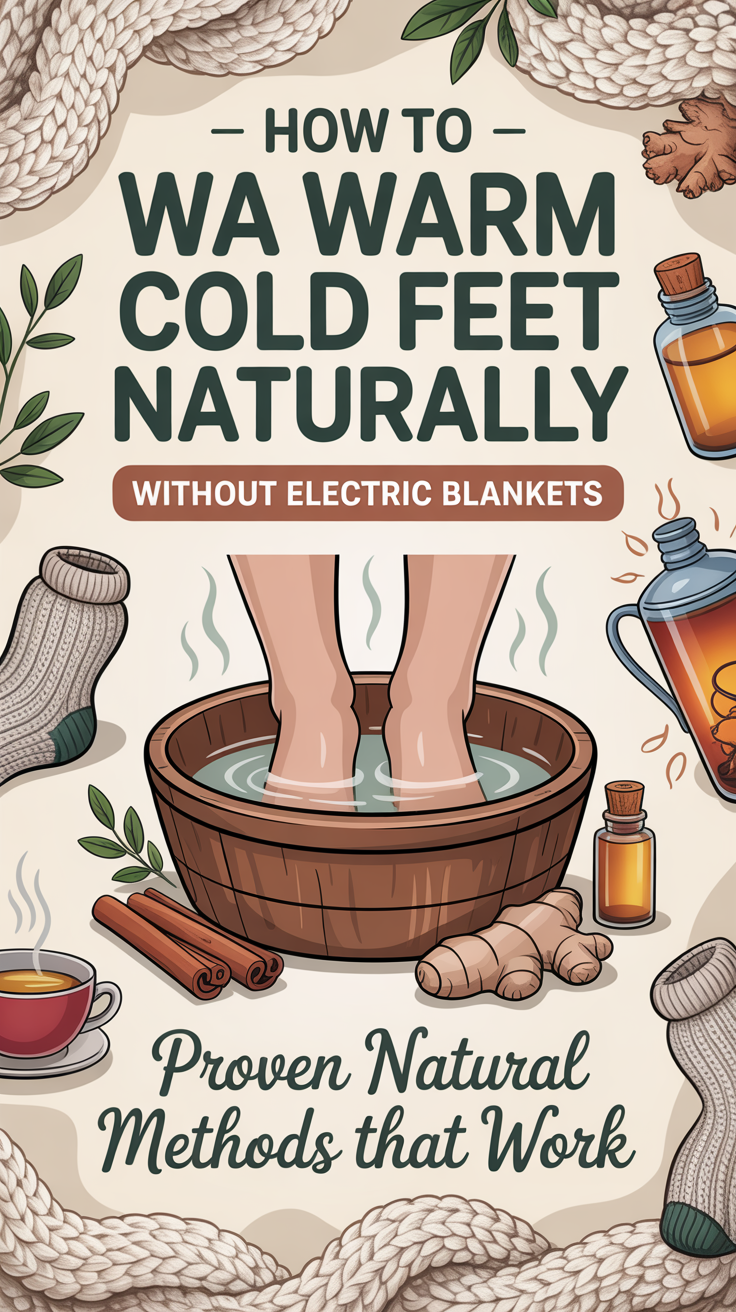
Your feet contain over 250,000 sweat glands, yet poor circulation often leaves them feeling like ice blocks during winter months. While electric blankets offer quick relief, they don’t address the underlying vascular issues causing your discomfort. You’ll discover that combining ancient warming techniques with modern circulation science creates lasting warmth from within. These natural methods work progressively to retrain your body’s heat distribution system, ensuring your toes stay toasty without plugging in a single device.
Warming Foot Soaks With Epsom Salt and Essential Oils
When circulation slows or stress constricts blood vessels, a therapeutic foot soak can restore warmth through multiple mechanisms.
You’ll warm cold feet naturally by filling a basin with water at 98-102°F, adding two tablespoons of Epsom salt to ease muscle tension and improve blood flow. Incorporate three drops of circulation-boosting essential oils like ginger, rosemary, or black pepper. Soak for 15-20 minutes, allowing magnesium absorption while vasodilation occurs.
For an especially soothing variation, try adding 2-3 drops peppermint essential oil per gallon of warm water to create an invigorating peppermint oil mixture that may help support circulation naturally.
This combination addresses both immediate cold symptoms and underlying circulation issues. Pat dry thoroughly afterward, then wear wool socks to maintain the therapeutic warmth you’ve generated.
Spice-Infused Circulation Teas for Internal Heat
Thermogenic spices trigger internal heat production through compounds that directly stimulate circulation and metabolism. Ginger contains gingerol, which dilates blood vessels and increases peripheral blood flow to extremities. Cinnamon regulates blood sugar while improving microcirculation. Cayenne pepper’s capsaicin activates thermogenesis, warming your body from within.
Brew fresh ginger tea by steeping sliced root for ten minutes. Add Ceylon cinnamon and a pinch of cayenne for enhanced effects. Drink two cups daily, preferably morning and afternoon. You’ll notice warmer feet within twenty minutes as vasodilation occurs. Turmeric with black pepper offers additional anti-inflammatory benefits that support vascular health. For optimal thermogenic benefits, steep 1 tablespoon of fresh grated ginger in 8 ounces of boiling water for 10-12 minutes to maximize bioavailability of active compounds.
Targeted Foot Massage and Pressure Point Techniques
Strategic pressure point stimulation activates your body’s natural warming mechanisms by improving blood flow to cold extremities. Apply firm circular pressure to the Kidney 1 point, located at your foot’s center, for two minutes to enhance circulation.
Massage the base of each toe using upward strokes toward your ankle, promoting venous return. Target the inner ankle’s Spleen 6 point, three finger-widths above the bone, to boost peripheral blood flow. Use warming oils like ginger or cayenne-infused carriers during massage.
Practice these techniques twice daily, especially before bed, to maintain consistent foot temperature and prevent chronic coldness. For enhanced results, combine this pressure point massage with a 15-minute Epsom salt foot soak using 2 tablespoons per gallon of warm water.
Thermal Sock Layering Systems for Maximum Insulation
Proper sock layering creates insulating air pockets that trap body heat and prevent thermal loss from your feet. You’ll need a three-layer system: a moisture-wicking base layer, an insulating middle layer, and a protective outer layer. This combination maintains optimal temperature while managing perspiration that causes heat loss.
| Layer | Material | Function |
|——-|———-|———-|
| Base | Merino wool/synthetic | Wicks moisture away |
| Middle | Thick wool blend | Traps warm air |
| Outer | Dense wool/fleece | Shields from cold |
Ensure each layer fits comfortably without constricting circulation. Avoid cotton—it retains moisture and accelerates cooling, undermining your layering efforts. For additional protection during harsh winter months, pair your thermal sock system with thick moisturizing creams applied before bed to prevent skin dryness and cracking from cold exposure.
Active Movement Exercises to Boost Blood Flow
When circulation to your extremities slows due to cold exposure or prolonged inactivity, targeted movements can restore warmth within minutes by increasing blood flow to your feet.
Practice ankle circles—rotate each foot clockwise, then counterclockwise, ten repetitions each. Follow with toe clenches: curl your toes tightly for five seconds, then spread them wide. Calf raises activate your body’s natural pump mechanism, pushing blood toward your feet. You’ll also benefit from heel-toe rocking while seated. Research indicates these exercises stimulate peripheral circulation effectively.
Perform this sequence every two hours during sedentary periods to maintain optimal foot temperature and prevent cold-related discomfort. These natural movement techniques help combat cold weather circulation problems that commonly cause numb fingers and feet during freezing temperatures.
Natural Warming Spices and Dietary Adjustments
Certain spices generate internal heat through a process called thermogenesis, where your body’s metabolic rate temporarily increases after consumption. Add cayenne pepper, ginger, cinnamon, and turmeric to your meals—they enhance circulation and promote warmth from within.
You’ll also benefit from iron-rich foods like spinach and lean meats, which prevent anemia-related cold extremities. Include omega-3 fatty acids from fish and walnuts to support vascular health.
Stay hydrated with warm herbal teas rather than cold beverages, as proper hydration maintains blood volume for efficient circulation. Limit caffeine and alcohol; they constrict blood vessels and reduce peripheral blood flow to your feet.
Hot Water Bottle Placement and Usage Strategies
Strategic placement of a hot water bottle directly targets cold feet while training your body’s thermoregulation response over time. Position the bottle at your feet’s soles 15 minutes before bed to stimulate blood vessel dilation.
For daytime use, place it under your desk, rotating between feet every 20 minutes to prevent dependency. Fill bottles to two-thirds capacity at 120°F—hot enough for therapeutic warmth without tissue damage. Wrap in a cotton cover to moderate heat transfer and prevent burns.
This method strengthens circulation pathways, gradually improving your body’s natural warming mechanisms without creating reliance on external heat sources.
Bedtime Routines to Maintain Overnight Foot Warmth
Setting up your evening routine around foot warmth pays dividends throughout the night by working with your body’s natural temperature rhythms.
Take a warm foot bath 90 minutes before bed to trigger vasodilation, which signals sleep readiness. Dry feet thoroughly and apply a thin layer of coconut oil or shea butter to prevent moisture loss. Perform ankle circles and toe stretches to stimulate circulation. Put on wool or bamboo socks immediately after moisturizing.
Place a hot water bottle at the foot of your bed 30 minutes before retiring to pre-warm your sleeping space effectively.
Frequently Asked Questions
Can Cold Feet Indicate an Underlying Medical Condition Requiring Professional Diagnosis?
Have you considered underlying causes? Yes, chronically cold feet can signal circulatory issues, thyroid problems, or diabetes requiring professional evaluation. You’ll want to consult your healthcare provider if warming methods don’t work or symptoms persist beyond lifestyle changes.
Are There Specific Vitamins or Supplements That Improve Poor Circulation?
You’ll find vitamin E, B-complex vitamins, and omega-3 fatty acids support healthy circulation. Magnesium helps relax blood vessels, while vitamin C strengthens capillary walls. However, you should consult your healthcare provider before starting any supplement regimen.
How Does Room Temperature Affect Natural Foot Warming Effectiveness?
Room temperature directly impacts your body’s ability to warm extremities. You’ll need temperatures above 68°F for effective natural warming methods. Below this threshold, your body prioritizes core heat, making circulation-based foot warming strategies less effective overall.
Do Certain Medications Cause Chronically Cold Feet as a Side Effect?
Like Pandora’s box, beta-blockers, blood pressure medications, and certain antidepressants can trigger chronically cold feet by restricting blood flow. You’ll want to consult your doctor about alternatives while maintaining proper circulation through exercise and nutrition.
When Should Someone Consult a Doctor About Persistent Cold Feet?
You should consult your doctor if you’re experiencing persistent cold feet alongside numbness, color changes, pain, slow-healing wounds, or if they’re interfering with daily activities—these symptoms could indicate underlying circulatory, nerve, or thyroid issues requiring professional evaluation.