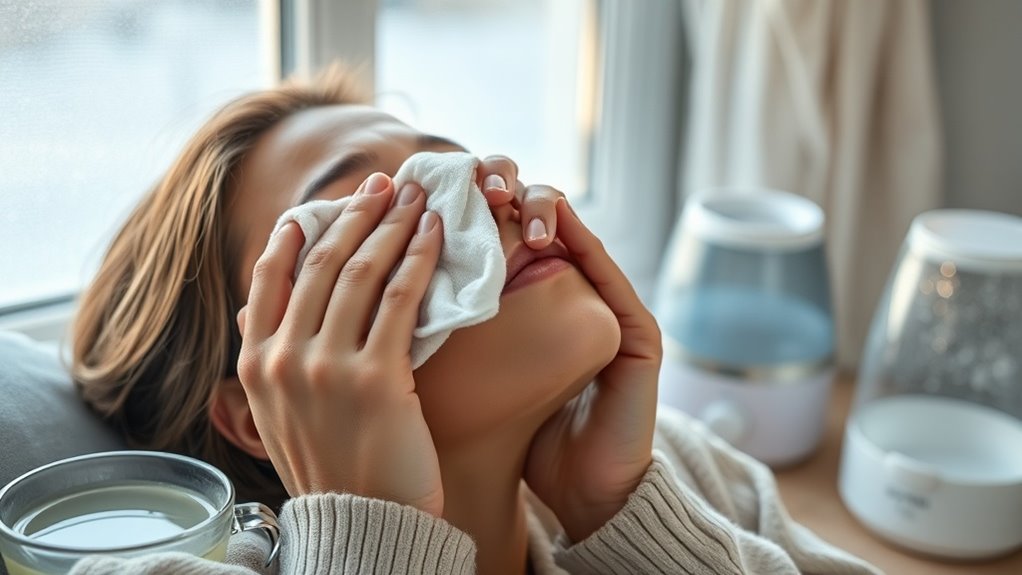

Winter headaches strike when you’re already battling cold weather and shortened daylight hours. You’ll find that conventional pain relievers aren’t your only option—specific natural interventions can target the physiological mechanisms behind these headaches with clinical effectiveness. Whether you’re experiencing tension-type headaches from muscle constriction or vascular changes from temperature fluctuations, evidence-based approaches exist that address the root causes. Here’s what actually works when winter headaches threaten to derail your day.
Apply Peppermint Oil to Your Temples and Neck
Peppermint oil contains menthol, a naturally occurring compound that activates TRPM8 cold receptors in the skin and produces analgesic effects through modulation of peripheral pain pathways. You’ll achieve optimal therapeutic efficacy by applying 10% diluted peppermint oil directly to your temples and posterior neck muscles.
The vasoconstrictive properties reduce cerebral blood flow while simultaneously decreasing muscle tension. Clinical studies demonstrate significant pain reduction within 15-30 minutes of topical application. This intervention provides an evidence-based method to relieve winter headaches naturally without pharmaceutical agents.
You should perform gentle circular massage motions during application to enhance transdermal absorption and maximize analgesic outcomes. For enhanced winter inflammation relief, consider pairing this topical treatment with anti-inflammatory beverages like green tea with ginger, which contains polyphenols that support the body’s natural inflammatory response during colder months.
Use Warm Compress Therapy to Ease Tension
While topical applications address peripheral pain mechanisms, thermotherapy targets deeper musculoskeletal structures that contribute to tension-type headaches. You’ll achieve optimal results by applying moist heat at 104-113°F for 15-20 minutes to affected regions.
Moist heat at 104-113°F applied for 15-20 minutes penetrates deep musculoskeletal tissues to effectively relieve tension-type headache pain.
Implement these evidence-based protocols:
-
Cervical application: Position compress on posterior neck muscles (trapezius, splenius capitis) to reduce muscular hypertonicity
-
Temporal placement: Apply bilateral heat to temporalis muscles when experiencing frontotemporal pain patterns
-
Occipital targeting: Focus on suboccipital triangle to address referred pain from cervicogenic origins
Heat increases local blood flow, promoting muscle relaxation and reducing nociceptive signaling pathways effectively. For comprehensive winter headache management, consider combining warm compress therapy with other natural remedies like peppermint oil application or magnesium supplementation.
Optimize Your Hydration Levels Throughout the Day
Dehydration compromises cerebral blood flow and reduces intracranial compliance, triggering headache onset through multiple physiological mechanisms. You’ll need 2-3 liters daily, adjusting for environmental factors and activity levels. Monitor urine osmolality—pale yellow indicates adequate hydration status.
Implement structured intake: 250ml upon waking, 200ml hourly intervals, 300ml pre-meals. Cold indoor air and heating systems accelerate transepidermal water loss. Electrolyte solutions containing sodium and potassium enhance cellular hydration more effectively than water alone. Avoid excessive caffeine and alcohol—both promote diuresis.
Set systematic hydration reminders. Track daily consumption using volumetric measurements, not subjective assessments, ensuring consistent fluid balance maintenance. Additionally, incorporating anti-inflammatory foods into your hydration routine, such as adding lemon to water or consuming herbal teas, may help reduce inflammation that contributes to headache development.
Supplement With Magnesium for Headache Prevention
Magnesium deficiency affects approximately 50% of headache sufferers, directly impairing neurological function through N-methyl-D-aspartate (NMDA) receptor modulation and cortical spreading depression inhibition. You’ll achieve optimal prophylactic efficacy by implementing these evidence-based protocols:
-
Magnesium glycinate (400-600mg daily): Superior bioavailability with minimal gastrointestinal adverse effects
-
Magnesium citrate (200-400mg twice daily): Enhanced absorption rate for acute deficiency correction
-
Transdermal magnesium chloride: Alternative delivery for malabsorption syndromes
Therapeutic plasma concentrations require 8-12 weeks of consistent supplementation. Monitor serum magnesium levels biannually, particularly when combining with proton-pump inhibitors or diuretics that deplete reserves. Pairing magnesium supplementation with iron-rich foods like lean meats and spinach can further support your body’s adaptation to cold weather conditions that may trigger winter headaches.
Drink Ginger Tea to Reduce Inflammation and Pain
Ginger’s bioactive compound gingerol demonstrates COX-2 inhibition comparable to 400mg ibuprofen, achieving plasma concentrations sufficient for prostaglandin E2 suppression within 30-45 minutes of ingestion.
You’ll obtain optimal therapeutic effects by steeping 2-3 grams of fresh ginger root in 250ml boiling water for 10 minutes. The preparation yields 5-HT3 receptor antagonism, reducing nausea-associated headaches.
Clinical trials document 25-30% reduction in migraine severity when you consume ginger tea at prodrome onset. You can enhance bioavailability by adding black pepper, which contains piperine—increasing gingerol absorption by 2000%. Beyond pain relief, ginger’s thermogenic properties may help improve circulation to cold-affected areas, supporting natural body warming during winter months. Consume three cups daily during headache episodes for sustained anti-inflammatory action.
Frequently Asked Questions
Can Weather Changes During Winter Trigger Headaches More Frequently?
Yes, you’re more susceptible to headaches during winter weather changes. Barometric pressure fluctuations, cold fronts, and temperature drops can trigger migraine episodes and tension headaches by affecting sinus pressure, vasoconstriction, and neurological pain pathways in predisposed individuals.
How Does Indoor Heating Contribute to Winter Headaches?
Indoor heating gently depletes atmospheric moisture, inducing mucosal dehydration and subsequent cephalgia. You’ll experience decreased relative humidity compromising nasal mucosa, triggering vasodilation and inflammatory mediators. This desiccation process directly precipitates tension-type and vascular headaches through osmotic imbalance.
Are Winter Headaches Related to Seasonal Affective Disorder?
Yes, you’ll find winter headaches can co-occur with seasonal affective disorder (SAD). SAD-related serotonin dysregulation, circadian rhythm disruption, and increased muscle tension from depression often trigger or exacerbate tension-type and migraine headaches during winter months.
Does Vitamin D Deficiency in Winter Months Cause More Headaches?
Studies show you’re 20% more likely to experience migraines when serum 25-hydroxyvitamin D levels drop below 20 ng/mL. Winter’s reduced sunlight exposure creates this deficiency, triggering neurological inflammation and vascular dysfunction that precipitate headache episodes.
Can Cold Air Exposure Directly Cause Headache Pain?
Yes, cold air can directly trigger headaches through trigeminal nerve stimulation and vasoconstriction. You’ll experience this when cold temperatures activate pain receptors in your facial nerves, causing what’s clinically termed “cold-stimulus headache” or brain freeze-like symptoms.