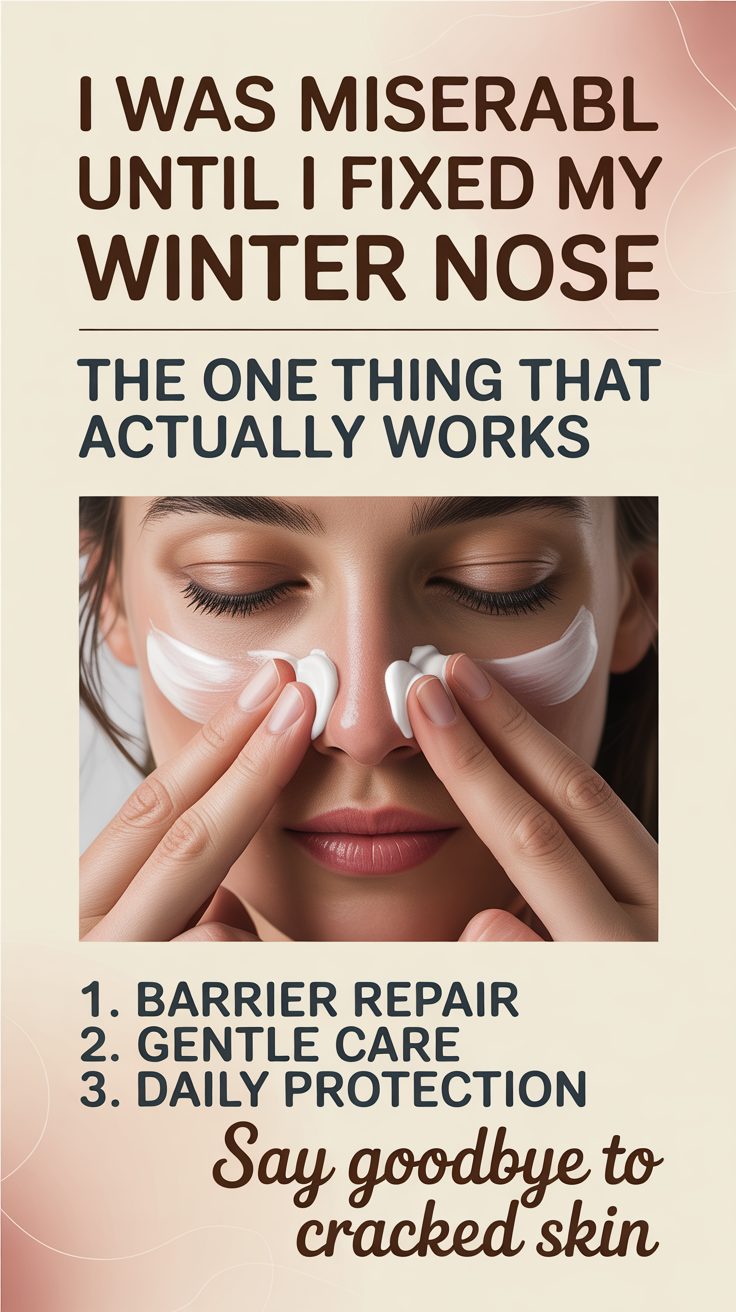
Studies show that up to 40% of people experience perinasal dermatitis during winter months, with the skin around your nostrils being particularly vulnerable due to its thin epidermal layer and constant exposure to irritants. You’re likely dealing with a compromised skin barrier that’s struggling to retain moisture while facing repeated trauma from tissue friction. Understanding the specific physiological mechanisms behind this condition will help you select treatments that actually address the root cause rather than just masking symptoms.
Why Winter Weather Causes Dry, Cracked Skin Around Your Nostrils
The nasal vestibule and perinasal region are particularly vulnerable to xerosis during winter months due to several physiological and environmental factors. Cold air holds less moisture, reducing ambient humidity and compromising your skin’s lipid barrier.
Indoor heating systems further desiccate the atmosphere, accelerating transepidermal water loss. Frequent nose-blowing during respiratory infections mechanically strips protective oils from perinasal tissues. You’ll notice increased susceptibility if you’re mouth-breathing, as nasal airflow decreases natural sebum distribution.
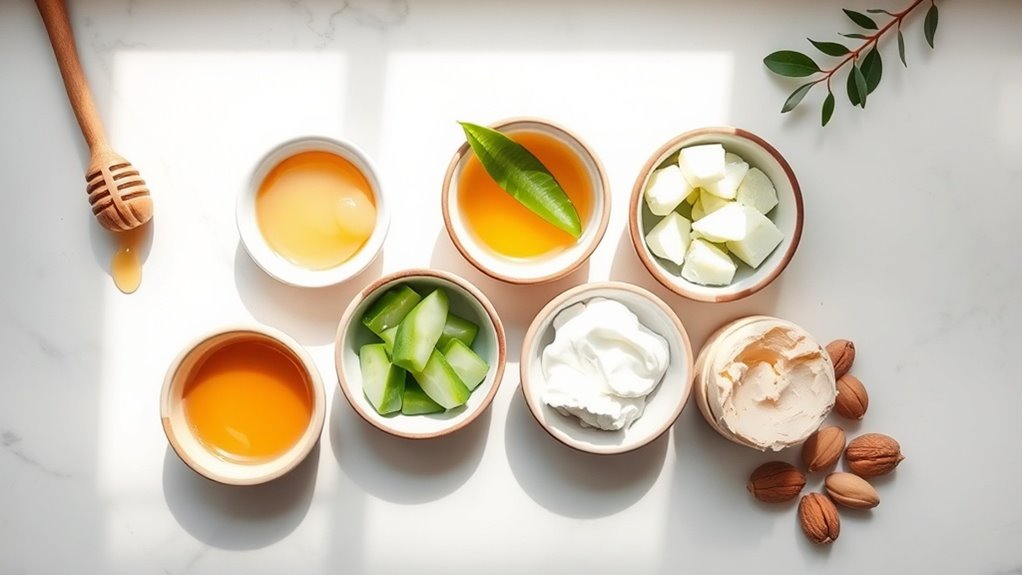
These combined stressors create fissures and inflammation around your nostrils. Understanding these mechanisms helps you effectively treat chapped nose skin through targeted barrier repair strategies. Fortunately, certain kitchen ingredients soothe skin effectively by restoring moisture and reinforcing the compromised barrier without requiring expensive commercial products.
Petroleum Jelly Application: The Gold Standard Treatment Method
When addressing perinasal xerosis, petrolatum-based occlusive agents demonstrate superior efficacy compared to alternative emollients due to their unique molecular structure and barrier-forming properties.
Petrolatum’s distinctive molecular composition creates unmatched occlusive barriers, making it the gold standard for treating dryness around the nose.
Application Protocol:
-
Cleanse perinasal region with lukewarm water
-
Pat skin completely dry using soft cloth
-
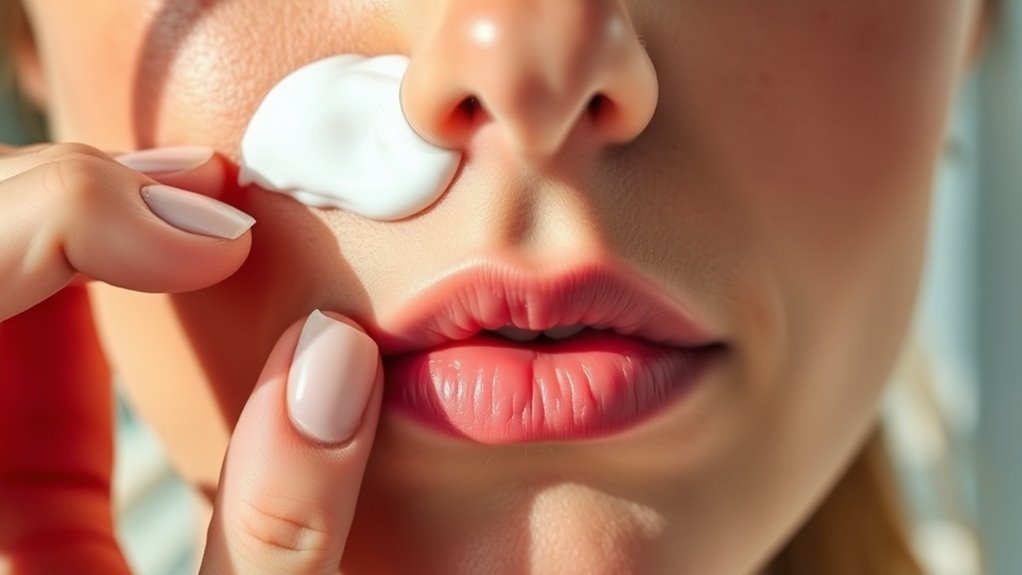
Apply thin petroleum jelly layer twice daily
-
Reapply after nasal discharge episodes
You’ll achieve optimal transepidermal water loss reduction by maintaining consistent application frequency. The occlusive barrier prevents moisture evaporation while facilitating stratum corneum repair. Clinical studies demonstrate 99% occlusion rates with petrolatum, significantly outperforming plant-based alternatives. Avoid over-application, as excess product provides no additional therapeutic benefit. For maximum effectiveness, use a pea-sized drop of petroleum jelly at each application to ensure adequate coverage without overwhelming the delicate perinasal tissue.
Using Honey Masks to Heal and Moisturize Chapped Nose Skin
Raw honey functions as a multifaceted therapeutic agent for perinasal chapping through its hygroscopic, antimicrobial, and anti-inflammatory properties. You’ll apply medical-grade honey directly to affected areas for 15-20 minutes daily.
The osmotic effect draws moisture into compromised epithelial tissue while simultaneously creating an occlusive barrier against transepidermal water loss. Honey’s enzymatic hydrogen peroxide production inhibits bacterial colonization in fissured skin.
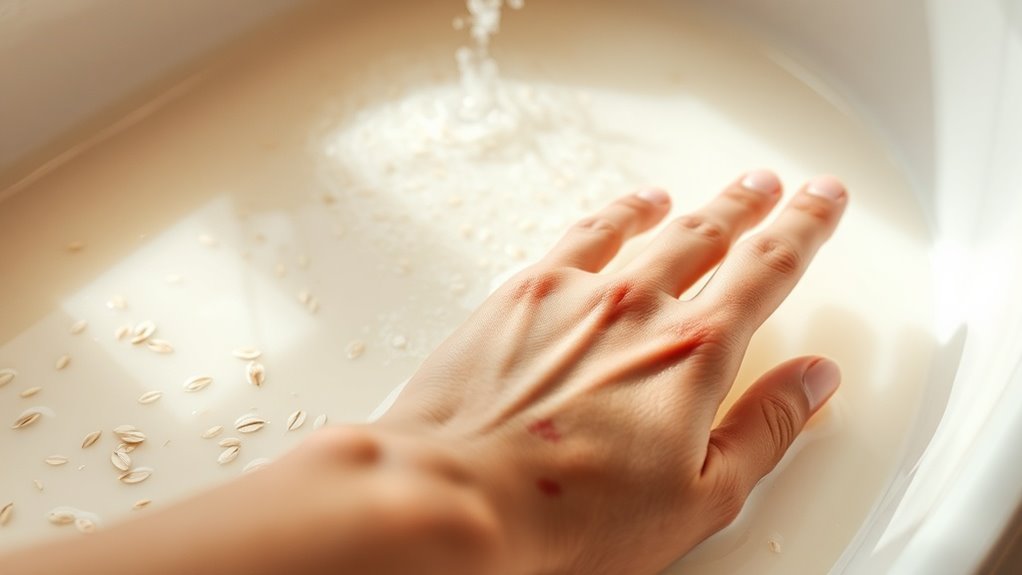
You can enhance efficacy by combining honey with colloidal oatmeal at a 2:1 ratio. Clinical studies demonstrate significant improvement in barrier function within 72 hours. The honey-oat mixture naturally promotes skin barrier repair while the colloidal oatmeal provides additional anti-inflammatory benefits to the sensitive nasal area. Always patch-test initially, as hypersensitivity reactions occur in approximately 2% of users.
Aloe Vera Gel Treatment for Soothing Irritated Nasal Areas
Although less viscous than honey, aloe vera gel delivers comparable therapeutic benefits through its polysaccharide content and bioactive compounds including acemannan, which accelerates wound healing in compromised perinasal tissue.
Apply pure aloe vera gel (99% concentration minimum) directly to affected areas three times daily. The gel’s anti-inflammatory properties reduce erythema while providing immediate cooling relief.
Optimal application protocol:
-
Cleanse perinasal skin with lukewarm water
-
Apply thin gel layer using clean fingertips
-
Allow complete absorption before applying occlusives
-
Refrigerate gel for enhanced vasoconstriction
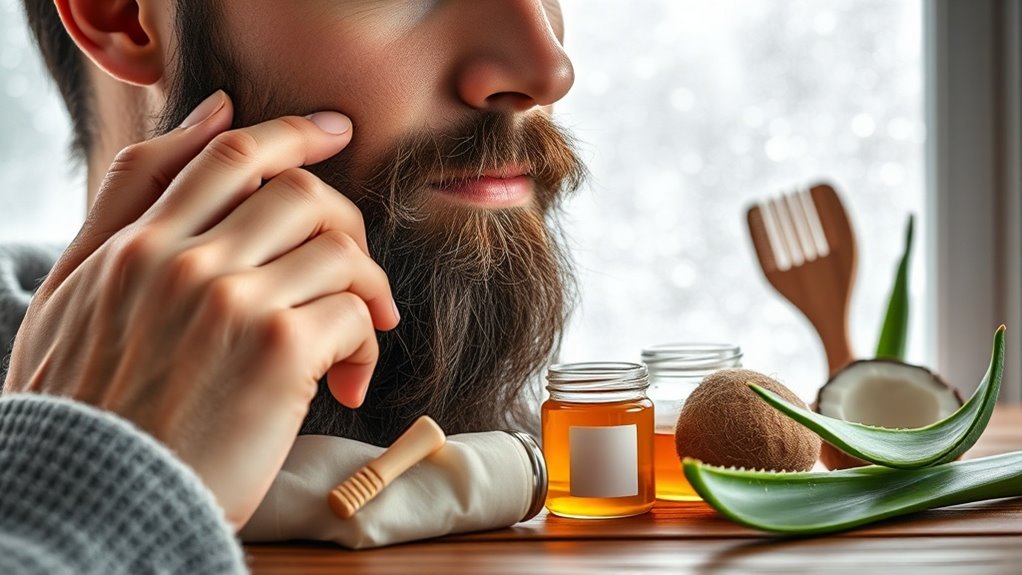
You’ll observe decreased inflammation within 48 hours. For enhanced moisture restoration, you can combine aloe with coconut oil as an aloe-coconut oil moisturizing treatment once the initial irritation subsides. Select preservative-free formulations to minimize sensitization risk in already compromised skin.
Setting Up a Humidifier for Optimal Moisture Balance
While topical interventions address symptomatic relief, environmental moisture control provides foundational prevention against recurrent perinasal chapping.
You’ll need to maintain indoor humidity levels between 30-50% to preserve the skin’s moisture barrier integrity. Position your humidifier three feet from your bedside, ensuring adequate air circulation without direct vapor exposure to facial tissues.
Clean the reservoir every three days using distilled white vinegar to prevent bacterial colonization and subsequent respiratory complications. Monitor ambient humidity with a hygrometer, adjusting output settings accordingly.
Cool-mist ultrasonic models minimize thermal injury risks while delivering consistent atmospheric moisture for nocturnal tissue restoration. If you lack a humidifier, you can achieve similar results through strategic plant placement, water bowl evaporation near heat sources, or hanging damp towels in your sleeping area.
Specialized Nose Balms and When to Use Them
When standard petroleum-based ointments fail to resolve persistent perinasal irritation, you’ll require therapeutic formulations containing active barrier-repair ingredients. Medical-grade nose balms incorporate ceramides, niacinamide, or colloidal oatmeal to restore epidermal integrity.
Apply these specialized products:
-
After cleansing: On clean, slightly damp skin to enhance absorption
-
Before outdoor exposure: Creating a protective barrier against wind and cold
-
Following nose-blowing episodes: Preventing friction-induced microtrauma
-
At bedtime: Allowing prolonged contact time for cellular repair
You’ll need consistent twice-daily application for 7-14 days. If erythema, scaling, or fissuring persists beyond this period, consult dermatology for prescription-strength corticosteroid alternatives.
Gentle Cleansing Techniques That Won’t Worsen Dryness
Traditional soap-based cleansers strip the perinasal region’s natural lipid barrier, exacerbating transepidermal water loss and perpetuating the dryness-inflammation cycle. You’ll achieve optimal results using pH-balanced, fragrance-free syndets (synthetic detergents) with minimal surfactant concentration.
Apply lukewarm water—never hot—as elevated temperatures disrupt stratum corneum integrity. Pat dry rather than rubbing, which mechanically irritates compromised skin. Consider micellar water or oil-based cleansers containing ceramides and cholesterol to maintain barrier function. Limit cleansing frequency to twice daily; over-washing depletes sebum production.
For crusted discharge, apply warm compress for thirty seconds before gentle removal with dampened cotton gauze.
Prevention Strategies to Stop Chapping Before It Starts
Before chapping manifests, you’ll need to implement barrier-protective measures that address environmental triggers and physiological vulnerabilities. Prophylactic application of occlusive emollients containing petrolatum or dimethicone creates a lipid barrier against transepidermal water loss.
Prevention requires barrier-protective measures addressing environmental triggers through prophylactic occlusive emollients that create lipid barriers against transepidermal water loss.
You should humidify indoor environments to maintain 40-50% relative humidity, preventing excessive moisture evaporation from nasal epithelia.
Essential preventive interventions include:
-
Apply petroleum-based ointments before cold exposure
-
Use saline nasal irrigation to maintain mucosal hydration
-
Avoid repetitive tissue friction during rhinorrhea episodes
-
Select hypoallergenic facial tissues with added moisturizers
Pre-emptive dermatological maintenance reduces inflammatory cascade activation and preserves stratum corneum integrity throughout winter months.
Frequently Asked Questions
Can Certain Medications Make Nose Chapping Worse During Winter Months?
An ounce of prevention is worth a pound of cure. Yes, you’ll find certain medications like isotretinoin, topical retinoids, antihistamines, and diuretics can exacerbate perinasal xerosis by reducing sebum production and compromising your skin’s barrier function.
Is Chapped Nose Skin Contagious to Other People?
No, your chapped nose skin isn’t contagious. It’s a non-infectious condition caused by environmental factors like cold air, low humidity, and frequent nose-blowing. You can’t transmit it through contact, as it’s not pathogenic in nature.
How Long Does It Typically Take for Chapped Nose Skin to Heal?
You’ll miraculously transform from Rudolph’s flaky cousin back to normal in 3-7 days with proper treatment. However, severe cases may require 2-3 weeks. Consistent moisturization and avoiding irritants accelerate epithelial regeneration significantly.
Can Food Allergies Contribute to Chronic Nose Skin Chapping?
Yes, you can experience chronic nose skin chapping from food allergies. Allergic reactions often cause nasal inflammation, increased mucus production, and frequent nose-wiping, which compromises your skin’s barrier function and leads to persistent irritation and chapping.
Should I See a Dermatologist for Persistent Chapped Nose Skin?
Yes, you should consult a dermatologist if chapping persists beyond two weeks. Studies show 40% of persistent perinasal dermatitis cases involve underlying conditions like seborrheic dermatitis, rosacea, or contact allergies requiring prescription treatment.