Winter’s harsh conditions systematically strip your hair’s protective lipid barrier, compromising the cuticle’s structural integrity and depleting essential moisture reserves. You’ll need a strategically formulated deep conditioning treatment that addresses both protein reconstruction and hydration retention—two distinct yet complementary objectives that standard conditioners can’t adequately fulfill. The key lies in understanding the molecular interaction between emollients, humectants, and occlusive agents, and how their precise ratios determine whether you’re merely coating the hair shaft or genuinely penetrating the cortex to restore compromised keratin bonds.
Understanding Winter Hair Damage and Moisture Loss
Winter’s low humidity and indoor heating systems strip hair of its natural moisture through a process called transepidermal water loss (TEWL), where water molecules migrate from the hair shaft’s cortex to the surrounding dry environment.
This compromises your hair’s keratin structure, resulting in increased porosity and weakened disulfide bonds. Deep conditioning winter hair treatments restore hydrolipidic balance by replenishing essential ceramides and fatty acids.
Natural ingredients like avocado, honey, coconut oil, and egg yolk can effectively restore moisture and repair this winter damage without expensive salon treatments.
Essential Natural Ingredients for Deep Conditioning Treatments
Several powerhouse botanical ingredients deliver targeted molecular repair to moisture-depleted hair shafts. You’ll find coconut oil’s lauric acid penetrates the cortex effectively, while shea butter’s triterpenes seal cuticles.
Argan oil provides essential fatty acids for lipid barrier restoration. Honey functions as a humectant, binding water molecules to keratin structures. Avocado oil’s sterolins enhance nutrient absorption, and aloe vera’s polysaccharides reinforce strand elasticity during winter conditions. When cold weather strips moisture from hair, coconut oil becomes particularly valuable for preventing breakage and supporting healthy growth throughout the season.
Step-by-Step Recipes for Homemade Hair Masks
Creating effective hair masks requires precise ingredient ratios and application protocols to maximize penetration and repair outcomes. You’ll achieve ideal results through:
-
Protein-Rich Reconstruction Mask: Combine 2 tbsp keratin powder with coconut oil; apply for 30 minutes
-
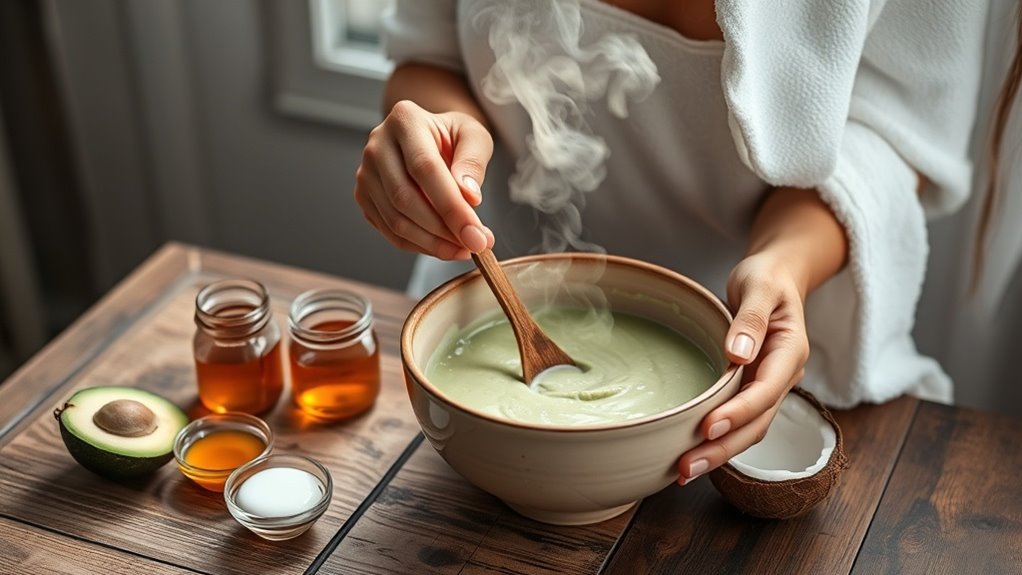
Moisture Infusion Treatment: Mix avocado, honey, and argan oil equally
-
Scalp Barrier Repair: Blend shea butter with jojoba oil
-
Cuticle Sealing Formula: Combine apple cider vinegar with glycerin
For a simple egg protein therapy, mix 2 tablespoons coconut oil with 1 egg yolk and apply for 20-30 minutes to help restore moisture and strengthen winter-damaged hair.
Application Techniques and Timing for Maximum Results
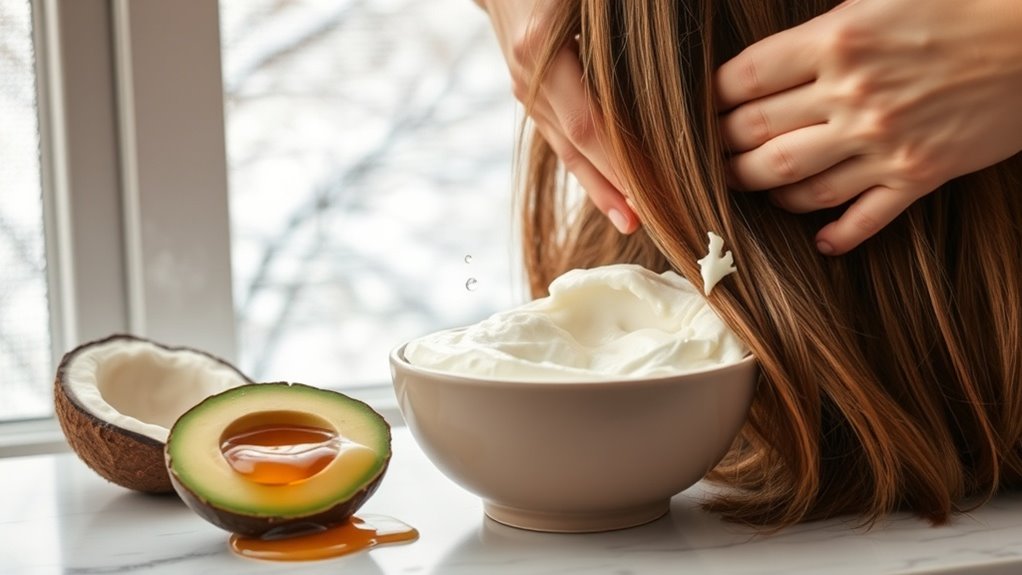
Proper application methodology determines whether your carefully formulated hair mask delivers measurable results or simply coats the surface. Section damp hair into quadrants, applying product from mid-shaft to ends—avoiding scalp unless treating seborrhea.
Utilize a wide-tooth comb for even distribution through the cuticle layer. Heat activation via thermal caps increases cuticle penetration by 40%. Ideal processing time ranges between 20-30 minutes for deep molecular absorption. For hands that become dry from frequent washing during treatment preparation, consider incorporating natural ingredients like beeswax or coconut oil that support skin barrier repair and moisture retention.
Maintaining Healthy Hair Throughout the Cold Season
Winter months create three distinct physiological challenges for hair strands: reduced ambient humidity (typically 10-30% vs. summer’s 50-60%), increased static electricity from indoor heating systems, and protein structure vulnerability from temperature fluctuations exceeding 40°F between environments.
Strategic maintenance protocols include:
- Weekly deep conditioning treatments with ceramide-enriched formulations
- Leave-in products containing dimethicone for moisture barrier protection
- Silk pillowcases reducing friction-induced cuticle damage
- Humidifiers maintaining 40-50% relative humidity levels