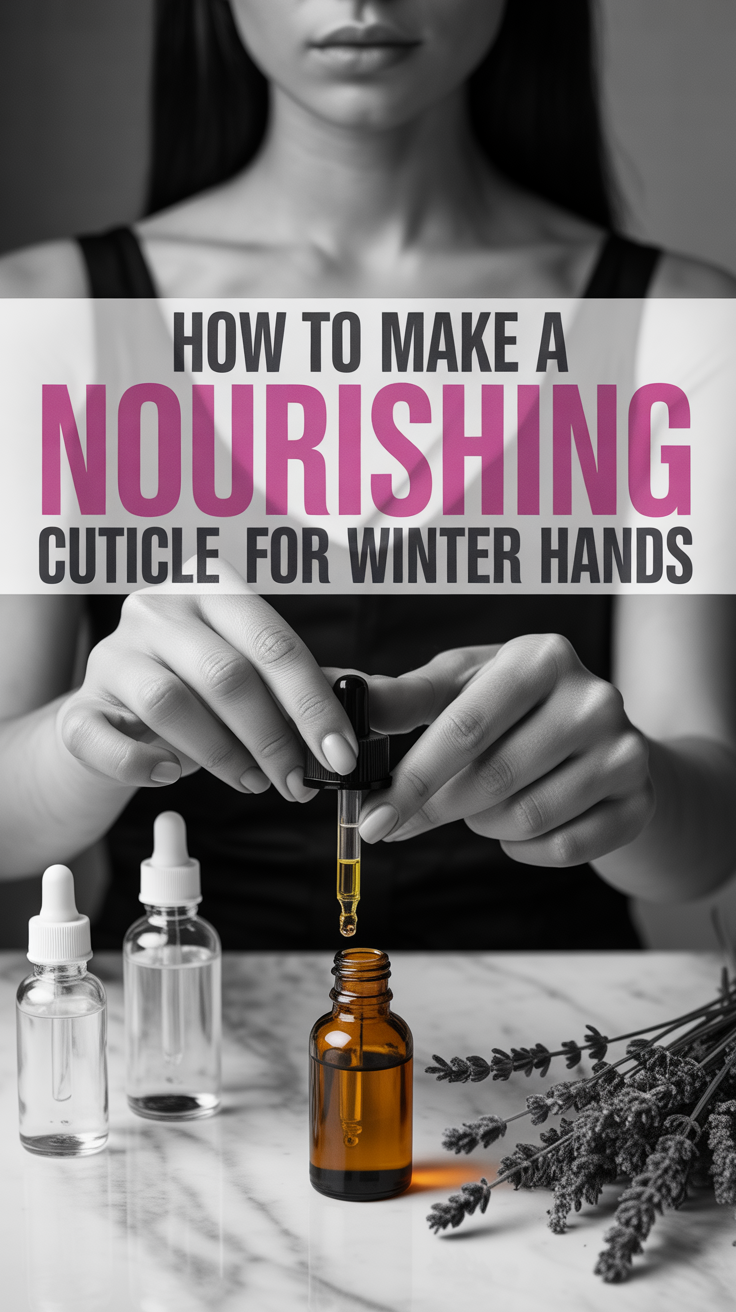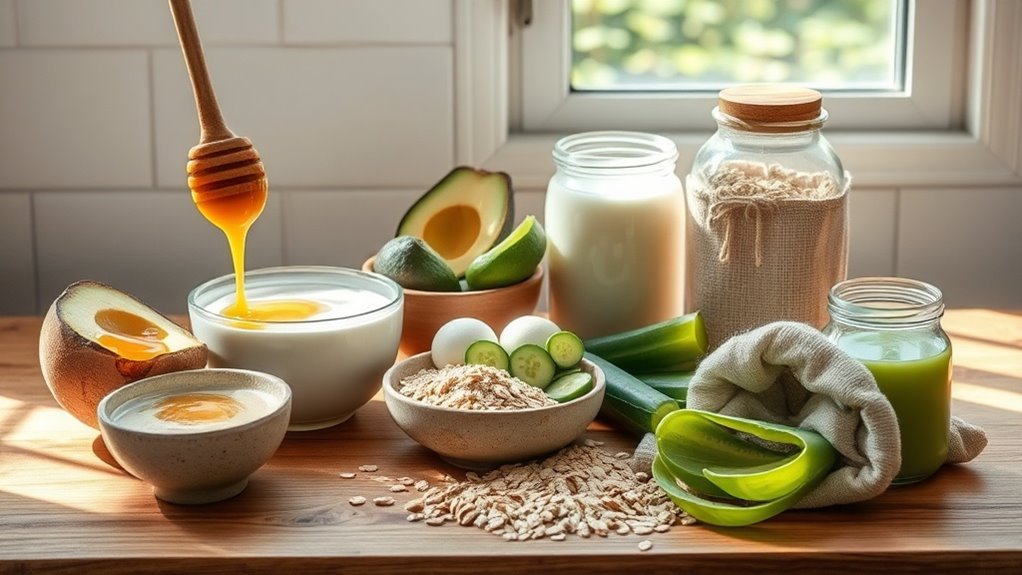
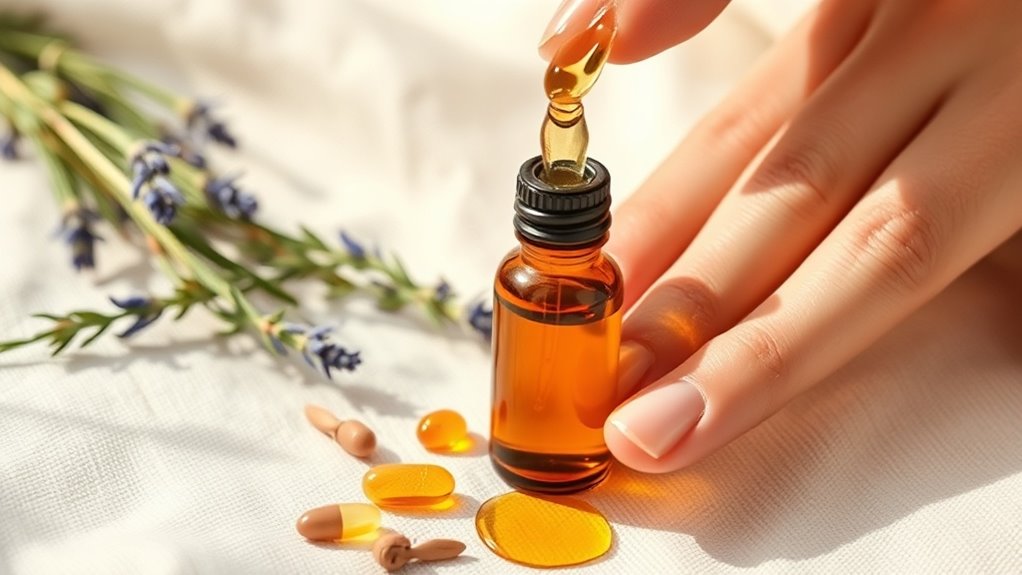
Winter’s low humidity and indoor heating strip your cuticles of essential lipids, compromising the periungual skin barrier and leading to fissures, hangnails, and increased infection risk. You’ll need a precisely formulated oil blend to restore moisture balance and protect against ongoing environmental damage. Clinical studies confirm that specific carrier and essential oil combinations penetrate the stratum corneum more effectively than commercial products. Here’s what you should know about creating a therapeutic-grade formula that actually works.
Why Winter Weather Damages Cuticles and Nails
Winter’s harsh conditions create a perfect storm for cuticle and nail deterioration through multiple physiological mechanisms. Cold air reduces humidity levels, causing transepidermal water loss from your nail beds.
Indoor heating further depletes moisture, while temperature fluctuations compromise keratin structure. You’ll experience brittle nails, cracked cuticles, and reduced elasticity.
A nourishing cuticle oil recipe counteracts these effects through targeted lipid replenishment. Frequent hand washing during winter months accelerates moisture depletion, making healthcare workers and busy professionals particularly vulnerable to severe cuticle damage.
Essential Oils and Carrier Oils: Understanding the Key Ingredients
Before formulating your cuticle oil, you’ll need to distinguish between carrier oils and essential oils—two functionally distinct categories that work synergistically.
Carrier oils (jojoba, sweet almond, argan) provide the lipid base and penetrate the nail matrix, delivering nutrients.
Essential oils (lavender, tea tree, frankincense) offer therapeutic compounds but require dilution to 2-3% concentration to prevent dermal irritation and sensitization.
For severely damaged winter hands with cracks extending beyond the cuticles, combining your cuticle oil treatment with a healing salve can address both nail health and deeper skin barrier repair simultaneously.
Six Nourishing Cuticle Oil Recipes With Precise Measurements
Each formulation below targets specific dermal needs through measured botanical ratios that optimize absorption and efficacy. You’ll find six evidence-based recipes:
1) Basic Hydration: 15ml jojoba, 3 drops lavender;
2) Anti-inflammatory: 15ml argan, 2 drops frankincense;
3) Circulation Boost: 15ml sweet almond, 3 drops rosemary;
4) Intensive Repair: 10ml rosehip, 5ml vitamin E;
5) Antibacterial: 15ml grapeseed, 2 drops tea tree;
6) Antioxidant: 15ml avocado, 2 drops carrot seed.
For enhanced winter protection, consider adding coconut oil’s natural moisturizing properties to any of these formulations at a 5ml ratio to support skin barrier function during harsh cold weather conditions.
Step-by-Step Blending Instructions for Each Recipe
Proper blending technique guarantees ideal stability and therapeutic efficacy of your cuticle oil formulation. You must measure base oils using a graduated pipette or digital scale for accuracy within 0.1 mL, then incorporate essential oils drop-by-drop while stirring continuously to achieve homogeneous distribution.
Transfer the completed blend immediately into an amber glass bottle with a dropper cap to preserve photosensitive compounds and facilitate controlled application. For enhanced winter skin repair, consider adding therapeutic ingredients like tea tree oil treatments, which research suggests may naturally support healing of severely damaged skin when properly diluted in your cuticle oil blend.
Measure Your Base Oils
When formulating your cuticle oil blend, you’ll need to measure the base oils with precision to achieve the desired therapeutic effect. Use a graduated glass pipette or digital scale accurate to 0.1 grams.
Measure jojoba oil first as your primary carrier, followed by sweet almond oil. Maintain a 70:30 ratio for ideal absorption and emollient properties, ensuring consistent efficacy across applications.
Add Essential Oil Drops
With your base oils properly measured, you’re ready to incorporate the therapeutic essential oil components. Add 3-5 drops total per 30ml of base oil, maintaining a 1% dilution ratio to prevent dermal sensitivity.
Recommended essential oils include lavender (Lavandula angustifolia) for anti-inflammatory properties, frankincense (Boswellia carterii) for cellular regeneration, or myrrh (Commiphora myrrha) for enhanced barrier repair and antimicrobial protection.
Mix and Bottle Properly
Everything depends on thorough emulsification to safeguard consistent therapeutic delivery across your cuticle surface.
Swirl your carrier oil base clockwise for 30 seconds, then add essential oils drop-by-drop while maintaining circular motion.
Transfer immediately into amber glass bottles using a sterile funnel to prevent oxidation. Cap tightly and invert three times to warrant homogeneous distribution before storage.
Proper Application Techniques and Optimal Timing
Apply your cuticle oil when your hands are clean and slightly damp, ideally after washing or bathing, as moisture facilitates deeper penetration of active ingredients into the nail bed and surrounding tissue. Use 1-2 drops per cuticle, then massage the oil in circular motions for 30-60 seconds to stimulate blood flow and enhance absorption through the eponychium.
For ideal results during winter months, repeat this application twice daily—once in the morning and once before bed—to maintain consistent hydration levels and prevent desiccation of the cuticle barrier.
Best Time to Apply
The ideal application window for cuticle oil occurs immediately after handwashing or bathing, when your cuticles remain slightly damp and porous. This moisture enhances lipid penetration and absorption efficiency.
Apply twice daily—morning and evening—for excellent results. Nighttime application proves most effective, as prolonged contact during sleep maximizes nutrient delivery.
Reapply after frequent handwashing to maintain the protective barrier against winter’s dehydrating effects.
Step-by-Step Application Method
Knowing when to apply cuticle oil matters little without proper technique to maximize its therapeutic benefits. Dispense one drop per nail, then massage using circular motions for 30-60 seconds to enhance dermal penetration.
Push back softened cuticles gently with a wooden stick. Apply occlusive moisturizer immediately afterward to seal in hydration through transepidermal water loss prevention.
Massage Techniques for Absorption
Four distinct massage patterns optimize cuticle oil absorption: effleurage strokes moving proximally from nail tip toward knuckle facilitate venous drainage, while petrissage kneading mobilizes subcutaneous tissues to enhance microcirculation.
- Apply 30-second circular friction around each cuticle using your thumb pad at 2-3 Newton pressure
- Execute tapotement tapping for 10 seconds to stimulate local blood flow
- Finish with compression holds for 5 seconds per digit to seal penetration
Storage Tips and Expected Results Timeline
Proper storage markedly extends your cuticle oil’s therapeutic efficacy and shelf life. Store your formulation in amber glass bottles at 15-25°C, away from direct sunlight to prevent oxidation.
You’ll observe initial hydration within 24 hours, with significant cuticle softening by day three. Consistent twice-daily application yields ideal barrier restoration within 14 days, demonstrating measurable improvements in nail flexibility and periungual tissue integrity.