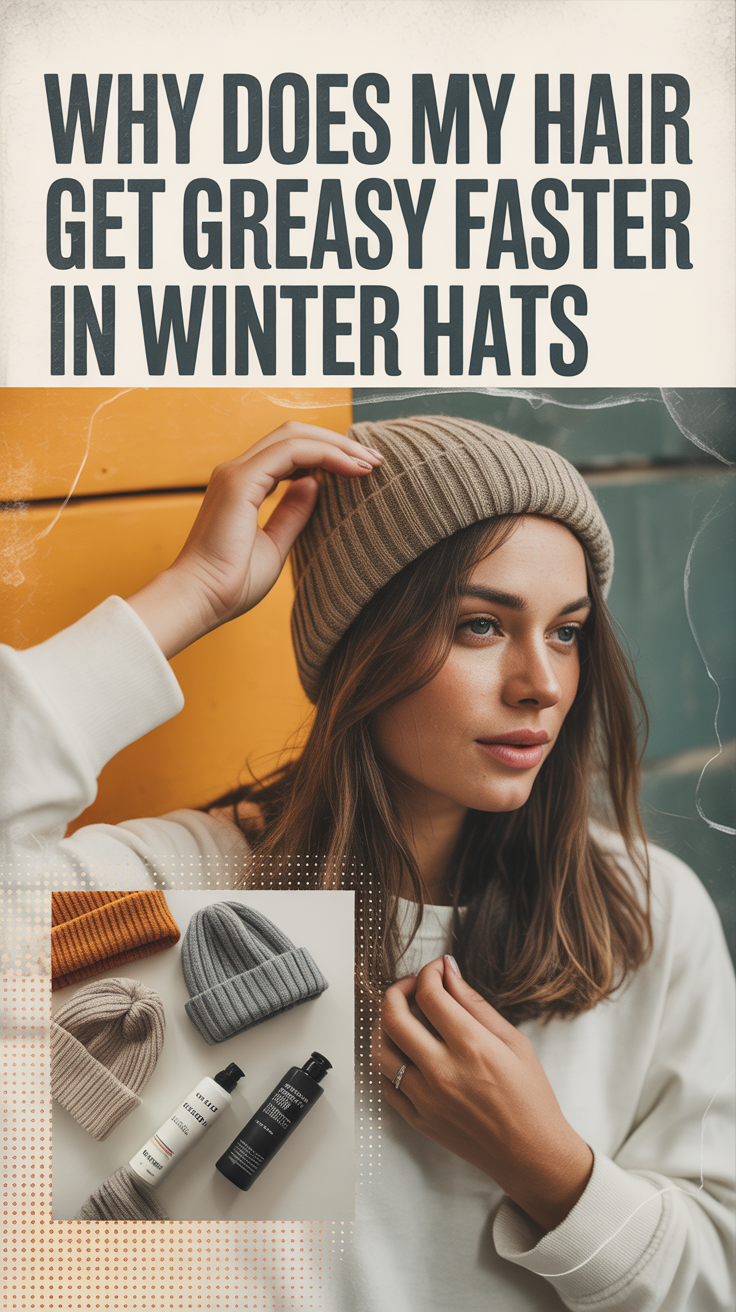
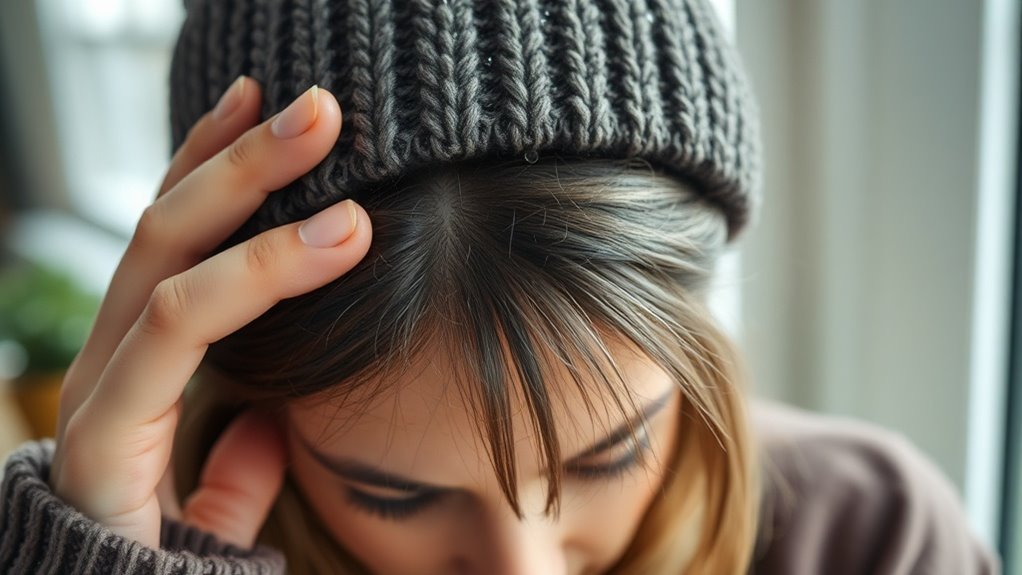
You’ve just removed your beanie after your morning commute, and within hours, your roots feel slick with sebum—a pattern that didn’t exist during summer months. This phenomenon isn’t coincidental: winter hats create an occlusive microenvironment that elevates scalp temperature by 2-3°C, directly stimulating your sebaceous glands’ lipid production while simultaneously trapping moisture and oils against your follicles. What you’re experiencing involves a complex interplay of thermoregulation, microbial activity, and mechanical friction that warrants closer examination.
How Winter Hats Create the Perfect Environment for Greasy Hair
While your scalp maintains a consistent temperature of approximately 98.6°F (37°C) under normal conditions, winter hats create an insulated microenvironment that elevates this baseline by 2-4°F, directly stimulating sebaceous gland activity.
This thermal increase liquefies waxy sebum, enabling migration down hair shafts. Simultaneously, blocked air circulation prevents moisture evaporation, creating humidity levels exceeding 80%. The resulting occlusive environment compounds oil visibility as sweat mixes with sebum, forming an emulsion that coats strands uniformly.
Friction-induced cuticle damage further traps oils. This warmer, more humid microclimate also promotes the growth of dandruff-causing microbes, which thrive under these conditions. Selecting moisture-wicking fabric selections can help reduce humidity buildup and minimize the occlusive effects that accelerate oil distribution. Understanding these mechanisms enables targeted winter hair grease solutions through temperature regulation and enhanced ventilation strategies.
The Science Behind Cold Weather and Increased Scalp Oil Production
The paradox of winter hair grease extends beyond hat-induced occlusion—cold ambient temperatures fundamentally alter your scalp’s sebaceous response through physiological compensation mechanisms.
Three Primary Thermoregulatory Responses:
-
Lipid Barrier Compromise: Cold-induced vasoconstriction reduces sebum synthesis initially, depleting your scalp’s protective lipid layer and triggering reactive hypersecretion from sebaceous glands. This disruption of the scalp microbiome balance can further exacerbate oil production irregularities by compromising the delicate ecosystem that regulates sebaceous function.
-
Humidity-Mediated Dehydration: Low atmospheric moisture content strips transepidermal water, prompting compensatory sebum overproduction as your scalp attempts homeostatic reestablishment. Addressing this dehydration through natural scalp moisturizers like coconut oil or aloe vera can help restore proper oil regulation and prevent excessive greasiness.
-
Temperature Oscillation Dysregulation: Rapid shifts between cold outdoor environments and heated indoor spaces disrupt sebaceous gland equilibrium, causing erratic oil synthesis patterns and excessive scalp lipid accumulation.
Why Hat Material and Fit Directly Affect Hair Greasiness
Beyond environmental factors, your hat’s composition and structural characteristics directly modulate sebaceous gland activity through mechanical and thermal pathways. Non-breathable materials create occlusive conditions that elevate perifolicular temperatures, triggering compensatory sebum hypersecretion.
Synthetic fibers generate electrostatic charges causing follicular irritation, while friction disrupts the cuticular layer’s lipid barrier. Compression from tight-fitting headwear restricts capillary perfusion, impairing normal sebaceous regulation. Restricted scalp circulation from compression impedes the delivery of nutrients and oxygen necessary for balanced oil production. Unlined hats strip protective oils through direct contact, paradoxically stimulating rebound hypersecretion.
Additionally, unwashed accessories harbor microbial colonies and sebaceous residue, creating a concentrated lipid reservoir that redistributes across hair shafts with each wear, compounding visible greasiness. The trapped moisture from perspiration can increase scalp humidity beyond the optimal 30-50% humidity levels, further promoting bacterial growth and accelerating oil buildup.
How Your Hair Type Determines Hat-Related Oil Buildup
Because individual follicular architecture and sebaceous physiology vary substantially across hair phenotypes, your specific hair type functions as the primary determinant of hat-induced lipid accumulation patterns.
Critical hair-type variables affecting sebum distribution under occlusive headwear:
-
Strand curvature geometry – Straight shafts facilitate rapid sebum migration, whereas helical configurations in curly hair impede oil travel, concentrating lipids proximally at the scalp
-
Fiber diameter and density – Fine hair demonstrates accelerated visible oiliness due to reduced surface-to-volume ratios and limited sebum absorption capacity. Cotton fibers from hats can adhere to fine strands more readily, compounding the appearance of buildup and contributing to faster greasiness.
-
Cuticle porosity levels – High-porosity hair retains trapped oils longer under hats, while low-porosity strands cause sebum pooling at follicular openings. Winter conditions exacerbate this issue, making moisture retention more challenging and increasing the need for targeted treatments.
Common Winter Hair Care Mistakes That Accelerate Greasiness
While strategic hat selection and hair-type awareness provide foundational protection against winter greasiness, inadvertent hair care protocols consistently undermine these preventive measures by disrupting sebaceous homeostasis.
Daily washing paradoxically intensifies oil production through compensatory sebum hypersecretion. Thermal extremes—particularly hot water exceeding 38°C—trigger hyperactive sebaceous glands while compromising the lipid barrier. Direct scalp application of conditioning agents creates occlusive layers that trap endogenous oils. Heat-styling implements and alcohol-based products further destabilize the scalp microenvironment.
Post-hat hygiene protocols prove critical; immediate washing prevents trapped moisture from stimulating bacterial colonization and subsequent inflammation-mediated seborrhea. Seasonal stress during winter holidays elevates cortisol levels, which compounds sebaceous dysfunction and accelerates oil accumulation beneath winter headwear. Implementing lukewarm rinses and strategic product placement optimizes sebaceous regulation.
Proven Strategies to Keep Hair Fresh While Wearing Winter Hats
To mitigate sebum accumulation beneath winter headwear, you must implement targeted interventions addressing material selection, cleansing protocols, and environmental factors. Breathable hat fabrics reduce occlusive conditions that trigger compensatory sebaceous gland hyperactivity, while strategic washing schedules prevent both lipid depletion and excessive buildup.
Additionally, regulating ambient moisture levels minimizes the scalp’s reactive oil production that occurs in response to transepidermal water loss in heated indoor environments.
Choose Breathable Hat Materials
Natural fibers consistently outperform synthetic materials in preventing winter hat-induced scalp sebum overproduction. You’ll reduce scalp sweating and irritation by selecting hats constructed from cotton, linen, bamboo, wool, or cashmere, which facilitate superior air circulation compared to polyester, nylon, or acrylic alternatives that trap heat and moisture.
Optimal breathable hat materials include:
- Wool and cashmere — provide thermal regulation with natural ventilation, preventing excessive moisture buildup
- Moisture-wicking fabrics — reduce trapped sweat and oil accumulation during extended wear
- Silk or satin linings — minimize friction and moisture loss while maintaining scalp homeostasis
Avoid dense, non-breathable fabrics that stimulate compensatory sebum hypersecretion.
Adjust Hair Washing Routine
Strategic modification of your hair washing regimen constitutes the most effective intervention for mitigating winter hat-induced sebaceous hyperactivity. Implement lukewarm water temperatures exclusively, as thermal extremes trigger compensatory lipid secretion. Concentrate cleansing agents on scalp tissue while restricting conditioning protocols to distal hair shafts.
Sulfate-free formulations prevent excessive stripping of protective sebum layers. Maintain consistent wash intervals rather than increasing frequency, which paradoxically exacerbates oiliness through physiological compensation mechanisms. Deploy dry shampoo between cleansing cycles to absorb surface oils without disrupting homeostatic balance.
Conclude each wash with cold-water rinses to seal cuticle structures, optimizing moisture retention and minimizing reactive sebaceous gland activity.
Control Indoor Humidity Levels
While thermoregulatory mechanisms beneath winter headwear contribute to accelerated sebum accumulation, ambient moisture deficits in climate-controlled environments exert equally significant physiological stress on scalp homeostasis.
Implement evidence-based humidity optimization protocols:
-
Monitor relative humidity (RH) metrics: Maintain 30-50% RH using calibrated hygrometers, as 42% of winter measurements fall below therapeutic thresholds.
-
Deploy whole-house humidification systems: Integrate HVAC-linked humidifiers with hygrostatic controls for consistent moisture regulation and reduced static electricity generation.
-
Optimize ventilation parameters: Utilize sensor-based smart systems to prevent excessive moisture extraction while mitigating mold proliferation risks above 60% RH.
This tripartite approach addresses xerosis-induced sebaceous hyperactivity.