You wake up to find your reflection resembling someone who’s endured three rounds in a boxing ring—your face is swollen, your eyes are puffy, and you’re questioning every life choice. While winter’s cold, dry air can exacerbate facial fluid retention overnight, the remedies you’ll encounter range from scientifically plausible to questionable at best. Before you invest in expensive jade rollers or spend twenty minutes massaging your face, you’ll want to understand what’s actually happening beneath your skin and which interventions might offer legitimate relief.
Cold Jade Roller Therapy for Facial Drainage
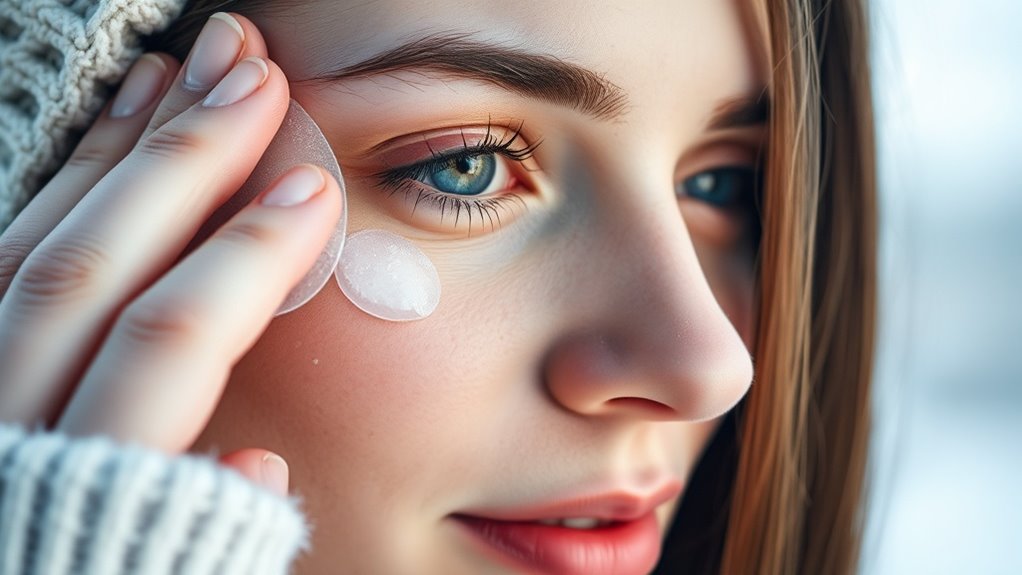
While jade rollers have gained considerable popularity in skincare routines, the scientific evidence supporting their efficacy for facial drainage remains limited. You’ll find that cold application itself—rather than the jade material—provides temporary vasoconstriction, potentially reducing periorbital edema.
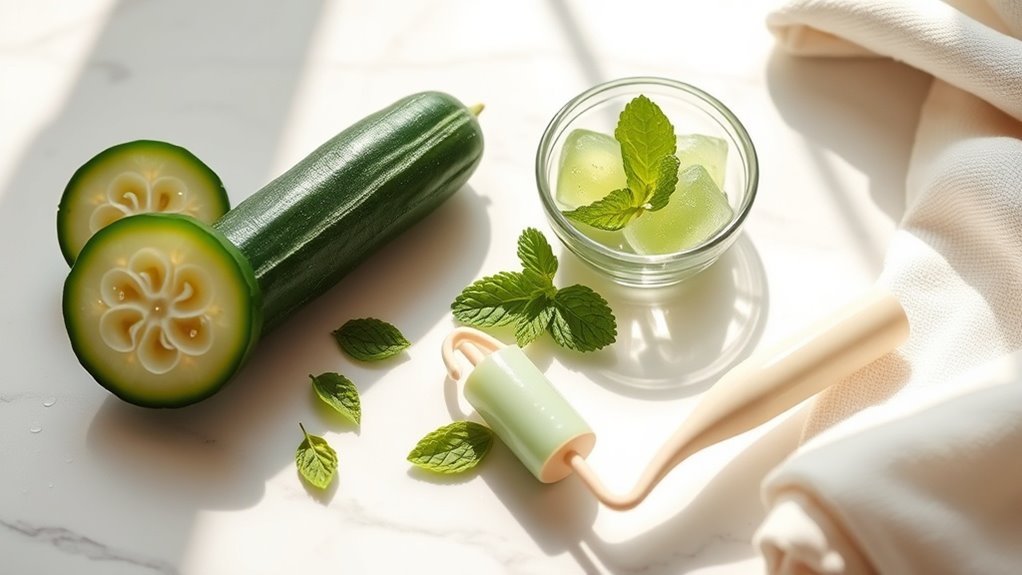
The mechanical lymphatic stimulation theory lacks robust clinical validation. If you’re seeking winter puffy face remedies, consider that results stem primarily from cold temperature and gentle massage pressure, not jade’s purported properties. You can achieve comparable outcomes using refrigerated metal spoons or ice wrapped in cloth.
For optimal application, roll the jade tool in upward motions for 3-5 minutes as part of your immediate morning routine before applying other skincare products. The therapeutic mechanism requires further rigorous investigation before definitive claims can be substantiated.
Lymphatic Drainage Massage Techniques
Though lymphatic drainage massage has become increasingly promoted for facial depuffiness, you should understand that peer-reviewed evidence demonstrating its effectiveness remains sparse and methodologically weak.
The technique involves applying gentle, rhythmic pressure along lymphatic pathways, theoretically facilitating fluid movement toward drainage points near your ears and clavicles.
If you’re attempting this intervention, use light fingertip pressure—approximately 25-30 mmHg—moving from your face’s center outward. However, recognize that any observed improvement may result from mechanical fluid displacement rather than enhanced lymphatic function. Expect temporary, modest results. Those with lymphedema or cardiovascular conditions shouldn’t attempt this without medical consultation.
Following your massage session, consider complementing the treatment with a warm bath containing colloidal oatmeal, which may help support overall skin barrier function and comfort during winter months.
Green Tea Compress Application Method
Can topical application of green tea actually reduce facial edema, or does this represent another overpromised natural remedy? Limited evidence suggests epigallocatechin gallate (EGCG) possesses anti-inflammatory properties that may constrict superficial blood vessels.
EGCG’s anti-inflammatory properties may constrict blood vessels, though scientific evidence supporting green tea’s efficacy against facial edema remains limited.
You’ll need:
-
Two steeped green tea bags, cooled to refrigerator temperature (approximately 4°C)
-
Clean gauze saturated with concentrated brew
-
Timer set for 10-minute intervals
Apply compressed tea bags directly to periorbital regions and cheeks. The combination of vasoconstriction from cold temperature and potential EGCG penetration theoretically addresses fluid accumulation. However, results remain largely anecdotal, with minimal peer-reviewed dermatological studies confirming statistically significant reduction in morning facial puffiness. For optimal anti-inflammatory benefits from green tea, steep loose tea at 175°F for 3-5 minutes to maximize polyphenols and catechins extraction before cooling for topical application.
Cucumber Slice Treatment for Depuffing
Why does cucumber maintain its status as a ubiquitous spa treatment despite scant clinical evidence supporting its depuffing efficacy? You’ll find cucumber’s theoretical benefits stem from its high water content (95%) and mild ascorbic acid presence, though peer-reviewed studies remain limited.
| Component | Concentration | Proposed Mechanism |
|———–|————–|——————-|
| Water | 95% | Osmotic pressure reduction |
| Vitamin C | 2.8mg/100g | Mild anti-inflammatory |
| Caffeic acid | Trace amounts | Theoretical vasoconstriction |
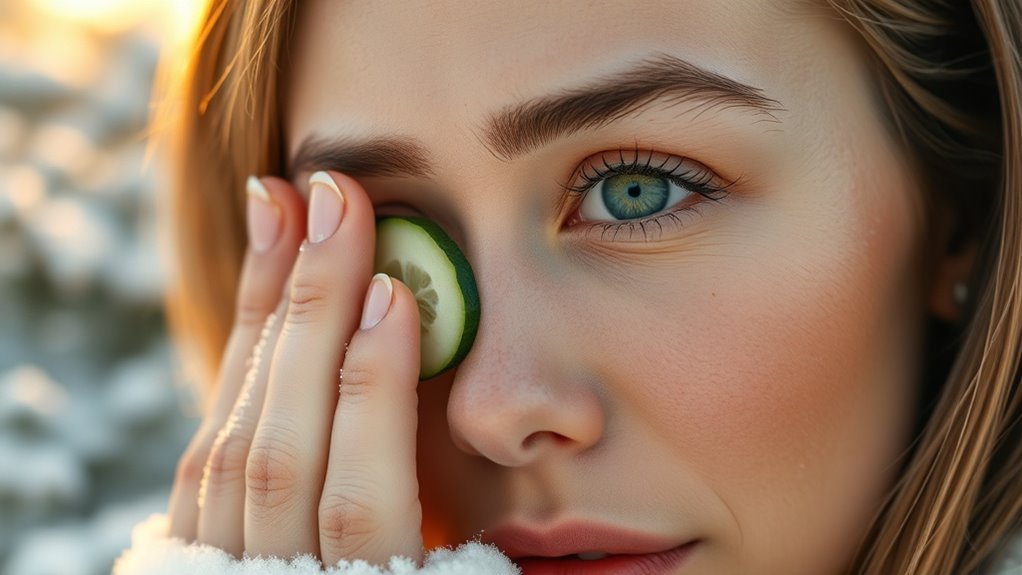
Application involves placing chilled slices over periorbital regions for 10-15 minutes. You’re essentially applying cold compresses with negligible bioactive compounds. For enhanced moisture retention during winter months, consider applying coconut oil after your cucumber treatment to help seal in hydration and protect against harsh weather conditions. Results remain anecdotal rather than empirically validated.
Elevation Sleep Positioning to Prevent Morning Puffiness
While gravitational fluid redistribution offers a physiologically plausible explanation for morning facial edema, you’ll find the clinical literature supporting elevation sleep positioning remains surprisingly sparse. Proponents recommend elevating your head 30-45 degrees to facilitate lymphatic drainage, though controlled trials haven’t definitively established efficacy.
Consider the practical implementation:
-
Extra pillows stacked beneath your head and upper torso create an inclined sleeping surface
-
Adjustable bed frames tilted at the head maintain consistent elevation throughout the night
-
Wedge-shaped foam cushions positioned under your mattress prevent pillow migration during sleep
You’re essentially testing an anatomically logical intervention with limited empirical validation. Additionally, maintaining optimal humidity levels of 30-50% in your bedroom through natural methods can help prevent overnight fluid retention that contributes to facial puffiness.
Frequently Asked Questions
What Foods Should I Avoid to Reduce Morning Facial Puffiness?
You’ll want to limit high-sodium processed foods, alcohol, and refined carbohydrates, as they’re associated with fluid retention. However, evidence for diet-induced facial puffiness remains limited, and individual responses vary considerably based on underlying health conditions.
How Much Water Should I Drink Daily to Prevent Puffy Face?
You’ll need approximately 2.7-3.7 liters daily, though evidence linking specific water intake to facial edema reduction remains limited. Individual requirements vary based on activity level, climate, and medical conditions. Don’t expect dramatic results from hydration alone.
Can Allergies Cause Morning Facial Swelling During Winter Months?
Yes, you can experience allergy-related facial swelling in winter. Indoor allergens like dust mites, mold, and pet dander often concentrate in heated homes with poor ventilation, potentially triggering histamine responses that cause morning puffiness.
Does Alcohol Consumption Contribute to Morning Facial Puffiness?
You might dismiss this connection, but alcohol definitely causes morning facial puffiness. It’s a vasodilator that increases blood flow and impairs lymphatic drainage while promoting fluid retention through dehydration—creating that characteristic swollen appearance you’re experiencing.
When Should I Consult a Doctor About Persistent Facial Swelling?
You should consult a doctor if facial swelling persists beyond two weeks, worsens progressively, or accompanies symptoms like breathing difficulty, chest pain, severe headaches, or vision changes. Unilateral swelling or swelling with skin discoloration warrants immediate evaluation.