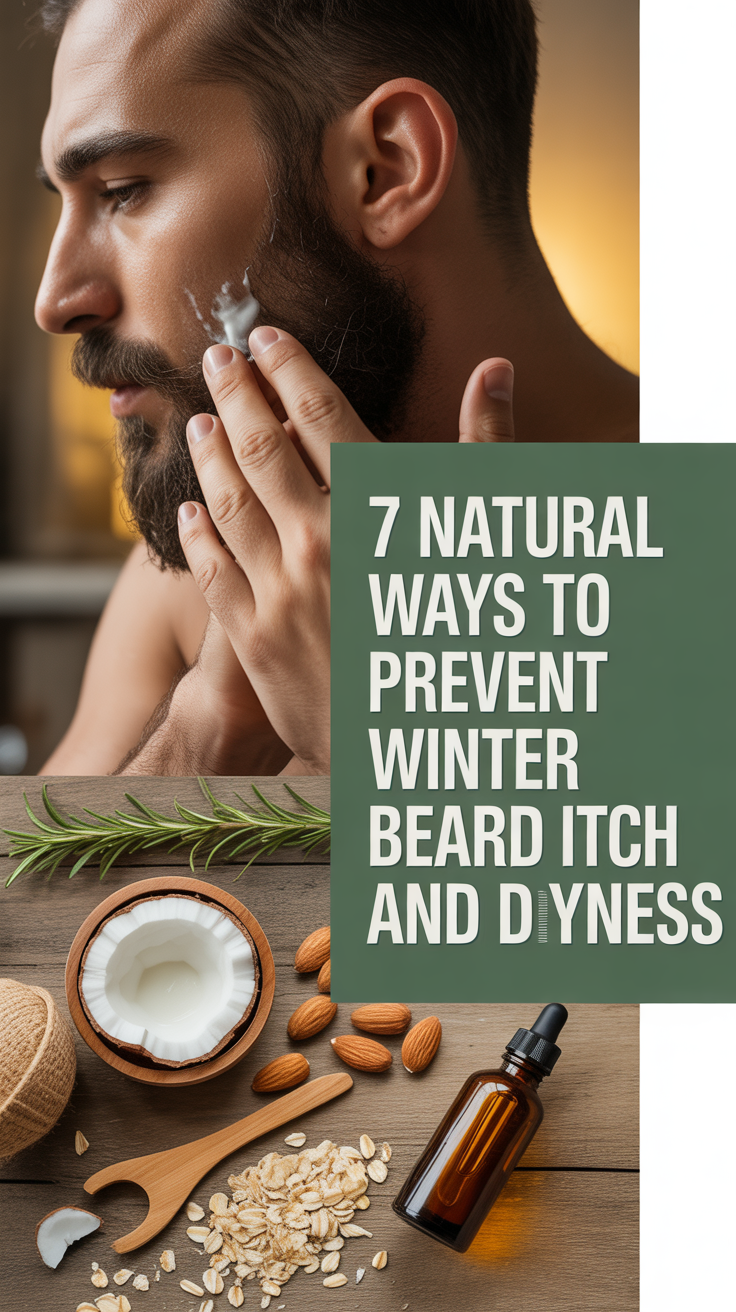
7 Natural Ways to Prevent Winter Beard Itch and Dryness
Like Odysseus braving harsh elements on his journey home, you’ll face winter’s assault on your beard with its cold winds and heated indoor air stripping away natural oils. Research indicates that xerosis—clinical dryness of the skin and hair—affects approximately 85% of bearded men during winter months, leading to pruritus and follicular irritation. You don’t need to endure this seasonal discomfort. Seven evidence-based interventions can restore your skin’s barrier function and eliminate that persistent itch throughout the colder season.
Key Takeaways
-
Apply 3-4 drops of jojoba, argan, or sweet almond beard oil to damp facial hair after cleansing for optimal moisture retention.
-
Use a cool-mist humidifier to maintain 45% indoor humidity, preventing dry air from depleting beard and skin moisture.
-
Exfoliate skin beneath beard twice weekly with salicylic acid or soft brush to remove dead skin and improve sebum distribution.
-
Apply beard balm containing shea butter, beeswax, and jojoba oil to damp hair for all-day hydration and protection.
-
Consume 250-500mg omega-3 fatty acids daily through fatty fish or supplements to strengthen skin’s moisture barrier from within.
Use Nourishing Beard Oils to Lock in Moisture
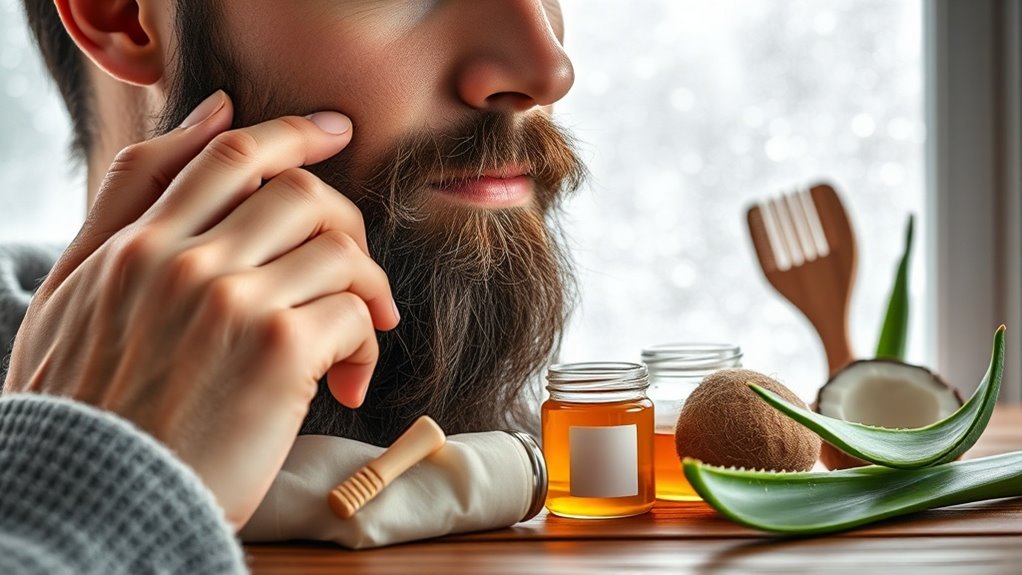
During winter months, sebaceous glands produce less natural oil due to reduced humidity and cold air exposure, which compromises the beard’s lipid barrier and increases transepidermal water loss. You’ll need emollient-rich beard oils containing jojoba, argan, or sweet almond oil to restore this barrier function. Apply 3-4 drops to damp facial hair post-cleansing, when cuticles are open for ideal absorption.
These botanicals contain fatty acids that mimic sebum composition, effectively binding moisture to the hair shaft. This intervention can prevent winter beard itch by reducing irritation from dehydrated follicles and maintaining adequate hydration levels throughout cold weather exposure. Regular application of beard oils helps address uncomfortable facial hair irritation that intensifies during harsh winter conditions.
Add a Humidifier to Combat Dry Indoor Air
Indoor heating systems typically reduce relative humidity levels to 10-20%, well below the dermatologically ideal range of 40-60% needed to maintain stratum corneum integrity and beard hydration. You’ll want to implement strategic humidification:
- Position cool-mist humidifiers within 3-6 feet of your workspace and bedroom, targeting 45% relative humidity
- Monitor levels using a hygrometer to prevent over-humidification, which can promote fungal proliferation
- Clean units weekly with diluted white vinegar to prevent bacterial colonization
This environmental modification works synergistically with topical emollients, reducing transepidermal water loss and subsequently minimizing pruritus and xerosis. If you prefer not to invest in equipment, consider natural humidity methods like placing water bowls near heat sources, using wet towel techniques on radiators, or maintaining moisture-releasing houseplants to gradually increase ambient humidity.
Exfoliate Your Skin Beneath the Beard
While topical hydration addresses surface-level concerns, accumulated desquamated keratinocytes beneath facial hair create an occlusive barrier that impedes sebum distribution and exacerbates inflammatory responses. You’ll need to mechanically remove this cellular debris through controlled exfoliation.
Apply a salicylic acid-based solution or utilize a soft-bristled brush in circular motions twice weekly. Don’t over-exfoliate; excessive manipulation disrupts the stratum corneum’s integrity and triggers compensatory sebum production. Pre-shower exfoliation optimizes penetration and removal efficacy.
If you’re experiencing persistent inflammation, reduce frequency to once weekly. Similar to treating dry skin on other areas, gentle exfoliation every 3-4 days helps remove dead skin buildup without causing irritation or compromising your skin’s protective barrier. This intervention facilitates improved product absorption and normalizes follicular function during winter months.
Apply Hydrating Beard Balms for All-Day Protection
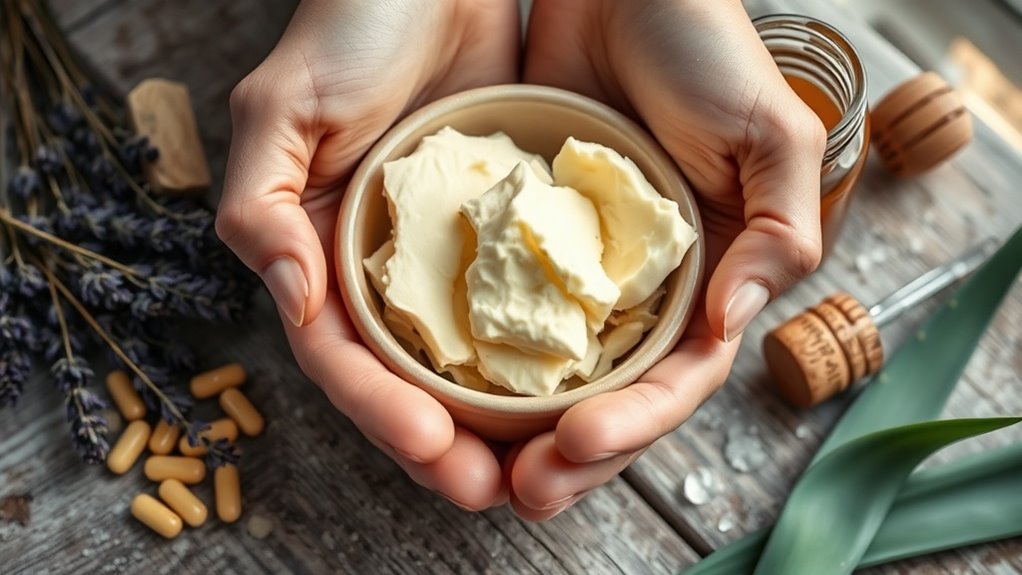
Because exfoliation alone can’t maintain prolonged epidermal hydration, you’ll need an occlusive agent to prevent transepidermal water loss throughout winter’s low-humidity conditions. Beard balms containing natural waxes and butters create a semi-permeable barrier while delivering humectants to underlying tissue.
Select formulations containing:
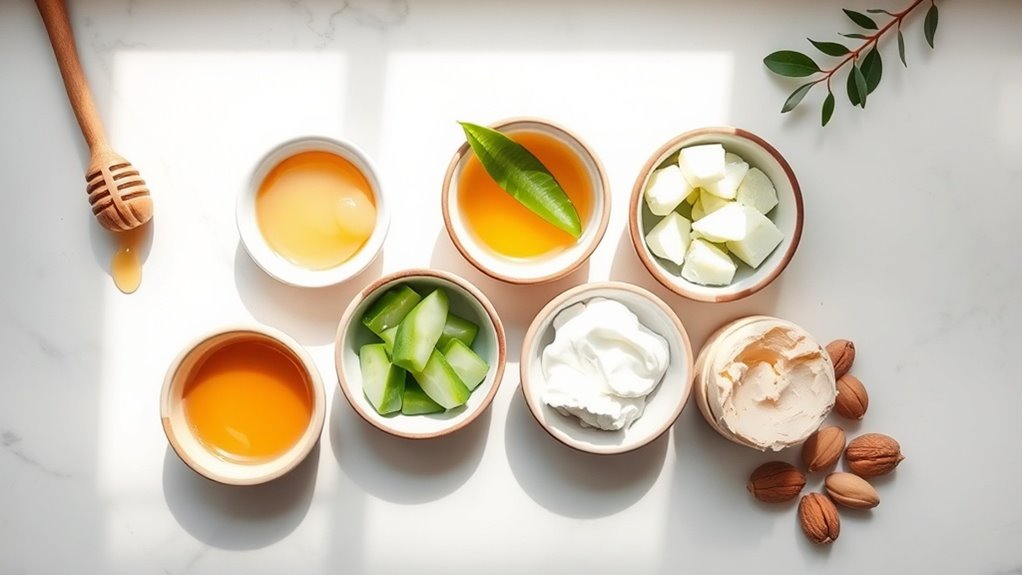
- Shea or cocoa butter (triterpene esters that occlude without comedogenicity)
- Beeswax or carnauba wax (film-forming agents preventing moisture evaporation)
- Jojoba oil (wax ester mimicking sebum composition for enhanced absorption)
Apply balm post-cleansing to damp facial hair, distributing evenly from root to tip. For an additional moisturizing boost, consider incorporating coconut oil winter skin care into your beard maintenance routine, as its fatty acid composition provides excellent emollient properties. Reapplication may be necessary in particularly xerotic conditions.
Boost Omega-3 Intake for Skin Health From Within
Since topical interventions address only superficial symptoms, you’ll need to modulate dermal lipid composition through dietary modification to achieve sustained barrier function improvement. Omega-3 fatty acids—specifically EPA and DHA—reduce inflammatory cytokine production while strengthening cellular membrane integrity. You should consume 250-500mg combined EPA/DHA daily through fatty fish (salmon, mackerel, sardines) or algae-based supplements if you’re plant-based.
Clinical evidence suggests 8-12 weeks of consistent supplementation is necessary for measurable improvements in transepidermal water loss. Consider concurrent omega-6 reduction, as excessive linoleic acid intake may counteract anti-inflammatory benefits. For optimal results, aim for 3-4oz wild salmon twice weekly to support your skin’s natural protective barrier function. Monitor your response; individual variation in lipid metabolism affects outcomes considerably.
Follow a Gentle Beard Washing Routine
Internal nutritional optimization requires complementary external hygiene protocols to address mechanical and chemical stressors that compromise the stratum corneum. You’ll need to implement strategic cleansing practices that preserve sebaceous gland function while removing environmental debris.
Evidence supports these washing parameters:
- Frequency limitation: Restrict washing to 2-3 times weekly to prevent lipid depletion
- Sulfate-free formulations: Select gentle, pH-balanced cleansers (4.5-5.5) to maintain acid mantle integrity
- Lukewarm water application: Avoid temperatures exceeding 37°C to prevent trans-epidermal water loss
This approach minimizes barrier disruption while maintaining follicular hygiene, reducing pruritus and xerosis manifestations during winter months.
Try Overnight Moisture Treatments for Deep Conditioning
While diurnal barrier maintenance proves essential, nocturnal occlusive therapy delivers superior penetration coefficients for lipophilic compounds.
You’ll maximize transepidermal hydration by applying jojoba or argan oil before sleep, allowing 6-8 hours for follicular absorption. Consider wrapping your beard in a silk covering to prevent oxidative degradation and pillow transfer. Empirical evidence suggests this extended contact time enhances stratum corneum moisture retention by 40-60%.
You should patch-test formulations initially to exclude allergic reactions. Apply treatment 2-3 times weekly during winter months when environmental humidity drops below 30%. Monitor for comedogenic responses and adjust frequency accordingly.