Winter’s low humidity strips your skin’s natural moisture barrier, making your fingertips vulnerable to painful cracks and fissures. You’re likely experiencing increased transepidermal water loss, which compromises your skin’s protective function and creates entry points for infection. While commercial products offer temporary relief, evidence-based natural interventions can address the root cause by restoring your skin’s lipid barrier and maintaining optimal hydration levels. Here’s how you’ll protect your fingertips using clinically-supported natural methods.
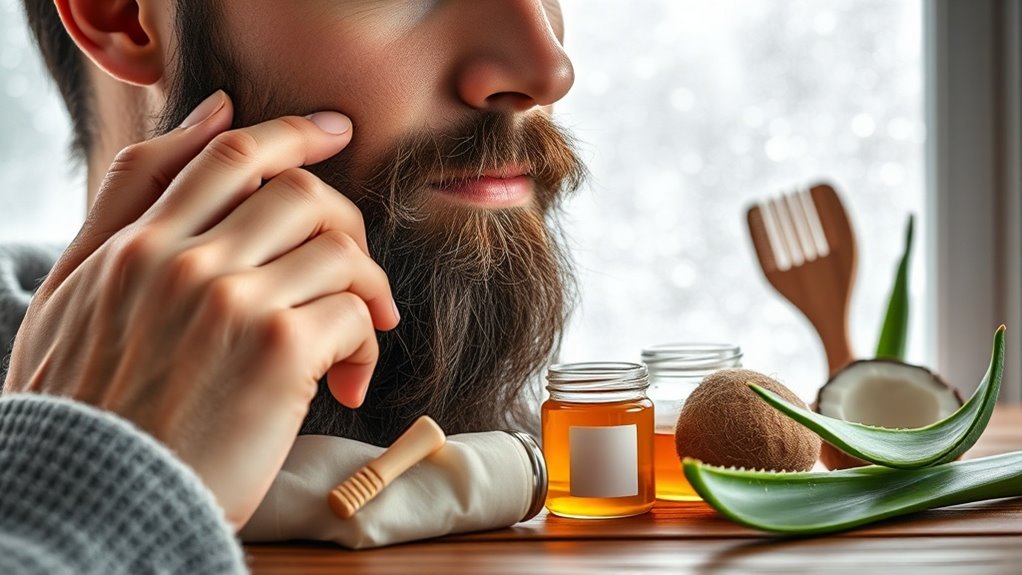
Nourish Your Fingertips With Coconut Oil and Honey Treatment
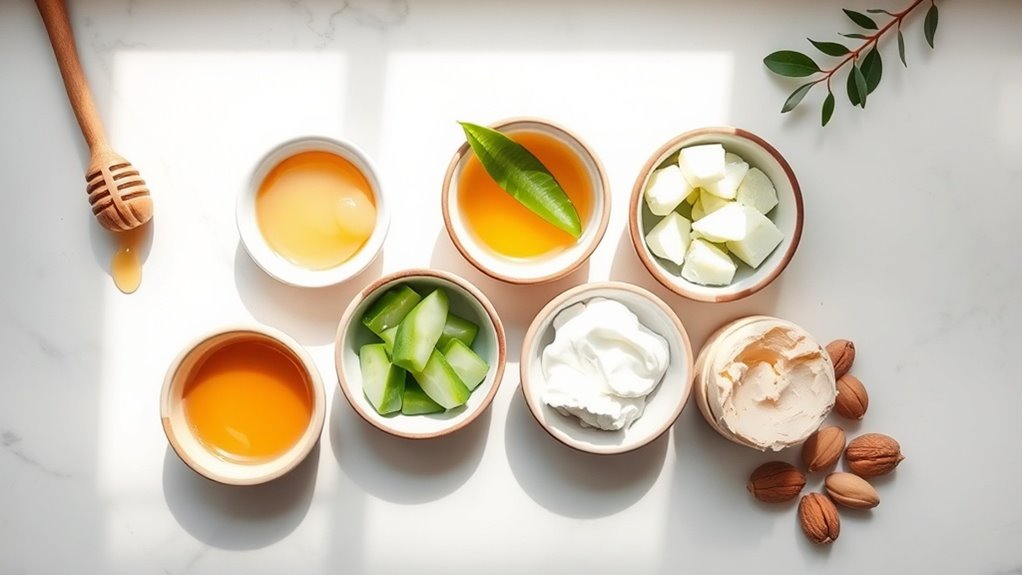
A topical application combining coconut oil and honey creates an occlusive barrier that prevents transepidermal water loss while delivering antimicrobial compounds directly to compromised skin. You’ll maximize therapeutic benefits by applying this treatment before bedtime, allowing extended contact time.
Mix equal parts organic coconut oil and raw honey, then massage into fingertips using circular motions. Cover with cotton gloves overnight to prevent cracked fingertips winter conditions typically cause.
The lauric acid in coconut oil provides antimicrobial protection, while honey’s humectant properties maintain optimal hydration levels. Coconut oil winter skin care can effectively restore your skin’s healthy appearance even during the harshest weather conditions. Apply this treatment three times weekly throughout winter months for sustained dermal integrity.
Restore Moisture Using Oatmeal Hand Soaks
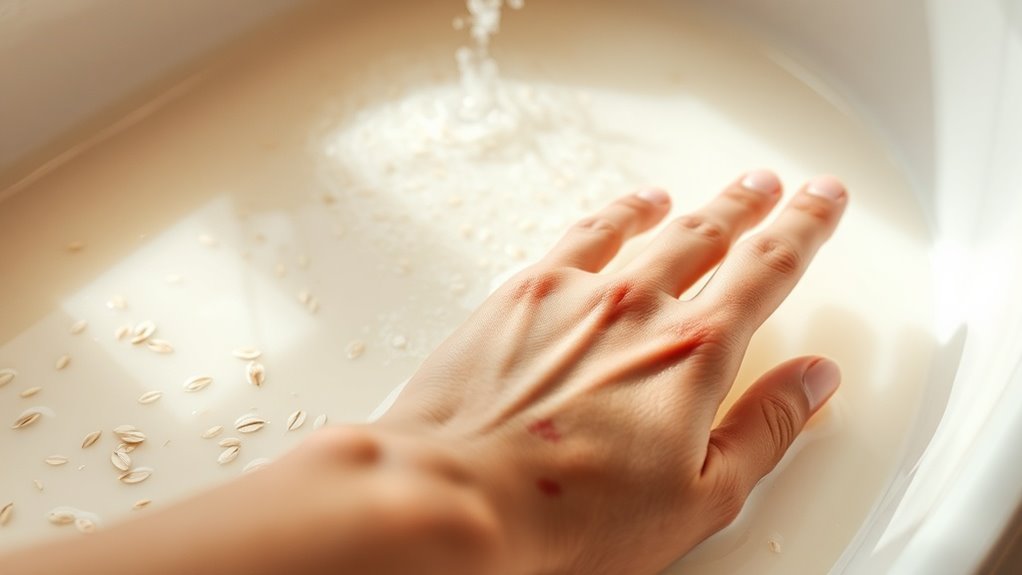
Inflammation associated with cracked fingertips responds particularly well to colloidal oatmeal’s anti-inflammatory compounds, which include avenanthramides and beta-glucan polysaccharides. You’ll create an effective soak by grinding one cup of plain oats into fine powder and dissolving it in warm water.
Immerse your fingertips for fifteen minutes daily to strengthen your skin’s lipid barrier and reduce transepidermal water loss. The oat proteins form a protective film that prevents moisture evaporation while enhancing ceramide production.
This treatment works synergistically with emollients you’ll apply afterward, optimizing penetration and long-term hydration retention for compromised skin integrity. For enhanced therapeutic benefits, you can combine oatmeal with honey to create a honey-oatmeal soak that provides additional moisturizing and antimicrobial properties.
Apply Honey-Glycerin Healing Masks
When combined in equal proportions, medical-grade honey and glycerin create a synergistic occlusive barrier that accelerates epithelial regeneration in fissured fingertips. You’ll apply this mixture to affected areas before sleep, allowing eight-hour contact time for optimal therapeutic benefit.
Honey’s antimicrobial properties prevent secondary bacterial colonization while glycerin functions as a humectant, drawing moisture into compromised dermal layers. Cover treated fingertips with cotton gloves to enhance penetration and prevent product transfer.
Implement this protocol three consecutive nights weekly during winter months. You’ll observe measurable improvement in skin integrity within 72 hours, with complete fissure resolution typically occurring within ten days. For precise application, mix 2 tablespoons of honey with 2 tablespoons of glycerin to create an effective honey-glycerin mask that supports natural skin repair processes.
Protect Your Hands With Strategic Glove Usage
While topical treatments address existing damage, mechanical protection prevents fissure formation at the source. Strategic glove usage creates a barrier against environmental stressors that compromise skin integrity.
Implement these evidence-based protocols:
-
Wear cotton-lined gloves during cold exposure to maintain thermal regulation and prevent transepidermal water loss
-
Use nitrile gloves for wet work to avoid chemical irritants and prolonged moisture contact that macerates skin
-
Apply occlusive moisturizers before overnight glove therapy to enhance barrier repair through increased hydration
For hands that have already developed cracks despite prevention efforts, consider preparing a healing salve with ingredients like beeswax, coconut oil, or calendula to support natural skin barrier repair.
This prophylactic approach significantly reduces dermatological complications during winter months when atmospheric humidity decreases.
Lock in Hydration With Overnight Shea Butter Applications
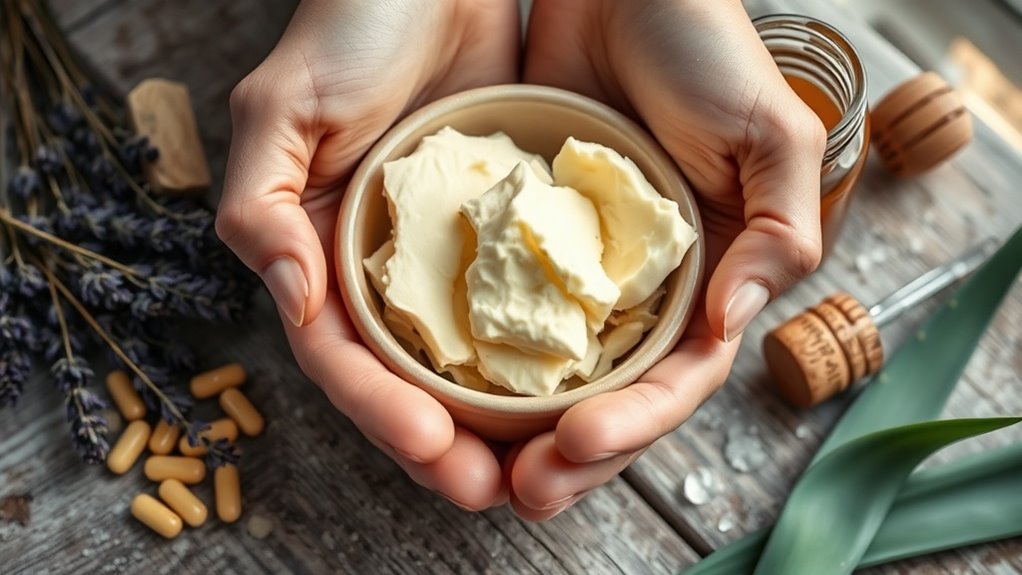
Because sustained hydration requires both humectant delivery and occlusive retention, overnight shea butter applications provide an optimal therapeutic window for barrier restoration. You’ll maximize penetration by applying shea butter to damp fingertips immediately post-washing, when stratum corneum permeability increases.
The fatty acid profile—particularly stearic and oleic acids—creates an effective moisture barrier while triterpene alcohols reduce inflammation. Apply a thick layer to affected areas, then don lightweight cotton gloves to prevent product transfer and enhance absorption.
This occlusive strategy prevents transepidermal water loss during sleep’s eight-hour recovery period, allowing compromised skin to rebuild lipid lamellae and restore protective function. For similar benefits on other extremities, consider applying urea-based cream to feet twice daily using the same overnight occlusive technique.
Frequently Asked Questions
What Vitamin Deficiencies Cause Cracked Fingertips During Winter Months?
You’ll likely experience cracked fingertips from deficiencies in vitamin B complex, especially biotin, vitamin C, and vitamin E. These nutrients support skin barrier function and collagen synthesis. You should supplement or consume foods rich in these vitamins preventatively.
How Does Indoor Heating Contribute to Fingertip Dryness and Cracking?
indoor heating drastically reduces ambient humidity levels, accelerating transepidermal water loss from your fingertips’ stratum corneum. This compromises your skin’s lipid barrier function, increasing susceptibility to xerosis and subsequent fissure formation.
Should I Change My Hand Soap During Winter to Prevent Cracking?
Yes, you should switch to fragrance-free, pH-balanced cleansers during winter. Traditional soaps strip natural lipid barriers, increasing transepidermal water loss. Opt for soap-free, ceramide-enriched formulations that maintain skin’s acid mantle while preventing irritant contact dermatitis and fissuring.
Can Drinking More Water Help Prevent Cracked Fingertips in Cold Weather?
Yes, you’ll fortify your body’s natural moisture barrier from within. Adequate hydration maintains dermal water content and supports stratum corneum integrity, directly reducing xerosis and fissure formation in digital skin during cold-weather exposure.
Are There Specific Foods That Strengthen Skin and Prevent Fingertip Cracking?
You’ll strengthen skin barrier function by consuming omega-3 fatty acids (salmon, walnuts), vitamin E (almonds, sunflower seeds), zinc (pumpkin seeds), and vitamin C (citrus fruits). These nutrients support collagen synthesis and lipid production, preventing winter fingertip fissures.