You’ve likely noticed your under-eye area appearing more swollen during winter months—and there’s solid scientific reasoning behind this seasonal change. Cold-induced vasoconstriction, reduced ambient humidity, and increased exposure to indoor allergens create a perfect storm for periorbital edema. While you might attribute puffiness to fatigue alone, multiple physiological mechanisms are simultaneously at work. Understanding these underlying causes will help you identify which evidence-based interventions can effectively target your specific triggers and restore a refreshed appearance.
Why Winter Weather Triggers Eye Puffiness and Swelling
Winter’s environmental conditions create a perfect storm of physiological stressors that directly compromise ocular health and trigger periorbital edema. Cold outdoor air combined with heated indoor environments depletes moisture, reducing tear film quality and causing dry eye conditions that exacerbate inflammation around ocular tissues.
Low temperatures induce vasoconstriction in periocular blood vessels, resulting in redness, swelling, and impaired fluid regulation. Additionally, winter winds trigger keratoconjunctivitis—simultaneous corneal and conjunctival inflammation causing blurred vision and severe puffiness. Seasonal allergies and colds can further contribute to puffy, red, and inflamed eyes during winter months.
Sinus congestion restricts normal drainage, causing fluid backup in surrounding tissues. Dry indoor heating further compounds the problem by continuously removing moisture from the air and skin, leaving the delicate under-eye area particularly vulnerable to swelling. Understanding these mechanisms helps identify effective puffy eyes winter remedies.
Common Allergens and Environmental Irritants During Cold Months
During winter months, you’re exposed to elevated concentrations of indoor allergens that trigger ocular inflammation and periorbital edema. Dust mites, pet dander, and mold spores accumulate in poorly ventated spaces as you spend more time indoors with closed windows and active heating systems.
Additionally, smoke from fireplaces, scented candles, and chemical irritants from cleaning products exacerbate allergic conjunctivitis, leading to increased eye puffiness and discomfort. Dry, heated indoor air also reduces moisture levels, which can compromise the tear film and contribute to eye irritation and swelling around the delicate periorbital region. Incorporating natural air purifying methods such as houseplants or activated charcoal bags may help reduce airborne irritants that contribute to eye inflammation during heating season.
Indoor Dust and Dander
As temperatures drop and heating systems activate, indoor environments become reservoirs for allergens that directly contribute to periorbital edema. Dust mites proliferate in bedding, carpets, and upholstered furniture, with allergen concentrations peaking due to reduced ventilation. You’ll experience increased exposure as closed windows trap allergens indoors.
Pet dander accumulates similarly, affecting 15-30% of allergy sufferers with heightened intensity during winter months. These allergens trigger allergic conjunctivitis, manifesting as ocular inflammation, pruritus, and swelling.
Implement mite-proof encasements for bedding, maintain HEPA-filtered vacuuming protocols, and restrict pet access to sleeping areas. Wash linens at temperatures exceeding 130°F to eliminate mite populations effectively. Consider opening windows during temperate winter days to reduce indoor mold spores, which thrive in warm, damp conditions and can exacerbate allergic eye reactions.
Mold in Damp Areas
While outdoor mold spore counts decline during freezing temperatures, indoor mold proliferation intensifies as winter’s cold, damp conditions create ideal environments for fungal growth. Water-damaged areas harbor approximately 80 allergenic fungal species, including Cladosporium and Alternaria, which release airborne spores triggering histamine-mediated periorbital edema.
Your risk increases substantially when condensation, inadequate ventilation, and heating systems create moisture gradients on walls, ceilings, and HVAC components. Children in mold-contaminated environments demonstrate up to tenfold increased odds of allergic conjunctivitis and associated eye puffiness. Professional diagnosis by pediatric allergists remains essential for confirming mold-related allergic conditions and guiding appropriate treatment strategies. Infrared thermal imaging effectively identifies hidden dampness requiring immediate remediation to prevent persistent allergen exposure.
Smoke and Fragrance Irritants
The periorbital tissues’ heightened vulnerability to smoke and fragrance irritants intensifies during winter months when prolonged indoor exposure converges with compromised ocular surface defenses. Cigarette smoke’s particulate matter and volatile compounds in perfumes trigger histamine-mediated inflammation, causing fluid accumulation and allergic conjunctivitis.
You’ll experience exacerbated symptoms because reduced humidity from heating systems impairs tear film integrity, amplifying irritant penetration. Morning puffiness worsens as overnight fluid settles in inflamed tissues. Contact dermatitis around the eyes and eyelids may develop from these allergic reactions.
Evidence supports eliminating fragranced products and smoke exposure while implementing antihistamine therapy and lubricating drops. Humidifier use restores ideal moisture levels, preventing irritant-induced edema. Allergy testing identifies specific triggers for targeted management.
Lifestyle Habits That Worsen Under-Eye Puffiness in Winter
Your daily habits profoundly influence the severity of under-eye puffiness during winter months, with sleep patterns and dietary choices playing critical roles in fluid retention and lymphatic drainage. Inadequate sleep disrupts your body’s natural fluid regulation mechanisms, while high-sodium foods and alcohol consumption exacerbate water retention around the delicate eye area. Implementing elevation sleep positioning with your head raised at 30-45 degrees can help prevent fluid accumulation around your eyes overnight, supporting natural drainage before morning puffiness develops.
Understanding how these lifestyle factors interact with winter’s environmental stressors enables you to implement targeted interventions that reduce swelling and improve periorbital appearance.
Poor Sleep and Fatigue
Sleep deprivation directly compromises the delicate periorbital tissue, triggering visible fluid accumulation and vascular changes that manifest as under-eye puffiness. When you’re sleep-deprived, blood vessels around your eyes dilate, increasing visibility of dark circles while simultaneously disrupting normal fluid drainage mechanisms.
Reduced lymphatic circulation during inadequate rest allows fluid to pool beneath your eyes, creating pronounced swelling. Additionally, chronic fatigue impairs your skin’s regenerative processes, diminishing collagen synthesis and weakening structural integrity. Your skin appears paler, accentuating underlying vascular networks and shadows.
Evidence demonstrates that sleep-deprived individuals exhibit substantially more periorbital edema, with observers consistently rating them as appearing more fatigued and aged.
Dietary Choices and Hydration
How considerably do your dietary patterns influence periorbital puffiness during winter months? Excess sodium intake—exceeding the FDA’s 2,300 mg daily recommendation—triggers water retention in delicate eyelid tissues. Processed foods, canned meats, and salty snacks exacerbate this condition.
Conversely, dehydration paradoxically causes fluid retention; you’ll need approximately 2.7-3.7 liters daily depending on biological sex. Alcohol and caffeine compromise hydration status further.
Food sensitivities, particularly lactose intolerance, stimulate histamine release and vasodilation, increasing periorbital edema. Inadequate protein impairs collagen synthesis, while saturated fats promote systemic inflammation.
Incorporate potassium-rich foods (bananas, leafy greens) and water-dense produce (watermelon, spinach) to optimize fluid balance and mitigate puffiness effectively.
Cold Compress Techniques and Cooling Remedies for Immediate Relief
When puffy eyes develop during winter months, cold compress therapy serves as an evidence-based first-line intervention that delivers rapid symptomatic relief. The mechanism involves vasoconstriction—narrowing of blood vessels—which reduces fluid accumulation and minimizes periorbital edema.
Application Protocol:
- Apply cold compresses for 5-10 minutes per session
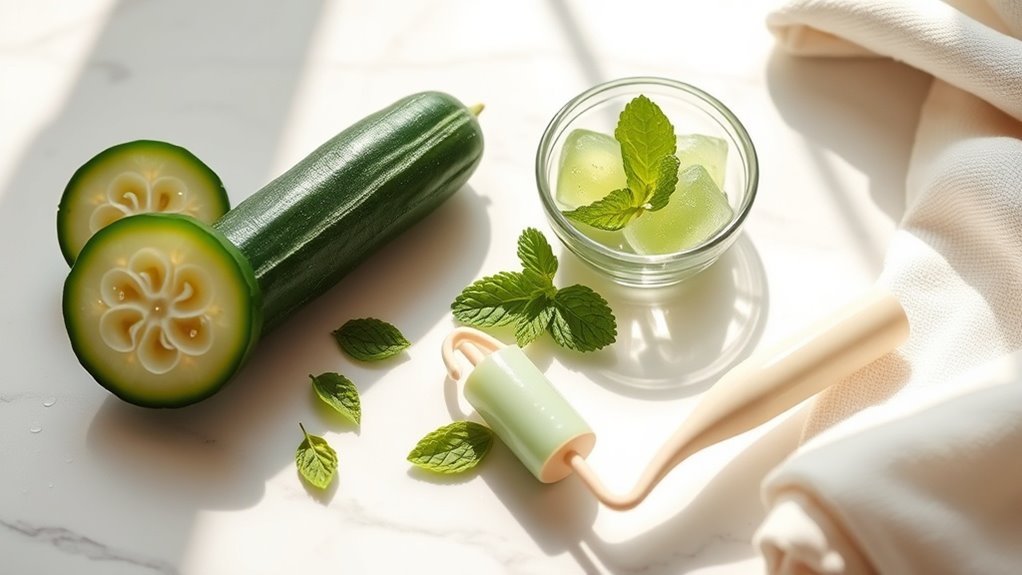
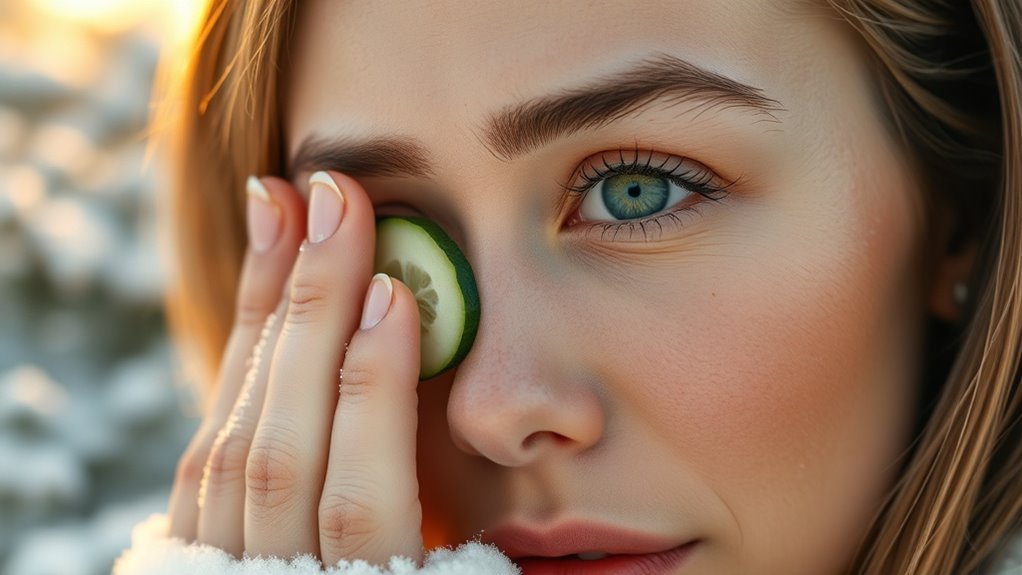
- Utilize chilled cucumber slices, frozen vegetables wrapped in towels, or ice packs in cloth barriers
- Maintain upright positioning during treatment to enhance drainage
- Avoid direct ice-to-skin contact to prevent frostbite risk
Combine cold therapy with caffeine-containing eye serums, adequate hydration, and seven to eight hours of nightly sleep for ideal outcomes. For enhanced cooling relief, consider incorporating chilled aloe compresses around the eye area, which may provide additional soothing benefits while supporting natural skin recovery processes.
Natural Ingredients and DIY Treatments to Reduce Eye Swelling
Natural botanical compounds offer evidence-supported alternatives to pharmaceutical interventions for managing periorbital edema during winter months. Cucumber’s high water content and vitamin C provide hydration while constricting blood vessels when applied cold for 10-15 minutes daily.
Aloe vera gel’s polysaccharides retain moisture and reduce inflammation, particularly when combined with vitamin E-rich almond oil. Tea bags deliver caffeine and tannins that produce vasoconstriction, diminishing puffiness after 15-20 minute applications. Green tea catechins offer additional anti-inflammatory benefits. Rose water’s antioxidants address redness through cotton pad application.
Dietary modifications reducing sodium intake prevent fluid retention, while vegetables rich in vitamins A, C, and E support periorbital tissue health.
Long-Term Prevention Strategies and When to Seek Medical Advice
While acute interventions address immediate periorbital edema, sustainable management requires holistic lifestyle modifications that target underlying physiological mechanisms. Implement these evidence-based prevention strategies:
- Maintain 7-9 hours of sleep with elevated head positioning to minimize nocturnal fluid accumulation
- Reduce dietary sodium and alcohol consumption to prevent water retention and vascular inflammation
- Optimize environmental controls through hypoallergenic bedding and humidifiers to mitigate allergen exposure
- Apply caffeine-infused serums containing hyaluronic acid and peptides to enhance microcirculation
Seek medical evaluation if you experience persistent swelling accompanied by pain, vision changes, or discharge, as these indicate potential underlying pathology requiring professional assessment.